The Wiert Corner – irregular stream of stuff

Jeroen W. Pluimers on .NET, C#, Delphi, databases, and personal interests

  • My badges

  • Twitter Updates

  • My Flickr Stream

  • Pages

  • All categories

  • Enter your email address to subscribe to this blog and receive notifications of new posts by email.

    Join 1,862 other subscribers

Archive for the ‘LifeHacker’ Category

Omrekenen van eenheden/Keuken – Wikibooks

Posted by jpluimers on 2019/10/21

Van [WayBackOmrekenen van eenheden/Keuken – Wikibooks omdat ik weer eens van teveel eetlepels naar volume wilde omrekenen:

Omrekenen van veel in de keuken gebruikte eenheden:

dr 1 dr = 0,05 ml druppel
tl 1 tl = 5 ml theelepel
el 1 el = 15 ml eetlepel
kopje 1 kopje = 250 ml
ons 1 ons = 100 gram
pd 1 pond = 500 gram

Afgestreken eetlepels

aardappelmeel 9 g
bakpoeder 7 g
basterdsuiker 12 g
bloem 8 g
boter 14 g
braadvet 12 g
cacao 8 g
griesmeel 9 g
havermout 5 g
krenten 11 g
maïzena 8 g
margarine 14 g
paneermeel 6 g
poedersuiker 9 g
rozijnen 10 g
rijst 13 g
suiker 11 g
zout 15 g

Oventemperatuur

lauwwarm 100 – 150°C
matig warm 150 – 175°C
tamelijk warm 175 – 200°C
warm 200 – 225°C
heet 225 – 275°C
zeer heet boven 275°C

–jeroen

Posted in LifeHacker, Power User | Leave a Comment »

AnyDesk remote desktop – on my list of things to test

Posted by jpluimers on 2019/10/21

After getting fed up by TeamViewer for the umptieth time because inter-version compatibility issues, I think I’m going to try this:

[WayBack] AnyDesk Remote Desktop

AnyDesk is the world’s most comfortable remote desktop application. Access all your programs, documents and files from anywhere, without having to entrust your data to a cloud service.

–jeroen

Posted in LifeHacker, Power User | Leave a Comment »

Reminder to politicians: concrete blocks do not help against trucks

Posted by jpluimers on 2019/10/18

These physics lessens at school were useful after all.

TL;DR:

A concrete block of ~1.500kg will loose against a truck of ~9.000kg, especially if that drives 50 km/hour.

It will not stop the truck, but will start moving by itself in unexpected directions and speeds becoming a projectile by itself or worse: usually pieces break off traveling at quite high speed.

The video below shows what happens.

Beton blocks

Over the last year or so, concrete blocks are deployed in many places of the public areas. The usual deeper motivation is to protect against traffic.

The blocks are put on the ground without anchoring for a variety of motivations like flexibility, ease of deployment/removal, cost of blocks (EUR ~100 each) versus anchoring (EUR ~250 per block) in a non-interconnected way.

Often, the rectangular lego-like blocks with 8 bumps are used which come in two varieties: 40cm high (easier to sit on, look more friendly) of a mere 1200kg or 80cm high (look more massive) of only 2400kg.

Other concrete blocks used are roughly the same dimensions, so an average weight of ~1500kg is reasonable.

Trucks

An average truck (at about 10.000 kg) isn’t a static object. In cities they are usually allowed to drive at 50 km/hour, but during assassination attempts they drove much faster and also were much heavier.

Let’s assume however that a truck used is less heavy (not all bad people are smart to get a really heavy truck) at ~9.000kg.

Truck concrete collision

The assumptions so far: a truck of 9.000kg at 50 km/hour against a concrete block of 1.500kg at standstill.

Even though a collision with a truck looses some energy, a moving truck has a lot of it. So most of the energy from the truck will be partially or fully transferred via its momentum to the concrete block(s).

The physics involved here are about momentum:

  • momentum = mass * velocity
  • momentum in a system is conserved

Before colliding, the truck has momentum, but the concrete block does not. After the collision, the momentum is divided over truck and concrete block so they both have a velocity.

A few cases that can happen, usually in a combined fashion:

  1. The truck comes to a full stop and all momentum is transferred to the block. The block now travels 9.000/1.500 * 50 km/h which is 200 km/h if it was in front of the truck.
  2. If the concrete wasn’t fully in front of the truck, the truck will move in another direction as well as the concrete block. Those directions are hard to predict for the public.
  3. Part of the concrete comes off during collision. Since their weight is smaller, their speed will be higher (because momentum is conserved) and direction even less predictable.

–jeroen

References

Read the rest of this entry »

Posted in LifeHacker, Power User, science | Leave a Comment »

Sam Knutson on Twitter: ““Every piece of equipment is shipped from the factory able to successfully complete n power cycles and you only find out n at n+1” Anonymous IBM Customer Engineer (CE)… 

Posted by jpluimers on 2019/10/18

[WayBackSam Knutson on Twitter: ““Every piece of equipment is shipped from the factory able to successfully complete n power cycles and you only find out n at n+1” Anonymous IBM Customer Engineer (CE)… .

I could not track down earlier versions of the image than 2005; see the images below.

Failures

[WayBack] flowcart troubleshooting komputer | superplayboy:

–jeroen

Posted in Hardware, LifeHacker, Power User | Leave a Comment »

My code of conduct – Marcin Juszkiewicz

Posted by jpluimers on 2019/10/17

There are many “code of conduct” documents. Often they differ a lot. I have my own: Do not be an asshole. Respect the others.

Source: [WayBackMy code of conduct – Marcin Juszkiewicz

Via: [WayBack] I like this code of conduct and general remarks. – Jean-Luc Aufranc – Google+

–jeroen

Posted in LifeHacker, Power User | Leave a Comment »

But what is the Fourier Transform? A visual introduction. – YouTube

Posted by jpluimers on 2019/10/07

[WayBack] If only math was taught like that when I was studying… – Adrian Marius Popa – Google+

–jeroen

Posted in Power User, science | Leave a Comment »

Fastener Reference Cheat Sheets, by @pighixxx | #ManufacturingMonday

Posted by jpluimers on 2019/10/04

[WayBackFastener Reference Cheat Sheets, by @pighixxx | #ManufacturingMonday

From pan flange to button washer, from socket cap to trim screw heads, not to mention threading types and drive head options, every workbench and workshop should have this fastener reference guide …

via:

–jeroen

Read the rest of this entry »

Posted in Development, Hardware Development, LifeHacker, Power User | Leave a Comment »

Meeting Agreements for High Performing Teams – Noteworthy — The Journal Blog

Posted by jpluimers on 2019/09/30

Worthy short read: [WayBackMeeting Agreements for High Performing Teams – Noteworthy — The Journal Blog

A quote from it:

[WayBackPatrick Lencioni‏ @patricklencioni: If someone offered me a single piece of evidence to assess the health of an org, I would want to observe the executive team during a meeting

–jeroen

via: [WayBack] Meeting Agreements for High Performing Teams – Noteworthy — The Journal Blog – Marjan Venema – Google+

Read the rest of this entry »

Posted in Agile, Development, LifeHacker, Power User, Software Development | Leave a Comment »

SchipholWatch op Twitter: “Met app Explane uw klacht naar BAS sturen? https://t.co/i2P5qfVFZN”

Posted by jpluimers on 2019/09/24

[WayBack] SchipholWatch op Twitter: “Met app Explane uw klacht naar BAS sturen?”

–jeroen

Posted in LifeHacker, Power User | Leave a Comment »

Skin effect – Wikipedia

Posted by jpluimers on 2019/09/23

Skin effect – Wikipedia:

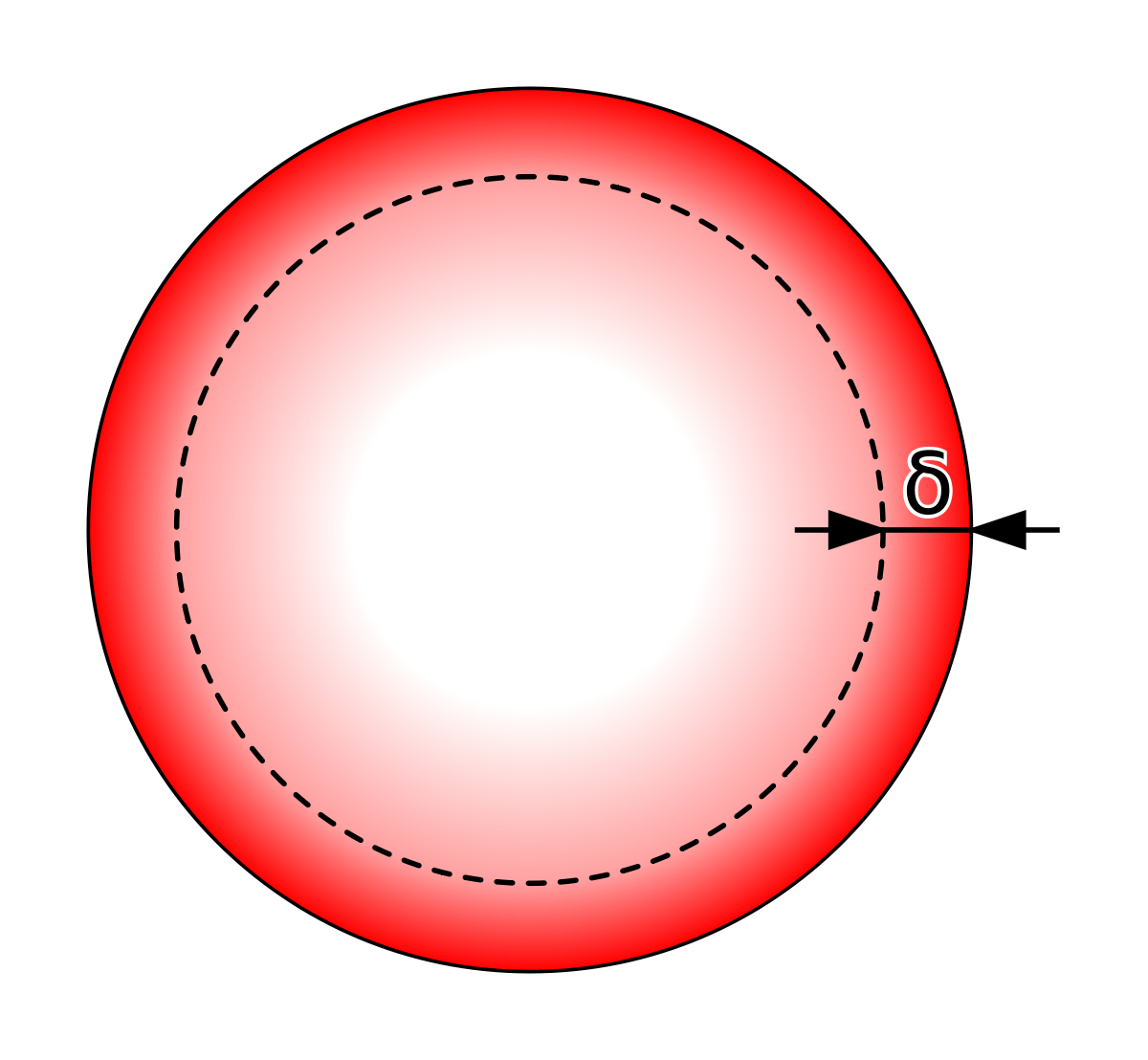
Skin effect is the tendency of an alternating electric current (AC) to become distributed within a conductorsuch that the current density is largest near the surface of the conductor, and decreases with greater depths in the conductor. …

At high frequencies the skin depth becomes much smaller. … Because the interior of a large conductor carries so little of the current, tubular conductors such as pipe can be used to save weight and cost.

Via [WayBack] Odd: “copper” central lead of antenna cable attracted by magnetic screwdriver tip. – Jeroen Wiert Pluimers – Google+

–jeroen


Posted in Development, Hardware Development, LifeHacker, Power User | Leave a Comment »