The Wiert Corner – irregular stream of stuff

Jeroen W. Pluimers on .NET, C#, Delphi, databases, and personal interests

  • My badges

  • Twitter Updates

  • My Flickr Stream

  • Pages

  • All categories

  • Enter your email address to subscribe to this blog and receive notifications of new posts by email.

    Join 1,861 other subscribers

Archive for the ‘Network-and-equipment’ Category

Solved: Stuttering Audio Streaming To Apple TV Via AirPlay – The Spotify Community

Posted by jpluimers on 2020/02/17

[WayBack] Solved: Stuttering Audio Streaming To Apple TV Via AirPlay – The Spotify Community:

Try to disable Wifi multimedia (WMM) from your router’s WLAN settings

For my Tomato USB it was easy as described by [WayBack] Installing AirPlay on Tomato – 2017 Edition [StartupCTO]:

disabling WMM in Tomato. (Advanced Settings → Wireless).

–jeroen

Posted in ASUS RT-N66U, Internet, Network-and-equipment, Power User, routers, TomatoUSB, WiFi | Leave a Comment »

XW6600 WOL – stopped working on Windows 10 – my trusty APC PDU to the rescue

Posted by jpluimers on 2020/01/17

A long time ago I wrote in Mac/PC: sending Wake-on-LAN (WOL) packets « The Wiert Corner – irregular stream of stuff “I’ve succesfully woken up these machines: HP XW6600 running ESXi 5.1 ThinkPad W701U running Windows 7”.

The XW6600 have now been demoted to Windows 10 machines that I only need every now and then, so most of the time they are shutdown.

However, with the installation of Windows 10 however, they stopped reacting to WOL (Wake on LAN).

Per web-search results, I’ve tried all the permutations of the below settings to no avail.

Luckily, my trusty APC PDU AP7921 (and little sister AP7920) helped out: when setting the “Reboot Duration” to 30 seconds or more (so the power fully drains), it can be rebooted.

Note that since I bought these a long time ago, they have been replaced by these:

Firmwares:

Power usage:

  • an XW66000 with 32 gigabytes of RAM and one hard disk takes between 0.6-1.2 Ampère of current, which at 230 Volt is 140-275 Watt.
  • over one day that is between 3.4 and 6.6 kWh

Settings tried

Read the rest of this entry »

Posted in Ethernet, Hardware, HP XW6600, Network-and-equipment, Power User, Wake-on-LAN (WoL), Windows, Windows 10 | Leave a Comment »

How Douglas Engelbart Invented the Future | Innovation | Smithsonian

Posted by jpluimers on 2020/01/15

Two decades before the personal computer, a shy engineer unveiled the tools that would drive the tech revolution

Don’t read this as a historic piece, but as the potential we are still going to experience what was not just sketched by a true visionary in 1968, but also demonstrated back then: [Archive.isHow Douglas Engelbart Invented the Future | Innovation | Smithsonian.

I am including one of the pictures below by Christie Hemm Klok that shows how far Engelbart was ahead of his time: not his initial invention of an input device (the mouse) “chord” kind.

After that, read about his 1968 presentation: The Mother of All Demos – Wikipedia

Finally, watch the video below, well worth watching the more than one and a half hours.

–jeroen

Via:

Read the rest of this entry »

Posted in Development, Future, Hardware, History, Network-and-equipment, Power User, Software Development | Leave a Comment »

Node-RED

Posted by jpluimers on 2019/12/11

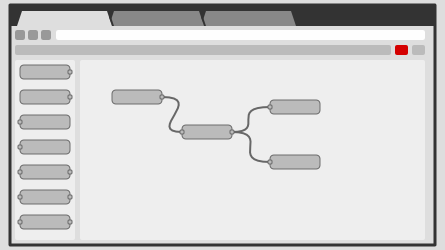
Node-RED is a programming tool for wiring together hardware devices, APIs and online services in new and interesting ways.It provides a browser-based editor that makes it easy to wire together flows using the wide range of nodes in the palette that can be deployed to its runtime in a single-click.

Seems one of the ways to automate our home: [WayBack] Node-RED, as it supports many input and output methods with all kinds of nodes between them:

input output
inject debug
catch
status
link link
mqtt mqtt
http http response
websocket websocket
tcp tcp
udp udp
serial serial

It is based on node.js, seems to need PM2 for running as a service, so I need to first figure out how well it runs on OpenSuSE (with more details than this gist).

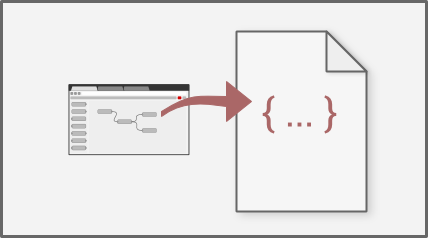
After that I need to figure out how to version your configurations using git and document as it looks like the configurations sources are stored in JSON format [WayBack].

For resources:

  • StackOverflow node-red tag
  • Github node-red repositories
  • nodered documentation to:
    • get started (including Installation, Running, Adding non-stock Nodes, Upgrading, Creating your first and second flow, running on Docker / Windows)
      • running on a device (Raspberry Pi, BeagleBone Black, Android) which needs extra device specific modules to hardware inputs/outputs
      • communicating with a device (Arduino)
      • running in the cloud (IBM Bluemix, SenseTecnic FRED, Amazon Web Services, Microsoft Azure)
    • user guide (including Configuration, Security, Logging, Command-line Admin, Writing Functions, Embedding into an existing app)
    • cookbook (with many flows covering Basics, HTTP and MQTT)
    • creating nodes (with a wall of information: Creating your first node, JavaScript File, HTML File, Storing Context, Node properties, Node credentials, Node appearance, Node status, Configuration nodes, Help style guide, Packaging, Internationalisation)
    • flows (hundreds of them)

Code is published as JSON, but I wish more examples also showed the visual representation.

Via: [WayBack] Now I can go to bed :-) Added node-red [1] to my setup and thanks to node-red-contrib-ui [2] (replaced by node-red-dashboard [3]) I can now generate ni… – Jan Wildeboer – Google+ who also provided the large screenshot below.

–jeroen

Read the rest of this entry »

Posted in Development, Hardware Development, IoT Internet of Things, Network-and-equipment, Power User, Raspberry Pi | Leave a Comment »

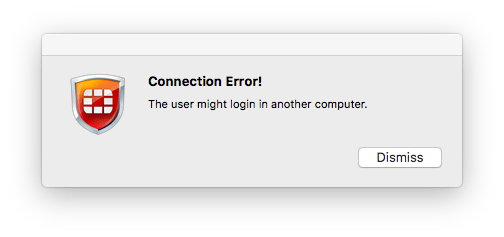
Forticlient “the user might login in another computer”, never found the cause

Posted by jpluimers on 2019/11/25

Could only find one reference using “the user might login in another computer” – Google Search, who also could not find out why this error happened:

When trying to log in on FortiClient, I get an error message that says, “the user might login in another computer” I assume that could mean that I’m logged in on another machine elsewhere? I could not find any information confirming that.

[WayBack] Error Message | Fortinet Technical Discussion Forums

So I reached out to Fortinet, the makers of Forticlient:

[WayBackJeroen Pluimers on Twitter: “@Fortinet what could cause this? Searching for the message “The user might login in another computer” did not get me any further: https://t.co/Bl4KoWJ7IB FortiClient 6.6.1.723 on MacOS High Sierra.…”


–jeroen

Posted in FortiGate/FortiClient, Network-and-equipment, Power User, VPN | Leave a Comment »

For my link archive: IPVoid.com

Posted by jpluimers on 2019/11/25

Nice landing page to check various aspects of IP addresses: [WayBackipvoid.com:

We offer a vast range of IP address tools to discover details about IP addresses. IP smtp blacklist check, whois lookup, dns lookup, ping, and more!

I irregularly use them to check out blacklist issues (yes, sometimes 8.8.8.8, 8.8.4.4 and even 9.9.9.9 appear on blacklists).

–jeroen

Posted in Internet, Network-and-equipment, Power User | Leave a Comment »

Netgate SG-3100 is an ARM based pfSense Firewall Appliance

Posted by jpluimers on 2019/11/04

By now I should have had plenty of time to try out an ARM based pfSense multi-WAN router like the [WayBack]  Netgate SG-3100 is an ARM based pfSense Firewall Appliance.

So this is a reminder for myself to write down more detailed experiences than the summary at [WayBack]Netgate SG-3100 pfSense Security Gateway Appliance.

It is in the Mikrotik price range, but each time I use those I bump into mysterious RouterOS issues that only I seem to have.

–jeroen

via:

Read the rest of this entry »

Posted in Internet, Network-and-equipment, Power User, routers | 1 Comment »

ZeroShell Firewall/Router Linux Distribution Works on x86 Hardware, Raspberry Pi 2/3, & (Some) Orange Pi Boards

Posted by jpluimers on 2019/11/01

From a while back: [WayBackZeroShell Firewall/Router Linux Distribution Works on x86 Hardware, Raspberry Pi 2/3, & (Some) Orange Pi Boards.

I’m anxious to see how much it has grown up by now.

More info at Zeroshell – Wikipedia

–jeroen

via: [WayBack] ZeroShell is a ##Linux distribution for firewalls/routers fully configurable via a web interface, and that not only works on x86, but also on some ##Arm… – Jean-Luc Aufranc – Google+

Posted in Internet, Network-and-equipment, Power User, routers | Leave a Comment »

Route traffic from one port via VPN – MikroTik

Posted by jpluimers on 2019/09/16

For my link archive: [WayBack] Route traffic from one port via VPN – MikroTik

Via [WayBack] networking – Mikrotik route internet traffic from one interface via vpn – Super User

–jeroen

Posted in Internet, MikroTik, Power User, routers | Leave a Comment »

Dean Bubley’s Disruptive Wireless: Debunking the Network QoS myth

Posted by jpluimers on 2019/08/09

QoS doesn’t work, except for one specific scenario:

Where QoS works is where one organisation controls both ends of a connection AND also tightly-defines and controls the applications:

  • A fixed-broadband provider can protect IP telephony & IPTV on home broadband between central office & the home gateway.An enterprise can build a private network & prioritise its most important application(s), plus maybe a connection to a public cloud or UCaaS service.
  • Mobile operators can tune a 4G network to prioritise VoLTE.
  • Telco core and transport networks can apply differential QoS to particular wholesale customers, or to their own various retail requirements (eg enterprise users’ data vs. low-end consumers, or cell-site timing signals and backhaul vs. user data).
  • Industrial process & control systems use a variety of special realtime connection protocols and networks. Vendors of “OT” (operational technology) tend to view IT/telecoms and TCP/IP as quaint. The IT/OT boundary is the real “edge”.

Source: [WayBackDean Bubley’s Disruptive Wireless: Debunking the Network QoS myth

Via: [WayBack] This is not news, but it’s worthwhile repeating… – Kristian Köhntopp – Google+:

This is not news, but it’s worthwhile repeating: it is actually cheaper to build a network that can carry the traffic than building a network that keeps quality promises on a backbone that is undersized or close to capacity. Overprovisioning works, everything else does not, economically as well as technically.

–jeroen

Posted in Network-and-equipment, Power User, QoS | Leave a Comment »