


Since I will likely need something like this one day: [WayBack] GitHub – Nike-Inc/gimme-aws-creds: A CLI that utilizes Okta IdP via SAML to acquire temporary AWS credentials
I think I got this via Kristian Köhntopp a while ago.
–jeroen
Posted by jpluimers on 2020/01/27
Since I will likely need something like this one day: [WayBack] GitHub – Nike-Inc/gimme-aws-creds: A CLI that utilizes Okta IdP via SAML to acquire temporary AWS credentials
I think I got this via Kristian Köhntopp a while ago.
–jeroen

Posted in Amazon.com/.de/.fr/.uk/..., Cloud, Cloud Development, Infrastructure, Power User, Software Development | Leave a Comment »
Posted by jpluimers on 2020/01/27
I wrote about Delphi, IBX and the Turkish I problem about a year and a half ago. Back then, I could use a US-English system to reproduce the problem. This time, I had a problem on a Turkish system running an embedded version of Windows with hardly any UI tools available (especially no Windows Explorer).
 Luckily, I had the command prompt, but it looked like this:
X:\>mode con codepage

Status for device CON:
----------------------
    Code page:      857

X:\>mode con codepage select 437
Invalid parameter - select

X:\>mode con codepage select=437
Invalid parameter - select

Status for device CON:
----------------------
    Lines:          300
    Columns:        120
    Keyboard rate:  31
    Keyboard delay: 1
    Code page:      437

X:\>
I tried the [WayBack] modecommand to change from [WayBack] code page 857(Turkish) to [WayBack] code page 437(IBM PC or OEM-US) which is the default on US-English systems, but that did not change the keyboard locale, not even for the command prompt.

Posted in Development, internatiolanization (i18n) and localization (l10), Power User, Software Development | Leave a Comment »
Posted by jpluimers on 2020/01/23
If you auto-configure, then at least try searching the tools you need:
[WayBack] Yeah right Delphi 10.2 Tokyo (for which the shortcut – unlike the Berlin one – does not contain the word Tokyo), they are right on the Windows PATH wher… – Jeroen Wiert Pluimers – Google+
–jeroen

Posted in Delphi, Development, Software Development | Leave a Comment »
Posted by jpluimers on 2020/01/23
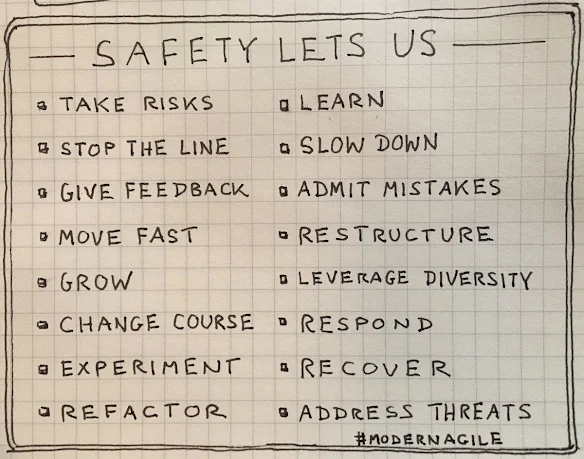
Medium indicates it is an 8 minute tread, but since I’m more on the non-people side of the spectrum, digesting it will take quite some time needing multiple reeds.
Via: [WayBack] Of Course Psychological Safety…But How? – John Cutler – Medium – Marjan Venema – Google+
Marjan is a great coach on the personal and agility side of things.
–jeroen
Posted in Agile, Development, LifeHacker, Power User | Leave a Comment »
Posted by jpluimers on 2020/01/23
Another blast from the past. I’ve been using many development environment all my live, so I have been using .NET very early on allowing me to make a good comparison: [WayBack] Delphi developer switching to C# – Stack Overflow.
I have a broad toolbox because we’ve never lived in a “silver bullet” era: any problem needs a combination of tools to solve them. Having a broad toolset allows you to pick and choose more easily. Mastering the different tools however requires a lot of effort and time. You really need to love this profession to put that energy in it.
I heavily use both for software development.
Development speed of server apps (web apps, web services, windows services) is much higher in .NET.
Development speed of business apps (pure Windows UI) is much higher in Delphi.
Development of sexy apps is a pain in both environments.
A few things you should know:
- Learning the .NET framework will take a lot of time: it is huge, but contains a lot of gizmos (some gems are really well hidden).
- Don’t lose yourself in following all new trends at once: generics, lambda, LINQ, each are nice, but grasping them all at once is only for a few of us
- For web apps, skip WebForms, but learn ASP.NET MVVC (yes, the Ruby guys were right after all); learn HTML 5 and JavaScript too.
- For sexy Windows apps, learn WPF, but be prepared for a steep learning curve (designer, and framework are radically different)
- Don’t get a too sexy UI: it costs you a disproportional amount of time while your users are waiting for functionality
- Like the market has been bashing Delphi since version 1, the market is bashing SilverLight too
- Skip WinForms; if you need something like WinForms, then Delphi is way more productive (even more so if you have an existing Delphi VCL codebase).
- WPF is just as thread-friendly as the VCL or WinForms (read: neither of the 3 is thread friendly)
- Don’t perform rewrites of your Delphi stuff in .NET (or for that matter any other 1:1 rewrite from platform A into platform B): it is a waste of your time.
- Threading and synchronization are a pain in all development environments. The pain is not so much in the general stuff (the Concurrent Collections in the .NET 4 framework helps, as do the Delphi OmniThreadLibrary), but in getting the final details and exception cases right is the real pain.
- Garbage collection does not mean that you won’t leak memory: it means that you won’t leak when your app terminates, but while it runs the leaks are way harder to detect (boy, I wish I had the FastMM memory monitor for .NET)
–jeroen
Posted in .NET, C#, Delphi, Development, Software Development | 3 Comments »
Posted by jpluimers on 2020/01/22
If you ever get an exit code 9009 from xcopy like the one below, then try using the full path to xcopy. It should be there, it should not matter, but it does if someone changed your path.
[Exec Error] The command " xcopy ....\Shared\DLL\FastMM\FastMM_FullDebugMode.dll .\Win32\Debug\ /y&& xcopy ....\Shared\DLL\OpenSSL\libeay32.dll .\Win32\Debug\ /y&& xcopy ....\Shared\DLL\OpenSSL\ssleay32.dll .\Win32\Debug\ /y&& xcopy ....\Shared\DLL\gRPC\nghttp2.dll .\Win32\Debug\ /y&& xcopy ....\Shared\DLL\gRPC\sgcWebSockets.dll .\Win32\Debug\ /y" exited with code 9009.
Preliminary solution: replace xcopy with C:\Windows\System32\xcopy.exe .
Final solution: look with Process Explorer and Process Monitor what the exact environment PATH is. It should include C:\WINDOWS\system32;C:\WINDOWS;C:\WINDOWS\System32\Wbem;
If it does not, then find out what is changing your path.
Related:
–jeroen
Posted in .NET, Delphi, Development, Software Development | Leave a Comment »
Posted by jpluimers on 2020/01/22
So as the author of CSS3 Animate It I have a good background in CSS animation. Before CSS3 was released you would have to resort to using JS for animation…
Even after CSS3 got introduced, I’m still not sure I’d use animation: [WayBack] CSS Animation How To Tutorial – Dev Tuts
Via:
–jeroen

Posted in CSS, Development, Software Development, Web Development | Leave a Comment »
Posted by jpluimers on 2020/01/22
A blast from the past: my 2009 answer to [WayBack] What Design Patterns do you implement in common Delphi programming? – Stack Overflow which is still very much relevant today.
TL;DR
Every Delphi programmer uses the factory pattern as it is an intrinsic part of how components at design time work.
So he were go:
Only a minority of the Delphi developers knows that every Delphi developer uses a Factory pattern (delphi.about.com has an example in “regular” Delphi), but then implemented using virtual Create constructors.
So: time to shed some light on that :-)
Virtual constructors are to classes like virtual methods are like object instances.
The whole idea of the factory pattern is that you decouple the logic that determines what kind (in this case “class”) of thing (in this case “object instance”) to create from the actual creation.
It works like this using virtual Create constructors:
TComponent has a virtual Create constructor so, which can be overridden by any descending class:
type
  TComponent = class(TPersistent, ...)
    constructor Create(AOwner: TComponent); virtual;
    ...
  end;
For instance the TDirectoryListBox.Create constructor overrides it:
type
  TDirectoryListBox = class(...)
    constructor Create(AOwner: TComponent); override;
    ...
  end;
You can store a class reference (the class analogy to an object instance reference) in a variable of type ‘class type’. For component classes, there is a predefined type TComponentClass in the Classes unit:
type
  TComponentClass = class of TComponent;
When you have a variable (or parameter) of type TComponentClass, you can do polymorphic construction, which is very very similar to the factory pattern:
var
  ClassToCreate: TComponentClass;

...

procedure SomeMethodInSomeUnit;
begin
  ClassToCreate := TButton;
end;

...

procedure AnotherMethodInAnotherUnit;
var
  CreatedComponent: TComponent;
begin
  CreatedComponent := ClassToCreate.Create(Application);
  ...
end;
The Delphi RTL uses this for instance here:
Result := TComponentClass(FindClass(ReadStr)).Create(nil);and here:
// create another instance of this kind of grid
SubGrid := TCustomDBGrid(TComponentClass(Self.ClassType).Create(Self));
The first use in the Delphi RTL is how the whole creation process works of forms, datamodules, frames and components that are being read from a DFM file.
The form (datamodule/frame/…) classes actually have a (published) list of components that are on the form (datamodule/frame/…). That list includes for each component the instance name and the class reference. When reading the DFM files, the Delphi RTL then:
- finds about the components instance name,
- uses that name to find the underlying class reference,
- then uses the class reference to dynamically create the correct object
A regular Delphi developer usually never sees that happen, but without it, the whole Delphi RAD experience would not exist.
Allen Bauer (the Chief Scientist at Embarcadero), wrote a short blogarticle about this topic as well. There is also a SO question about where virtual constructors are being used.
Let me know if that was enough light on the virtual Create constructor topic :-)
This resulted in this interesting comment by Kenneth Cochran:
Factory pattern implementations in other languages use ordinary static functions (or class functions for pascalites). As such they are capable of returning null(nil). A Delphi constructor, like the nameless constructors in other languages, will always return an object reference unless you raise an exception. You are free, of course, to use a class function just as easily if the need arises.
–jeroen
Posted in Delphi, Development, Software Development | Leave a Comment »
Posted by jpluimers on 2020/01/21
[WayBack] Today’s Organizations Waste Talent. Here’s How To Change That. | Corporate Rebels
Our research into more than 100 workplace pioneers reveals an important shift –“from job descriptions to talents and mastery”. It’s a clear differentiator between traditional and pioneering organizations.
Traditional organizations focus on fixed job descriptions, and linear careers that move from one description to the next. Progressive organizations focus on “talents & mastery”– and craft jobs and development opportunities around the specific skills employees would love to exploit.
The article goes on how to get the best from your talent and talents in other people.
via [WayBack] Today’s Organizations Waste Talent. Here’s How To Change That. | Corporate Rebels – Marjan Venema – Google+
–jeroen
Posted in Agile, Development, Software Development | Leave a Comment »
Posted by jpluimers on 2020/01/21
For my link archive in case I ever need to do Delphi generic type matching on intrinsic types. This will be tricky as you can have typed types like [WayBack] type TDate = type TDateTime since the early Delphi ages.
[WayBack] Hi, by using compiler intrinsics, is it possible to check if a generic type parameter is an unsigned integer? – Malcon X Portela – Google+
It will probably come down to fast intrinsic type mapping and slower typed type mapping.
The above WayBack link contains the most important bits of the Google+ post:
Hi, by using compiler intrinsics, is it possible to check if a generic type parameter is an unsigned integer? I have the following code:
function TChecker<T>.CheckIsUnsigned: Boolean;
begin
  if GetTypeKind(T) = tkInteger then
  begin
  if SizeOf(T) = 4 then
  begin
    // TODO: Check if it is an unsigned 32-bit integer
    Result := True;
  end else if SizeOf(T) = 2 then
  begin
    // TODO: Check if it is an unsigned 16-bit integer
    Result := True;
  end else
  begin
    // TODO: Check if it is an unsigned 8-bit integer
    Result := True;
  end;
  end else
  begin
    Result := False;
  end;
end;
The code should return True only if the ‘T’ generic type parameter is an unsigned integer. I remember that +Stefan Glienke posted here some code that can do this trick, however, I am not able to find that now.
Thanks!
Hi +Jeroen Wiert Pluimers, my answer can be a bit disappointing, sorry :( Some time after writing this question here, I just realized which for the things I was originally trying to do, being signed or unsigned would not change anything on the final result hehehehe :D But from this amazing project https://github.com/d-mozulyov/Rapid.Generics (entire credits goes to Dmitry Mozulyov for the magic), it is possible to write the check to the generic type parameter in order to identify if it is a 32-bit/64-bit signed or unsigned number.
LTypeData := PTypeInfo(TypeInfo(T)).TypeData;

case GetTypeKind(T) of
  tkInteger:
  begin
    {case LTypeData.OrdType of
      otSLong: Writeln('32-bit signed');
      otULong: Writeln('32-bit unsigned');
    end;}
    // the above code does the same thing
    if LTypeData.MaxValue > LTypeData.MinValue then
    begin
      Writeln('32-bit signed');
    end else
    begin
      Writeln('32-bit unsigned');
    end;
  end;
  tkInt64:
  begin
    if LTypeData.MaxInt64Value > LTypeData.MinInt64Value then
    begin
      Writeln('64-bit signed');
    end else
    begin
      Writeln('64-bit unsigned');
    end;
  end;
end;
The [WayBack] Rapid.Generics project is indeed cool, but unmaintained and has no unit tests. The main code is in some [Wayback] 30k lines Rapid.Generics.pas unit with some cool ideas and implementations. Hopefully people will find time to integrate some of the ideas there into basically the only well maintained Delphi generics library Spring4D.
A big limitation might be that the code is Delphi XE8 and up only, whereas Spring4D supports older Delphi versions.
–jeroen
Posted in Conference Topics, Conferences, Delphi, Development, Event, Software Development | Leave a Comment »

 The Wiert Corner - irregular stream of stuff