The Wiert Corner – irregular stream of stuff

Jeroen W. Pluimers on .NET, C#, Delphi, databases, and personal interests

  • My badges

  • Twitter Updates

  • My Flickr Stream

  • Pages

  • All categories

  • Enter your email address to subscribe to this blog and receive notifications of new posts by email.

    Join 1,839 other subscribers

Archive for the ‘History’ Category

Delphi: some notes on HModule while tracking down an access violation in TRegGroups.UnregisterModuleClasses

Posted by jpluimers on 2021/06/08

Too bad the whole mechanism involving TRegGroups.UnregisterModuleClasses is not documented anywhere

It is the underlying storage to support TClassFinder, which was introduced in Delphi 6, documented on-line in Delphi 2007, documented slightly in Delphi 2009, and since Delphi 2010 only one line of documentation was added (including the unchanged “instatiated”):

  • Delphi 2007: [WayBack] TClassFinder Class

    This is class Classes.TClassFinder.

  • Delphi 2009:[WayBack] TClassFinder Class

    The TClassFinder allows the list of registered persistent classes to be retrieved. Objects instatiated from persistent classes are those that can be stored (serialised) beyond the operation of the current application.

  • Delphi 2010:[WayBack] Classes.TClassFinder – RAD Studio VCL Reference

    TClassFinder allows registered persistent classes to be retrieved.

    The TClassFinder allows the list of registered persistent classes to be retrieved. Objects instatiated from persistent classes are those that can be stored (serialised) beyond the operation of the current application.

Back to TRegGroups.UnregisterModuleClasses: it takes a HMODULE parameter and ultimately gets called through the (since Delphi 2007) on-line documented [WayBack] Classes.UnRegisterModuleClasses Function

procedure UnRegisterModuleClasses(Module: HMODULE);

Call UnRegisterModuleClasses to unregister all object classes that were registered by the module with the handle specified by the Module parameter. When a class is unregistered, it can’t be loaded or saved by the component streaming system.

After unregistering a class, its name can be reused to register another object class.

To get more context about the access violation, I used both the stack trace and a debugging watch for GetModuleName(Module) (using the [WayBack] SysUtils.GetModuleName Function).

In order to see which classes were registered by what module, I set a breakpoint at in TRegGroup.AddClass (which can be called through various code paths):

procedure TRegGroup.AddClass(AClass: TPersistentClass);
begin
  FGroupClasses.Add(AClass);
end;

HModule

That gave me the class, but I also needed the HModule for a class, so I did a windows get module of currently executing code – Google Search, giving me these links, all C/C++ related:

Here you already see some confusion: there is HINSTANCE and HMODULE. That’s a historic thing, as described by Raymond Chen in [WayBack] What is the difference between HINSTANCE and HMODULE? | The Old New Thing:

They mean the same thing today, but at one time they were quite different.
It all comes from 16-bit Windows.
In those days, a “module” represented a file on disk that had been loaded into memory, and the module “handle” was a handle to a data structure that described the parts of the file, where they come from, and where they had been loaded into memory (if at all). On the other hand an “instance” represented a “set of variables”.
One analogy that might (or might not) make sense is that a “module” is like the code for a C++ class – it describes how to construct an object, it implements the methods, it describes how the objects of the class behave. On the other hand, an “instance” is like a C++ object that belongs to that class – it describes the state of a particular instance of that object.
In C# terms, a “module” is like a “type” and an instance is like an “object”. (Except that modules don’t have things like “static members”, but it was a weak analogy anyway.)

GetModuleName

Searching for delphi “__ImageBase” – Google Search then got me [WayBack] c++ – Get DLL path at runtime – Stack Overflow with a nice Delphi related answer by [WayBack] Ian Boyd:

For Delphi users:

SysUtils.GetModuleName(hInstance);              //Works; hInstance is a special global variable
SysUtils.GetModuleName(0);                      //Fails; returns the name of the host exe process
SysUtils.GetModuleName(GetModuleFilename(nil)); //Fails; returns the name of the host exe process

In case your Delphi doesn’t have SysUtils.GetModuleName, it is declared as:

...

This reassured my use of [WayBack] SysUtils.GetModuleName code was OK:

function GetModuleName(Module: HMODULE): string; 
var
  ModName: array[0..MAX_PATH] of Char; 
begin
  SetString(Result, ModName, GetModuleFileName(Module, ModName, Length(ModName))); 
end;

HInstance in Delphi

The example from Ian Boyd also brought back memories from long ago about the [WayBack] HInstance Variable – Delphi in a Nutshell [Book]:

Read the rest of this entry »

Posted in Conference Topics, Conferences, Delphi, Development, Event, History, Software Development | Leave a Comment »

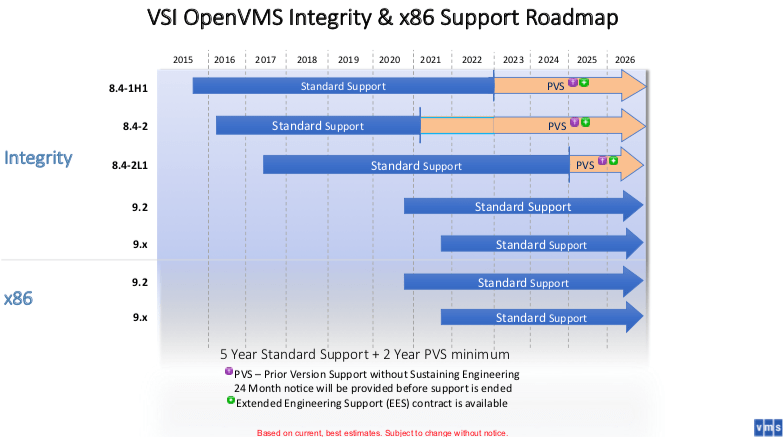
Some VMS and DCL history links

Posted by jpluimers on 2021/05/25

Last week, I wrote about a bit of my command-line and scripting history at I wanted to know the loaded DLLs in a process like Process Explorer shows, but from the console: Sysinternals ListDLLs to the rescue.

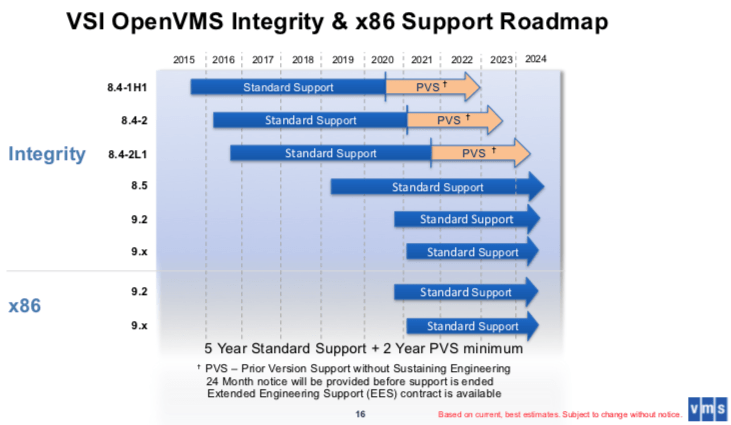
Since information about VMS and DCL is harder to find nowadays, I saved some information in the wayback machine:

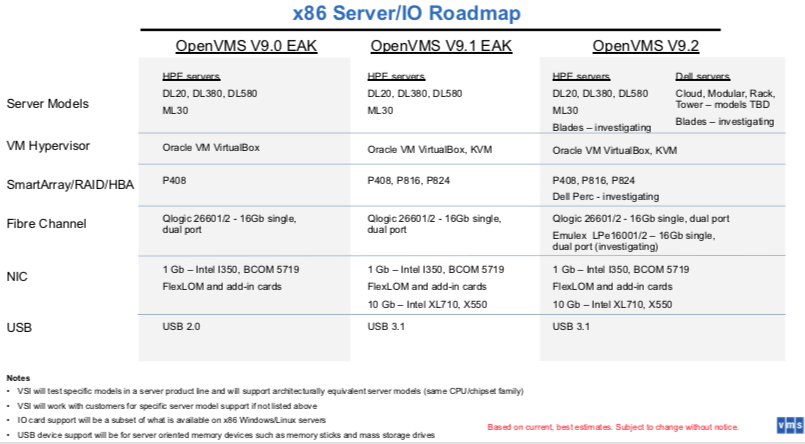
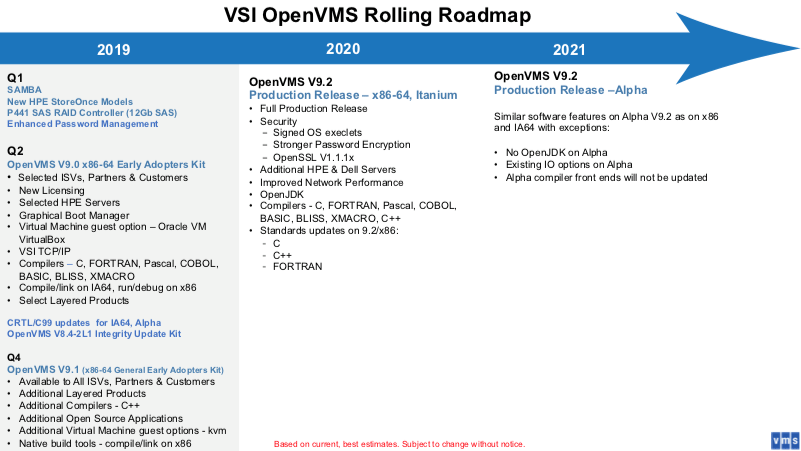
By now, there should be a good x86_64 version of OpenVMS, so this is also a reminder to self to see if that can run as a VM and is affordable enough to do some experimentation with.

–jeroen

Posted in Development, History, Scripting, Software Development | Leave a Comment »

I wanted to know the loaded DLLs in a process like Process Explorer shows, but from the console: Sysinternals ListDLLs to the rescue

Posted by jpluimers on 2021/05/20

In Windows, historically most people approach investigation GUI first. Having turned 50 a while ago, I am no exception.

My real roots however are on the command-line and scripting: roughly 1980s Apple DOS, CP/M, SunOS (yay sh Bourne shell!), MS-DOS, 4DOS, and VAX/VMS (yay DCL shell!), from the 1990s on, some Solaris, a little bit of AIX, HP-UX and quite a bit of Linux, MacOS (né OS/XMac OS),  and some BSD descendants derivatives (SunOS, AIX and MacOS are based on the Berkeley Software Distribution), and this century a more growing amount of PowerShell).

So I was glad to find out the makers of Process Explorer also made [WayBack] ListDLLs – Windows Sysinternals | Microsoft Docs (via windows get dlls loaded in process – Google Search)

List all the DLLs that are currently loaded, including where they are loaded and their version numbers.

ListDLLs is a utility that reports the DLLs loaded into processes. You can use it to list all DLLs loaded into all processes, into a specific process, or to list the processes that have a particular DLL loaded. ListDLLs can also display full version information for DLLs, including their digital signature, and can be used to scan processes for unsigned DLLs.

Usage

listdlls [-r] [-v | -u] [processname|pid]
listdlls [-r] [-v] [-d dllname]

Parameter Description
processname Dump DLLs loaded by process (partial name accepted).
pid Dump DLLs associated with the specified process id.
dllname Show only processes that have loaded the specified DLL.
-r Flag DLLs that relocated because they are not loaded at their base address.
-u Only list unsigned DLLs.
-v Show DLL version information.

Download: [WayBack] ListDlls.zip.

Now it is much easier to generate a draft deploy list of DLLs (and for Delphi: BPLs) based on a process running on a development machine.

Example output (the -r flags relocation warnings; the first part is the [WayBack] shim that Chocolatey created around the second which is from SysInternals):

Read the rest of this entry »

Posted in Conference Topics, Conferences, Delphi, Development, Event, History, Software Development, Windows Development | Leave a Comment »

Much Turbo Pascal history (via What is a Delphi DCU file? – Stack Overflow)

Posted by jpluimers on 2021/05/19

Editing [WayBack] What is a Delphi DCU file? – Stack Overflow for more historic correctness and adding links prompted me to archive some older material and search for some more, basically because while historically very relevant, link rot makes a lot of that stuff harder and harder to find.

The legendary full page colour advert published in the 12th 1983 issue of Byte Magazine on page 456 is at the bottom of this post (Many BYTE magaine issues have been archived at https://archive.org/details/byte-magazine).

The smaller version below is from WayBack: Sip from the Firehose : November 2008 marks the 25th anniversary of Turbo Pascal v1.0! (this article is not available on the Embarcadero or Idera site any more).

I also included more adverts in reverse chronological order at the end:

The last two via [WayBack] saundby.com: Software for the Ampro Little Board.

--jeroen

Read the rest of this entry »

Posted in Conference Topics, Conferences, CP/M, Delphi, Development, Event, History, MS-DOS, Pascal, Power User, Software Development, Turbo Pascal, UCSD Pascal, Z80 | Leave a Comment »

Certified Secure – XS4ALL Challenge

Posted by jpluimers on 2021/04/23

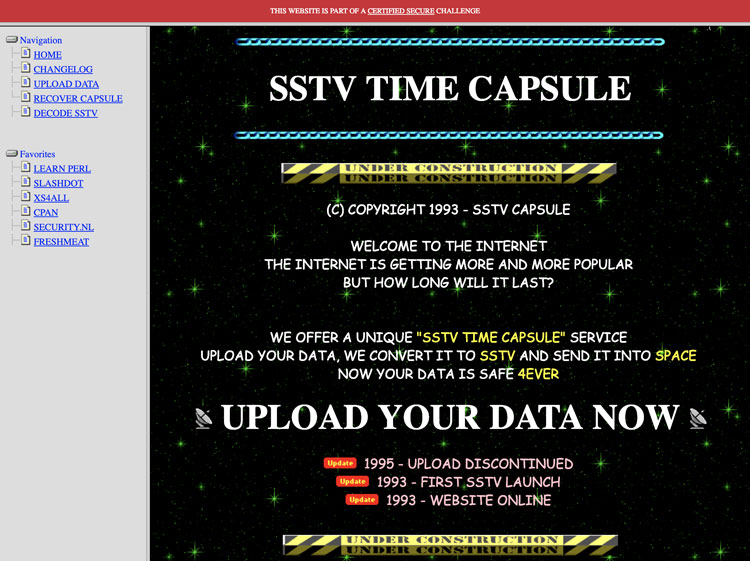
This was a cool one a few years back: [WayBack] Certified Secure – XS4ALL Challenge

–jeroen

Posted in Fun, History, Power User, Security | Leave a Comment »

The Architecture of Open Source Applications: Sendmail

Posted by jpluimers on 2021/04/12

Cool historic article: [WayBack] The Architecture of Open Source Applications: Sendmail by Eric Allman.

It is Chapter 17 of this book [WayBack]:

The Architecture of
Open Source Applications

Amy Brown and Greg Wilson (eds.)
ISBN 978-1-257-63801-7

I totally missed that book being published in 2014.

Great historic read!

–jeroen

Posted in *nix, *nix-tools, History, Power User, sendmail | Leave a Comment »

em-dosbox – Windows 3.11 on the Web

Posted by jpluimers on 2021/03/22

Cool: [Archive.is/WayBack] em-dosbox – Windows 3.11 on the Web.

Via [WayBack] JRWR – Forrest F. on Twitter: “I love this thing, http://vrcade.io/win311 Boots into Windows 3.11 with a internet connection (over a fake modem!)”

–jeroen

Read the rest of this entry »

Posted in History, Windows, Windows 3.11 | 2 Comments »

You are likely to be eaten by a grue! #NerdStitch cross stitch project- Zork 1 (Apple II version)

Posted by jpluimers on 2021/03/08

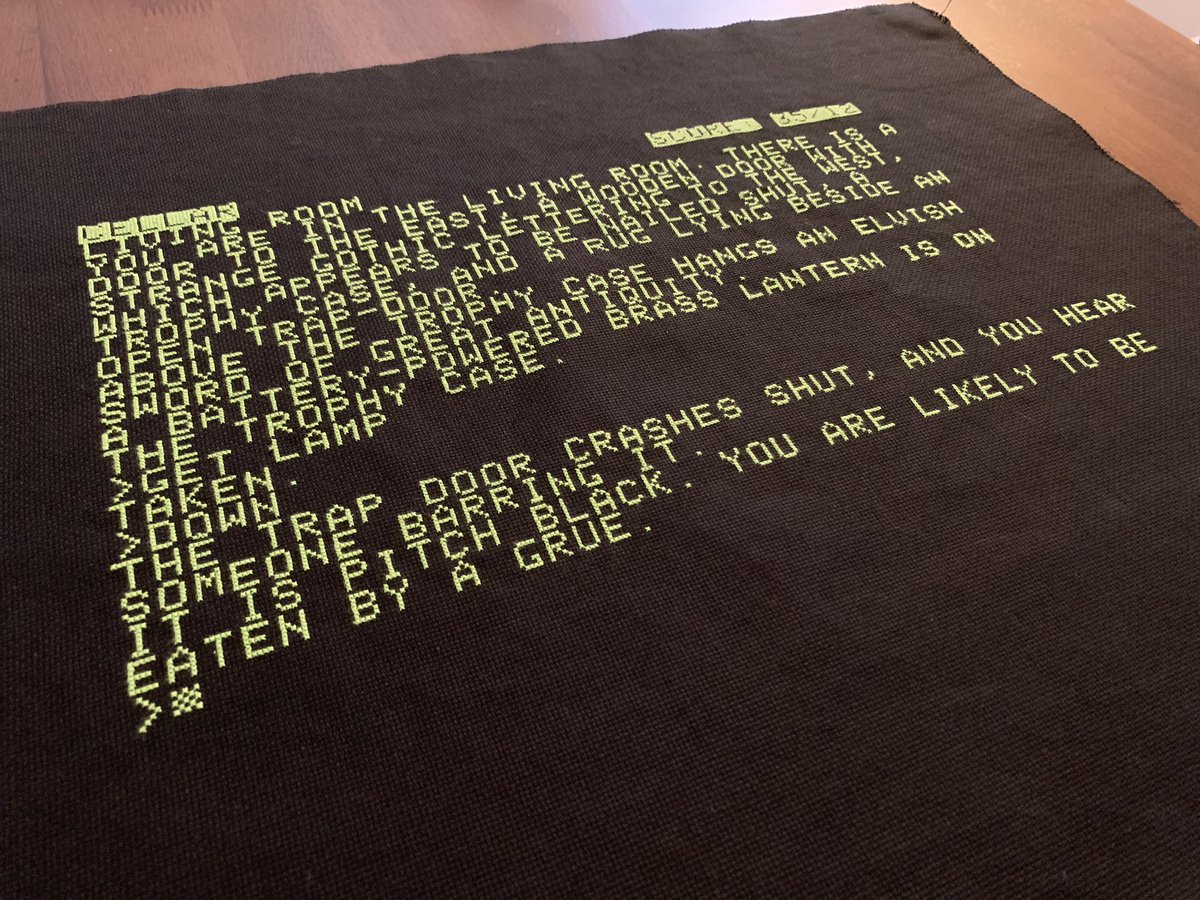
This is so cool: [WayBack] Glenda 🐰 on Twitter: “You are likely to be eaten by a grue! Just finished a new #NerdStitch cross stitch project- Zork 1 (Apple II version). The second adventure game I ever played. #zork #EatenByAGrue #apple2 #Infocom” .

That cursor!

Read the rest of this entry »

Posted in Fun, History | Leave a Comment »

Delphi XE7 introduced const support for dynamic arrays; prior versions used [] only for sets.

Posted by jpluimers on 2021/03/02

A few things to learn from [WayBack] delphi – Constant array of cardinal produces error ‘Constant expression violates subrange bounds” – Stack Overflow:

  • Delphi XE7 introduced compiler support for const dynamic arrays.
  • Compiler errors can completely put you in the wrong direction.
  • Command-line compilers indicate BDS versions which can confuse you for the exact product versions (thanks Rudy Velthuis for correcting that).

Sets

In this case, Delphi XE6 and below regard the [...] construct for constants as a set of Byte of which the maximum value is 255.

So this already fails with E1012 Constant expression violates subrange bounds, even though 257 perfectly fits the subrange of Cardinal:

const
  CardinalArray: array of Cardinal = [257];

The documentation (which has not changed since Delphi 2007) puts you in a totally different direction: [WayBack] x1012: Constant expression violates subrange bounds

x1012: Constant expression violates subrange bounds

This error message occurs when the compiler can determine that a constant is outside the legal range. This can occur for instance if you assign a constant to a variable of subrange type.

program Produce;
var
  Digit: 1..9;
begin
  Digit := 0;  (*Get message: Constant expression violates subrange bounds*)
end.
program Solve;
var
  Digit: 0..9;
begin
  Digit := 0;
end.

The alternative is to use a non-dynamic array that uses parenthesis instead of square brackets for initialisation:

const
  CardinalArray: array[0..0] of Cardinal = (257);

Dynamic arrays

Const initialisation of dynamic arrays only made a tick mark on the box in [Archive.is] What’s New in Delphi and C++Builder XE7 – RAD Studio: String-Like Operations Supported on Dynamic Arrays, but in fact this code works in Delphi XE7 and up just fine:

program Cardinals;

{$APPTYPE CONSOLE}

uses
  System.SysUtils;

const
  CardinalArray: array of Cardinal = [257]; // fails until Delphi XE6 with "E1012 Constant expression violates subrange bounds"

const
  ANSICOLORS: array of Cardinal = [
    $000000,//0
    $800000,//1, compilation error starts with this value
    $008000,//2
    $808000,//3
    $000080,//4
    $800080,//5
    $008080,//6
    $D0D0D0,//7
    $3F3F3F,//8
    $FF0000,//9
    $00FF00,//A
    $FFFF00,//B
    $0000FF,//C
    $FF00FF,//D
    $00FFFF,//E
    $FFFFFF];//F

var
  AnsiColor: Cardinal;

begin
  try
    for AnsiColor in AnsiColors do
      Writeln(Format('$%6.6x', [AnsiColor]));
  except
    on E: Exception do
      Writeln(E.ClassName, ': ', E.Message);
  end;
end.

Output:

$000000
$800000
$008000
$808000
$000080
$800080
$008080
$D0D0D0
$3F3F3F
$FF0000
$00FF00
$FFFF00
$0000FF
$FF00FF
$00FFFF
$FFFFFF

Note that dynamic arrays are unlike regular arrays, which for instance means that nesting them can get you into a different uncharted territory when using multiple dimensions.

Unlike an array, a dynamic array has notice of length. Which means it needs extra memory for it.

So where regular multi-dimensional arrays are blocks of memory. Multi-dimensional dynamic arrays are a dynamic array on each dimension level, which means extra length keeping, and the seemingly odd Copy behaviour described in [WayBack] Things that make you go ‘urgh’… | Delphi Haven:

What’s the flaw in this test code?

1
2
3
4
5
6
7
8
9
10
11
12
13
14
15
16
17
18
19
20
21
22
23
program Project1;
{$APPTYPE CONSOLE}
var
  Arr1, Arr2: array of array of Integer;
  I, J: Integer;
begin
  SetLength(Arr1, 5, 5);
  for I := 0 to 4 do
    for J := 0 to 4 do
      Arr1[I, J] := I * J;
  Arr2 := Copy(Arr1);
  for I := 0 to 4 do
    for J := 0 to 4 do
      if Arr2[I, J] <> Arr1[I, J] then
      begin
        WriteLn('Nope');
        Break;
      end;
  Write('Press ENTER to exit...');
  ReadLn;
end.

with these comments

Rudy Velthuis:

Dynarrays are single-dimensional. One can get the illusion of multi-dimensionality because the Delphi syntax lets you access them using a[5,6] syntax, and SetLength takes more than one dimension parameter, and indeed, the docs even mention multi-dimensional, but that doesn’t change anything. You don’t have a multi-dimensional dynarray, you have a dynarray than contains other dynarrays. Each of these is one-dimensional. IOW, you don’t have one array, you have a cluster of dynarrays.

Copy() handles dynarrays. These are one-dimensional, so it only does one dimension (what else?). IOW, the behaviour is correct and actually well known.

Franćois:

I’m with you Chris. I don’t think this is “well known”, maybe because mono-dimensional dynamic arrays are probably used much more than multidimensional ones.
And also, the documentation is blaringly silent on this behavior. (credit to DelphiBasics to mention it: http://www.delphibasics.co.uk/RTL.asp?Name=Array)
The more visibility it gets, the less bugs we’ll have to deal with.

IMO, I don’t see why “copy” would not behave recursively and copy each sub-array as well. It seems that it is the intuitive behavior people tend to expect in the 1st place. (either nothing at all like Arr1:=Arr2, or a full recursive copy)
But since it’s been like that for some time, I doubt it can change for compatibility reasons (breaking code relying explicitly on this behavior).

Chris:

Thanks for the support! On my reading, the help strongly implies the behaviour I was expecting, and therefore, implies the actual behaviour to be a bug. Specifically, the entry for Copy (http://docwiki.embarcadero.com/VCL/en/System.Copy) includes the line:

Note: When S is a dynamic array, you can omit the Index and Count parameters and Copy copies the entire array.

What could ‘the entire array’ mean? According to Rudy, this can’t mean more than one dimension because dynamic arrays aren’t multidimensional. And yet, the Delphi Language Guide talks of ‘multidimensional dynamic arrays’ quite clearly (http://docwiki.embarcadero.com/RADStudio/en/Structured_Types#Multidimensional_Dynamic_Arrays). See also the docs for SetLength (http://docwiki.embarcadero.com/VCL/en/System.SetLength).

–jeroen

Posted in Delphi, Development, History, Software Development, Undocumented Delphi | Leave a Comment »

Futurist 20 years ago “The Internet will not become a mass medium” – via littlewisehen on Twitter: “Also sprach der Zukunftsforscher… 😂”

Posted by jpluimers on 2021/03/02

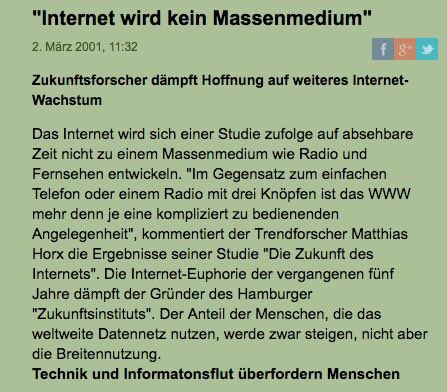
Today exactly 20 years ago, a futurist indicated “The Internet will not become a mass medium”.

Source: [WayBack] littlewisehen on Twitter: “Also sprach der Zukunftsforscher… 😂 https://t.co/taNRUxZD3S”

Via:

Thomas also made this great (German) observation:

2001 war vielfach noch Modem und ISDN angesagt, Flatrates waren gerade wieder abgeschafft worden, DSL gab es in machen Gegenden, war bei 2 Mbit aber mehr als doppelt so teuer wie heute 16 Mbit. Erinnert sich noch jemand an die unsäglichen AOL-CDs, die allen Zeitschriften beilagen?
Es gab noch keine “sozialen” Netzwerke und von mobilem Internet hat man nur geträumt. Selbst dumme Handys waren noch nicht so weit verbreitet wie heute Smartphones, und es kostete richtig Geld, eines anzurufen.

Das ist noch keine 20 Jahre her, aber ich komme mir gerade vor, als ob ich die Zeit des Schwarz-Weiß-Fernsehens beschriebe.

Google Translate actually does a halfway decent job on that (see below) which I’ve edited to this:

2001 was in many cases still the era of modem and ISDN. Flat rates had just been abolished again, there was DSL available in some areas, but at 2 Mbit was more than twice as expensive as todays 16Mbit. Does anyone remember the inexpressible AOL CDs that came with all the magazines?
There were no “social” networks and you could only dream of mobile Internet. Even dumb phones were not as widespread as smartphones are today, and it costed real money to call a mobile phone.

That was only 20 years, but it just feels as describing  black and white television.

Unedited Google Translate:

Read the rest of this entry »

Posted in History | Leave a Comment »