The Wiert Corner – irregular stream of stuff

Jeroen W. Pluimers on .NET, C#, Delphi, databases, and personal interests

  • My badges

  • Twitter Updates

  • My Flickr Stream

  • Pages

  • All categories

  • Enter your email address to subscribe to this blog and receive notifications of new posts by email.

    Join 1,854 other subscribers

Archive for the ‘History’ Category

Bye, bye ADSL…

Posted by jpluimers on 2016/12/27

As I got rid of some final hard coded IPv4 stuff, earlier this month I said good-bye to Ziggo cable internet.

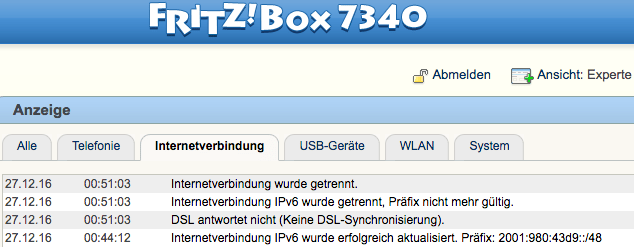
Today, the xs4all ADSL line finally got disconnected as well:

My old trusty Fritz!Box 7340 showing ADSL got disconnected for good on 20161217

My old trusty Fritz!Box 7340 showing ADSL got disconnected for good on 20161217

Which means that the years of running an xs4all DSL connection over mxStream, KPN FAST ADSL and xs4all ONLY are over. Oh the days:

Read the rest of this entry »

Posted in ADSL, fiber, History, Internet, ISP, KPN, Power User, xs4all, Ziggo/UPC/A2000 | Leave a Comment »

Apple Tesseract 1992 prototype (not Tessaract)

Posted by jpluimers on 2016/12/23

A while ago that bitsavers published a picture of an Apple 1992 Tesseract Motherboard.

It’s from the 68k to PowerPC RISC transition Apple made in the second half of the 1980s and first half of the 1990s where several groups within Apple were working on new equipment.

More details of those are here:

Note this is not [Wayback] TesSeRact from the DOS TSR (Terminate and Stay Resident) days:

Via [Wayback] Ralf Brown’s Files

Downloadable files by Ralf Brown:x86/MS-DOS Interrupt List, RBcomm, SPAWNO, AMISLIB, DV-GLUE, RBdualVGA,RBkeyswap, RBspeed, PCICFG, CMU-EBMT. (20aug10)


–jeroen

Read the rest of this entry »

Posted in 68k, History, MS-DOS, Power User, PowerPC, Tesseract, TSR Terminate and Stay Resitent | Leave a Comment »

Kmart 1974 Kmart in-store christmas (neeeee, holiday season) music

Posted by jpluimers on 2016/12/20

Wow: what a sound quality those reel to reel tapes had even at 3 3/4 inch per second!

Recorded using an Akai GX-4000D: excellent equipment which lasts forever.

The original has more background informatio. It’s at Kmart December 1974 Reel To Reel : Tape-A-Thon : Free Download & Streaming : Internet Archive

The youtube location has the full playlist. Enjoy! https://www.youtube.com/watch?v=cgnaWbPLAks

Posted in History | Leave a Comment »

Delphi history – on the FINITEFLOAT compiler option that has no one-character shortcut

Posted by jpluimers on 2016/12/14

Back in the .NET days, Delphi had an FINITEFLOAT compile option that came without a single-character shortcut.

It was about the handling of infinite float and other special float values in cases like overflow and underflow (including +Inf, -Inf and  [Wayback] NaN).

At first – in the [Wayback] Delphi 8 (Octane) era of which few people want to be reminded off – it was the [Wayback] undocumented counterpart of the [Wayback] 8087 exception mask in x86 mode. Hallvard Vassbotn wrote an article about it and Chee Wee Chua documented it before it got documented in Delphi 2009 (that coincidentally dropped .NET support in the compiler – go figure):

Whereas the native Delphi compilers had exceptions turned on, Microsoft compilers (including .NET) had them turned off, hence the compiler option.

Like most new Delphi features in this century, FINITEFLOAT didn’t come without quirks. Often these are fleshed out in 2-3 product releases, but this one wasn’t:

The FINITEFLOAT compile option didn’t have a single-character shortcut. This made it impossible to use the {$IFOPT ...} construct as IFOPT only works for single-character compiler options.

Which means you get questions like [Wayback] Why doesn’t {$ifopt FINITEFLOAT ON} compile? – Stack Overflow (I actually got into writing this article because I found a {$DEFINE FINFINITEFLOAT_ENABLED} in some pretty old code) and compiler enhancement requests like [WayBackQualityCentral – Please enhance the IFOPT directive for long switch names. It’s easier to read (which will likely never bee fixed).

For completeness some more information about exception masks in the native compiler:

  1. In the past you could only set the exception mask as part of the full control word using [Wayback] Set8087CW, nowadays you can use [Wayback] SetExceptionMask.
  2. Next to a precision mask, there are five exception masks you can set, see for instance this table from the [Wayback] Simply FPU Chap.1 Control Word section:

PM (bit 5) or Precision Mask
UM (bit 4) or Underflow Mask
OM (bit 3) or Overflow Mask
ZM (bit 2) or Zero divide Mask
DM (bit 1) or Denormalized operand Mask
IM (bit 0) or Invalid operation Mask

–jeroen

Posted in 8087, Algorithms, Delphi, Delphi 2005, Delphi 2006, Delphi 2007, Delphi 2009, Delphi 8, Development, Floating point handling, History, QC, Software Development | 1 Comment »

HDDWatches site. HDD Watch created from a Microdrive HDD. – Kristian Köhntopp – Google+

Posted by jpluimers on 2016/12/12

[WayBackKristian Köhntopp – Google+ – Ist ja bald Weihnachten pointed me to http://www.hddwatches.com/.

If I could wear watches (that’s over since I had RSI in the 1990s), I’d ask one for X-mas.

Which reminds me I still should have a few of these microdrives around.

The manufacturer is based on an Indiegogo project. Here are the links:

–jeroen

Posted in History, LifeHacker, Power User | Leave a Comment »

xyzzy, Relay Conferencing before IRC even existed

Posted by jpluimers on 2016/11/28

A while ago, I remembered xyzzy by David Bolen: a VAX/VMS program for the BITNET Relay conference system on BITNET/EARN. Yes, relay chat before IRC. Even ELIZA did operate as a chatbot on BITNET Relay.

I was part of it from the late 80s until the early 90s and vividly remember the chat rooms where at one time you could have smart people from all around the world participating: Asia, Middle East, Europe, North America and other regions.

All people had one thing in common: an enthusiastic vibe as they had immediately recognised what the benefits of near instant feedback were. World Wide before you had the WWW. It was addictive too (:

The most important Dutch relay node was HEARN which was named unlike the HNYKUN patterns at the University in Nijmegen (now Radboud Universiteit, but previously known as Katholieke Universiteit Nijmegen hence the KUN in the HNYKUN pattern).

I had an account at HLERUL52 (chemistry department) at first, then later at HLERUL5 as well (computer technology department). Only later I got an SMTP email address [Wayback/Archive] jeroenp@rulfc1.leidenuniv.nl.

Anyway: based on the list of Bitnet/Earn links and connections below, you’d think you could plot a route. The example is between me and a cyber friends who – in 1992 – I finally met in real life:

  1. Jeroen Pluimers <PCHPAPL@HLERUL52> /  <PLUIMERS@HLERUL5> ([Wayback/Archive]  and [Wayback/Archive])
  2. Peter Sawatzki <FE617@DHAFEU11> / <IN307@DHAFEU11> ([Wayback/Archive] and [Wayback/Archive])

But that table is not the only one, the actual routing tables were generated from [Wayback/Archive/Google] LINKSWT files (see below), which means that HEARN and DEARN had a direct connection collapsing the (expensive) transatlantic steps 3..5 into one.

Read the rest of this entry »

Posted in BITNET Relay, Chat, History, IRC, SocialMedia | Leave a Comment »

Audio Tape Recovery – recording old audio cassettes on modern hardware

Posted by jpluimers on 2016/11/14

I need this one day: Audio Tape Recovery – Saving the Tapes

Recording done on an IBM ThinkPad X30 using Gnome Sound Recorder, post processing on an IBM ThinkPad X200 using Audacity.

–jeroen

via Will Hill commenting on  Watch how old technology can make a comeback with trends, product quality and nostalgia. This is the last cassette factory in the world and the machines… – Jan Wildeboer – Google+

Posted in Audacity, Audio, History, LifeHacker, Media, Power User | Leave a Comment »

Kristian Köhntopp: Let’s have a chat – a taxonomy and some context (history and future; 20160606)

Posted by jpluimers on 2016/10/31

A few months ago was my first ever presence on IRC wich started like this:

[13:45]  bear with me: after BITNET relay chat, I've totally skipped the IRC thing, so
[13:46] * jeroenp_ is IRC n00b and wonders if netiquette is roughly the same as in the mid 1990s (:
[13:46]  jeroenp_: I don't think it changed a lot...
[13:46]  Cool: /me works on IRC too (:
[13:47]  Anyone having time to help me with `zypper dup` on Tumbleweed indicating `python3-urllib3-1.16-1.1.noarch requires python(abi) = 3.5` ?

I will post later on my own chat history (including BITNET Relay conference system on BITNET/EARN).

This post is just to mention a few keywords of Let’s have a chat – a taxonomy and some context(This is a text I wrote for work, but it contains nothing work specific and I might as well drop it here.… – Kristian Köhntopp – Google+

Kristian Köhntopp now basically uses his G+ as a blog (blog.koehntopp.de is now defunct) with a great set of collections.

I’ve kept my blog as I find G+ very hard to search for content and a “bla bla site:wiert.me” for me often is the fastest way to find something back that interests me.

Hence the keywords below on his post Let’s have a chat – a taxonomy and some context.

  • Chat, IRC, ICQ, Jabber, Skype, Google Hangouts, Facebook Messenger, WhatsApp, Slack and RocketChat
  • Google Wave, Apache Wave, Google Documents  and Google Spaces.
  • Managing presence in adverse circumstances: status, /away, nickname renaming
  • Deliverables
  • One identity, many clients: a common history (federation, standards, XML, SIP, extensions, incompatibilities)
  • Many-to-Many conversations: Groups versus Places (rooms, channels, discoverability)
  • Media, bots (hello Eliza) and API
  • emoji, giphy and meme references

–jeroen

Posted in Chat, Google, GoogleHangouts, History, IRC, Power User, SocialMedia | Leave a Comment »

The Oracle at Delphi: Set in my ways

Posted by jpluimers on 2016/09/28

A few pieces of Delphi compiler history:

Allen Bauer:

Most notably, the Object Pascal/Delphi compiler is written in mostly C with a smattering of C++, the editor kernel (sans display rendering) and debugger engine (process control/symbol table management) were written in C++. All of which I’ve worked on throughout my 24+ years on that team.

The 16bit compiler was written in pure assembler. The current compiler is written in C. It was derived from an Amiga 68000 Turbo Pascal compatible compiler. It’s never been written in Object Pascal.

That being said, there was an effort several years ago to completely rework/re-architect the compiler. That was done in OP. It just barely got to the “hello world” stage before it was set aside.

Source: The Oracle at Delphi: Set in my ways [WayBack]

–jeroen

Posted in Delphi, Development, History, Software Development | 1 Comment »

+Kristian Köhntopp #awesomeCosplay

Posted by jpluimers on 2016/09/09

+Kristian Köhntopp #awesomeCosplay

Trip down memory lane:

at the time of the videos release (1984/85), this was completely state of the art – I got my C64 in 1983 and an Amiga in 1986, so this is 8 bit level of tech in home computing time.

The video has been the work of Gavin Blair and Ian Pearson, canadian animators which needed the money and a test run for their animation software. What Gavin and Ian actually wanted to make is Reboot, a pretty groundbreaking early full-render animation series.

http://reboot.wikia.com/wiki/Gavin_Blair
http://reboot.wikia.com/wiki/Ian_Pearson

Fun fact: These people made https://en.wikipedia.org/wiki/Barbie_in_the_Nutcracker and many other Render-Barbie-Movies.

–jeroen

Posted in Fun, History | Leave a Comment »