The Wiert Corner – irregular stream of stuff

Jeroen W. Pluimers on .NET, C#, Delphi, databases, and personal interests

  • My badges

  • Twitter Updates

  • My Flickr Stream

  • Pages

  • All categories

  • Enter your email address to subscribe to this blog and receive notifications of new posts by email.

    Join 1,861 other subscribers

Archive for the ‘Hardware Development’ Category

Some KlikAanKlikUit links – it runs at 433 Mhz is insecure, but for lights should work fine

Posted by jpluimers on 2018/01/09

Since I’ve an old TPC-200 lying around…

–jeroen

Posted in Development, Hardware Development | Leave a Comment »

Some links on multicast networking, Raspberry Pi and DVB USB adapters that help you build a TV server

Posted by jpluimers on 2017/12/26

A cool set of YouTube videos by CWNE88:

The USB device used here is this one:

Tuner is AVerMedia AVerTV Volar Green
There are 2 models, but the good one uses firmware dvb-usb-it9135-02.fw The other one uses dvb-usb-af9035-02.fw but that didn’t seem to work as well and got hot. They look the same on the outside though.
ID 07ca:3835 AVerMedia Technologies, Inc. AVerTV Volar Green HD (A835B)

–jeroen

Posted in Development, Hardware Development, Power User, Raspberry Pi | Leave a Comment »

OpenBSD on PC Engines APU2 | Hacker News

Posted by jpluimers on 2017/11/21

Via [WayBackOpenBSD on PC Engines APU2 | Hacker News and [WayBackIlya S – Google+ commenting at [WayBack] I am thinking about moving to BSD as my main OS – Joe C. Hecht – Google+:

Just in case I want to build my own router on PC Engines APU2 hardware: installation instructions at [Wayback/Archive] elad/openbsd-apu2: OpenBSD on the APU2

–jeroen

Posted in APU, Development, Hardware, Hardware Development, Internet, Network-and-equipment, Power User, routers | Leave a Comment »

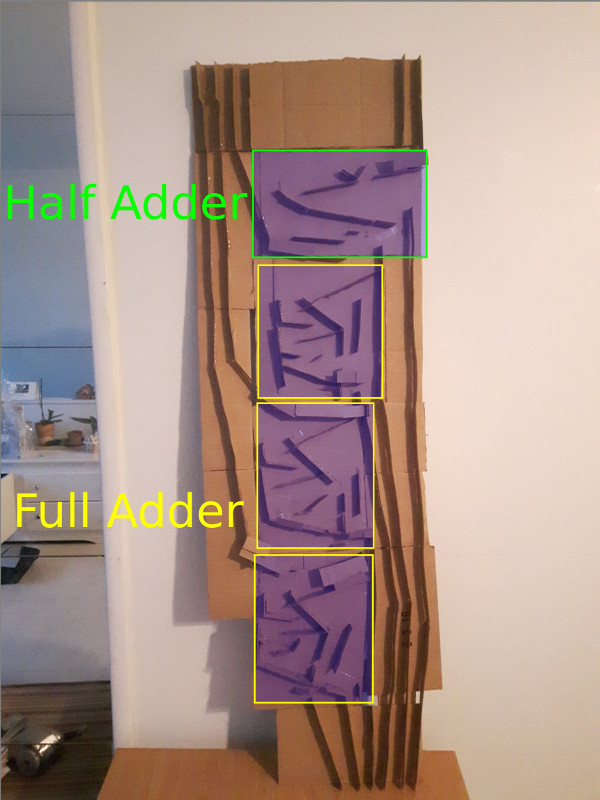
A 4-bit Calculator made in cardboard and marble

Posted by jpluimers on 2017/11/14

Cool device: [WayBackA 4-bit Calculator made in cardboard and marble

I really love this. Not just that it exists, but how it was made and how it’s explained.

Definitely worth reading.

via: [WayBack] Funny modern abacus https://lapinozz.github.io/learning/2016/11/19/calculator-with-caordboard-and-marbles.html – David Berneda – Google+

–jeroen

Posted in Algorithms, Development, Hardware Development, Software Development | Leave a Comment »

MX Backup – Postfix Email Server | samhobbs.co.uk

Posted by jpluimers on 2017/11/09

Interesting as it has steps for both OpenSuSE and Debian each well suited for running on a Raspberry Pi.

[WayBackMX Backup – Postfix Email Server | samhobbs.co.uk

It seems postfix is a lot easier to configure than sendmail so I already like it.

First I need to read a bit more in Postfix greylisting.

I’ll need to catch up on Sam’s other parts with the postfix tag as well:

–jeroen

Posted in *nix, *nix-tools, Debian, Development, Hardware Development, Linux, openSuSE, Power User, Raspberry Pi, Raspbian, sendmail, SuSE Linux, Tumbleweed | Leave a Comment »

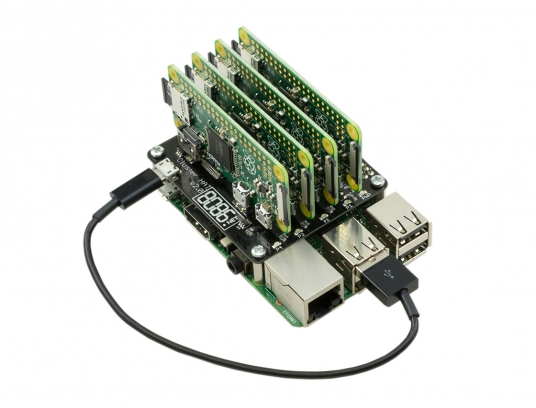
ModMyPi | Cluster HAT Kit Inc. 4 x Raspberry Pi Zero

Posted by jpluimers on 2017/10/30

Interesting stuff; I wonder if there is a case for it as well:

The Cluster HAT interfaces a (Controller) Raspberry Pi A+/B+/2/3 with 4 Raspberry Pi Zeros Configured to use USB Gadget mode, it is an ideal tool for teaching, testing or simulating small scale clusters.

This Kit Includes 1 x Cluster HAT V2, 4 x Raspberry Pi Zero’s, 4 x 16GB Micro SD Cards.

Please Note. A Raspberry Pi B+/2/3, with SD Card & Power Supply are also required for set up. These items are NOT Included in the Kit but can be purchased separately.

Source: [WayBackModMyPi | Cluster HAT Kit Inc. 4 x Raspberry Pi Zero

Via Matthijs ter Woord.

–jeroen

Posted in Development, Hardware Development, Hardware Interfacing, Raspberry Pi | 2 Comments »

UPS PIco HV3.0 documentation not on github: “03_0x38_W_UPS PIco HV3.0.pdf”

Posted by jpluimers on 2017/10/17

I ordered a UPS PIco HV3.0 A Stack 450 Plus and it arrived without any documentation on how to solder the parts together.

So I tried searching for them: https://www.google.com/search?q=UPS+PIco+HV3.0+A+Stack+450+Plus+installation+instructions which turned mostly github based URLs.

I learned there is a bit on github:

But despite code and documentation being there, no installation instructions on how to solder the stuff together.

Luckily, they responded quickly to my tweet So I got my “UPS PIco HV3.0 A Stack 450 Plus” @ModMyPi but no assembly instructions. Where do all the non-soldered parts go when using RPi3? and a quick respons thread revealing I needed 03_0x38_W_UPS PIco HV3.0.pdf which – TADAAAA – is on Google drive and on the forums at [WayBackUPS PIco Firmware Update & Troubleshooting : Technical Support

So despite github providing an excellent platform for discussion and storing documentation, something archaic like a forum is used to store data in a disorganised way.

Too bad, as the document itself is 100+ page of invaluable documentation.

So in case of future bit-rot, here are the links:

Read the rest of this entry »

Posted in Development, Hardware Development, Hardware Interfacing, Raspberry Pi | Leave a Comment »

The cloud has no walls: cache-based jamming agreement to communicate over the CPU cache even without rights

Posted by jpluimers on 2017/10/12

Oh boy: [WayBack] Alles kaputt: In der Cloud gibt es keine Wände.  – Kristian Köhntopp – Google+:

Two Amazon EC2 instances communicating over the CPU cache without the need of a network in-between them.

Open sourced foundations: IAIK/CJAG: CJAG is an open-source implementation of our cache-based jamming agreement.

In our BlackHat Asia 2017 Talk we show that the cache covert channel we built is so fast and reliable that we can do much more than tunneling SSH over it: We show that we can even stream a music video in decent quality through the cache – on the Amazon EC2 cloud.

See the BlackHat Asia Briefings Information here: https://www.blackhat.com/asia-17/brie…

See a video of the Live Demo here: https://www.youtube.com/watch?v=yPZmi…

Find our NDSS 2017 paper here: https://gruss.cc/files/hello.pdf

–jeroen

Read the rest of this entry »

Posted in Development, Hardware Development, Security, Software Development | Leave a Comment »

Raspberry Pi brexit – changing your locale away from GB when you’ve a different keyboard

Posted by jpluimers on 2017/10/02

A while ago I wrote about -bash: warning: setlocale: LC_ALL: cannot change locale (en_US.UTF-8) on fresh Raspbian on Raspberry

I thought my locale issues were solved and they sort of were. Until I had to logon locally and managed to get one or more of these characters in my password:

  • ~ (tilde)
  • @ (at)
  • # (hash)
  • \ (backslash)
  • | (pipe)
  • " (double-quote)

Then logon would fail locally but work via ssh. Go figure!

Lot’s of people outside the UK using their Raspberry Pi with keyboard and monitor will now say: you’ve the default GB keyboard layout and your keyboard is not GB.

Bingo!

This is how US keys look when using a GB keyboard layout:

Read the rest of this entry »

Posted in *nix, Debian, Development, Hardware Development, Linux, Power User, Raspberry Pi, Raspbian | Leave a Comment »

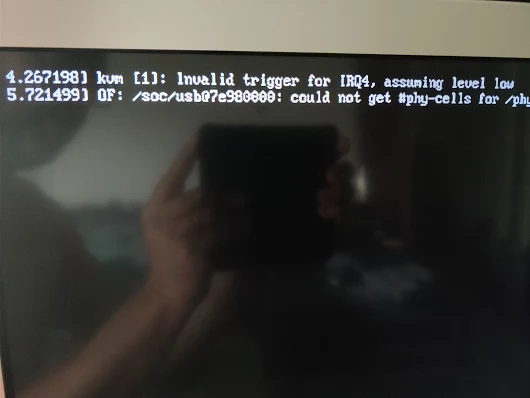
Oops: OF: /soc/usb at 7e980000: could not get #phy-cells for /phy

Posted by jpluimers on 2017/09/28


kvm [1]: Invalid trigger for IRQ4, assuming level low
OF: /soc/usb at 7e980000: could not get #phy-cells for /phy

Via [WayBack] Oops. – Jeroen Wiert Pluimers – Google+

This was after updating my Raspberry Pi 3 with Tumbleweed to 20170920.

Not sure what do do now. Some searches didn’t reveal much:

–jeroen

Posted in *nix, Development, Hardware Development, Linux, openSuSE, Power User, Raspberry Pi, SuSE Linux, Tumbleweed | Leave a Comment »