


Memories of a great movie scene with The Black Knight and King Arthur: for USD 5 you can get the template files for the [Wayback/Archive] 3D Printable Black Knight from Monty Python – Highlands Miniatures by Highlands Miniatures.
Archive for the ‘3D printing’ Category
‘Tis but a scratch, just a flesh wound: 3D Printable Black Knight from Monty Python – Highlands Miniatures by Highlands Miniatures
Posted by jpluimers on 2024/08/19

Posted in 3D printing, Fun, History, Power User, Quotes | Leave a Comment »
Dutch hackerspaces and FabLabs
Posted by jpluimers on 2024/08/15
Before visiting Bitlair 2 years ago, I didn’t know there were so many hackspaces and FabLabs in The Netherlands.
There are (:
Starting points:
- [Wayback/Archive] Nederlandse hackerspaces en -organisaties even shows which are open at the moment of viewing.

- [Wayback/Archive] Home – FabLab BeNeLux

- [Wayback/Archive] Dave Borghuis on Twitter: “@jpluimers @BadgeteamNL @bitlair @MCH2022Camp @NLHackers Or check
mapall.spacewith all hackerspaces and fablabs around the world. It even includes heatmaps of the spaces that use the @space_api (disclamer I made this site).”

This is the hackerspace closest to my home: [Wayback/Archive] Technologia Incognita. At Louwesweg 1, 1066 EA Amsterdam, it is about 15 minutes bicycling distance (more information on in their wiki at [Wayback/Archive] ACTA – Technologia Incognita; onofficially on Twitter at [Wayback/Archive] Techlnc ☸ (@Techlnc) / Twitter).
Related tweets:
- [Wayback/Archive] Jeroen Wiert Pluimers on Twitter: “Helping the @BadgeteamNL at @bitlair with their @MCH2022Camp flash sweatshop I discovered there is
hackerspaces.nl(@NLHackers) which even has an API. Cool! “

- [Wayback/Archive] Jeroen Wiert Pluimers on Twitter: “@BadgeteamNL @bitlair @MCH2022Camp @NLHackers Via their site, I found out about
fablab.nl(no Twitter) which also has a map, however since there are so many more #FabLab in the #BeNeLux: no marking which are open/closed.”
–jeroen
Share this:

Posted in 3D printing, Development, Hardware Development, Power User | Leave a Comment »
Inline drying of 3D printer fillament?
Posted by jpluimers on 2024/08/09
A promising video:
[Wayback/Archive] Why are we drying filament this way? – YouTube
The trick is blowing warm air over the fillament strand while it is pulled through some tin cans.
This also works for drying used (and therefore wettened) silica gel beads on a 3D printer heat bed.
--jeroen
Share this:
Posted in 3D printing, Power User | Leave a Comment »
Downloads: North Pi 3D Files — Fractal Design
Posted by jpluimers on 2024/08/07
Since a few weeks, you can now download the [Wayback/Archive] North Pi 3D Files — Fractal Design

The concept North Pi created for Computex 2024 is now available to download as 3D-print files
- [Wayback] 3D Print Files
- [Wayback/Archive] Instrunctions [Wayback PDF View/PDF View]
Required hardware
- 3D Printer or access to 3D printing service.
- Screws:
- 13 x M2.5 threaded inserts, outer diameter 3.5 mm (other diameter will require altering the holes for the inserts) + tools for inserting them.
- 9 x M2.5×4 (-6) for case assembly.
- 4 x M2.5×4 (-6) or stand-offs for motherboard assembly.
- Screwdriver.
- Glue.
Optional hardware
- File or sanding paper for cleaning up print.
- Wood strips (for authentic look) and shaping tools for those
- 2 x 40 mm fans (max 10 mm thick). Check the documentation of your specific SBC on what voltage to use.
- Paint and paintbrush/airbrush.
This was after a few other people recreated Pi cased in the style of the North Pi:
Share this:

Posted in 3D printing, Development, Hardware Development, Power User, Raspberry Pi | Leave a Comment »
Injection Travel Kit by frozenfoxx | Download free STL model | Printables.com
Posted by jpluimers on 2024/07/23
 This is kewl: [Wayback/Archive] Injection Travel Kit by frozenfoxx | Download free STL model | Printables.com
Travel case for an injection kit. Includes spaces for draw and injection needles, syringes, vial, wipes, and bandages
Not just because they are injection kits, but because they form a base for other travel cases like one mentioned in the [Wayback/Archive] Comments: Injection Travel Kit by frozenfoxx | Download free STL model | Printables.com
Would it be possible to make this with a space for a horizontal storage for a similar sized via, and a 1-2mL ampule storage? The space could even be taken from one of the needle spaces, maybe.
Share this:

Posted in 3D printing, Power User | Leave a Comment »
Glue 3D printed parts – Chris Bensen on Twitter: “@geerlingguy It depends. I often times use hot glue. Super glue is great. Epoxy is better. Jbweld is even better. You can even heat the two parts and melt them together. Bolts also work. Rubber band. Velcro’s strap.”
Posted by jpluimers on 2023/11/24
Various way to keep 3D printed parts together: [Wayback/Archive] Chris Bensen on Twitter: “@geerlingguy It depends. I often times use hot glue. Super glue is great. Epoxy is better. Jbweld is even better. You can even heat the two parts and melt them together. Bolts also work. Rubber band. Velcro’s strap.” / Twitter
–jeroen
Share this:
Posted in 3D printing, LifeHacker, Power User | Leave a Comment »
Eff-Uno Racer v1 by chrisbensen – Thingiverse: Open Wheel Race Car from LEGO© and 3D printed bricks, with RC motors controlled by a Raspberry Pi and Arduino
Posted by jpluimers on 2022/08/17
This is so cool!
[Wayback/Archive.is] Eff-Uno Racer v1 by chrisbensen – Thingiverse
Welcome to the home for the things to print for the Eff-Uno Racer project ([Wayback/Archive.is] github.com/oracle-devrel/eff-uno-racer). Eff-Uno Racer is a LEGO© Open Wheel Race Car that you can build and remotely control. Most of it is made with LEGO© bricks but the motors are regular RC motors controlled by a Raspberry Pi and Arduino. Below are the extra parts needed.
The videos are via these three tweets:
- [Archive.is] Chris Bensen on Twitter: “In case you missed Episode 5 of the Lego inspired Red Bull inspired Formula 1 race car powered by a raspberry Pi with 3D printed custom Lego bricks. What doesn’t this project have?… “
- [Archive.is] Oracle Groundbreakers on Twitter: “Episode 5 — 3D Printed RC Servo Motor Adapters. Building a hand made cloud race car piece by piece, by DevRebel Chris Benson. Try it! All episodes here: … @chrisbensen @oracledevs #makers #developers “
- [Archive.is] Oracle Groundbreakers on Twitter: “Episode 5 — 3D Printed RC Servo Motor Adapters. Building a hand made cloud race car piece by piece, by DevRebel Chris Benson. Try it! All episodes here: … @chrisbensen @oracledevs #makers #developers …”
List is at: [Wayback/Archive.is] Cool DevRebel Projects – YouTube
Videos when writing (by now there should be more):
- [Wayback/Archive.is] Cloud Car Episode 1 — Custom Breadboard for Pi Zero – YouTube
- [Wayback/Archive.is] Cloud Car Episode 2 — Pi Controlled Motors – YouTube
- [Wayback/Archive.is] Cloud Car Episode 3 — Shoving a Pi & RC Motor into a Toy Car – YouTube
- [Wayback/Archive.is] Episode 4: Shoving a Motor and Speed Controller into a Toy Car – YouTube
- [Wayback/Archive.is] Episode 5 — Next Stage: 3D Printed RC Servo Motor Adapters – YouTube
Via [Archive.is] Chris Bensen on Twitter: “If you want to build your own open source cloud connected toy race car follow this thing”

–jeroen
Share this:

Posted in 3D printing, Arduino, Development, Hardware Development, LifeHacker, Power User, Raspberry Pi | Leave a Comment »
PLA use outdoors? – 3D Printing Stack Exchange
Posted by jpluimers on 2021/07/05
[WayBack] PLA use outdoors? – 3D Printing Stack Exchange:
TL;DR: though bio-degradable, PLA needs high temperatures (> 50 Celsius) to degrade.
So in European summers, for light weight enclosures (like weather stations or signage), it should be fine.
- [WayBack] Using PLA for Long-Term Outdoor Applications – IEPAS
To biodegrade within 90 days, as described, the products have to reach 140 F for 10 consecutive days. This requires a special facility, which few consumers have access to. If your PLA products end up at the landfill, they will not degrade any faster than a petroleum-based product.
- [WayBack] Polylactic acid: Degradation – Wikipedia
Abiotic PLA degradation is due to 3 mechanisms:[35]
- Hydrolysis: The ester groups of the main chain are cleaved, dividing the molecule in two parts, thus reducing molecular weight.
- Thermal degradation: A complex phenomenon leading to the appearance of different compounds such as lighter molecules and linear and cyclic oligomers with different Mw, and lactide.
- Photodegradation: Sunlight induces degradation due to low-wavelength and high-energy UV radiation. This is a factor mainly where PLA is exposed to sunlight in its applications in plasticulture, packaging containers and films.
The hydrolytic reaction is:
{\displaystyle {\ce {-COO + H2O -> – COOH + -OH-}}}
The degradation rate is very slow in ambient temperatures. A 2017 study found that at 25 °C in seawater, PLA showed no degradation over a year.[36]
Pure PLA foams undergo selective hydrolysis when placed in an environment of Dulbecco’s modified Eagle’s medium (DMEM) supplemented with fetal bovine serum (FBS) (a solution mimicking body fluid). After 30 days of submersion in DMEM+FBS, a PLLA scaffold lost about 20% of its weight.[37]
PLA samples of varying molecular weight were degraded into methyl lactate (a green solvent) by using a metal complex catalyst.[38]
Some bacteria can also degrade PLA, such as Amycolatopsis and Saccharothrix. A purified protease from Amycolatopsis sp., PLA depolymerase, can also degrade PLA. Enzymes such as pronase and most effectively proteinase K from Tritirachium album degrade PLA.[39]
Degradation is the reverse of the synthesis process in this Wikipedia picture:


For other materials and in-car usage, read:
- [WayBack] material – 3d printing for outdoor use: what types of filament are most weather resistant? – 3D Printing Stack Exchange
- [WayBack] filament choice – Can you put PLA parts in your car (in the sun)? – 3D Printing Stack Exchange
generally, materials should not be exposed prolonged periods of time above (give or take):
- 70 °C (158 °F) for basic Co-Polymers
- 85 °C (185 °F) for ABS
- 100 °C (212 °F) for enhanced Co-Polymers
- 105 °C (221 °F) for Polypropylene (PP)
- 110 °C (230 °F) for Polycarbonate (PC)
…
If you put PLA parts in a sealed plastic bag (or two to keep it dry) and simmer in water (212 °F or 100 °C), the part “anneals”. The time taken varies with the part shape, but for small parts should be about 15-30 minutes. You can simmer longer if unsure, but it provides no additional benefit once the part is annealed. When you remove and cool the annealed part, it will feel harder and more compact. You may also notice a slight hazing or color change.
Annealed parts become a bit more resistant to heat warp. The annealing process shrinks and hardens your part (I’ve annealed gears) so you need to account for the shrinkage by making the unannealed part slightly larger.
–jeroen
Share this:
Posted in 3D printing, Power User | Leave a Comment »
Threaded Inserts in 3D Prints – How strong are they? – YouTube
Posted by jpluimers on 2021/03/17
They are much stronger than plastic threads, no matter how you create the plastic threads.
To make them even stronger, add shell thickness to the thread locations, either globally or by using modifier meshes. Modifier meshes work way better in Cura than in Slic3r.
–jeroen
Share this:
Posted in 3D printing, Development, Hardware Development | Leave a Comment »
How-to Make Your Own 3D Printing Goo
Posted by jpluimers on 2020/08/07
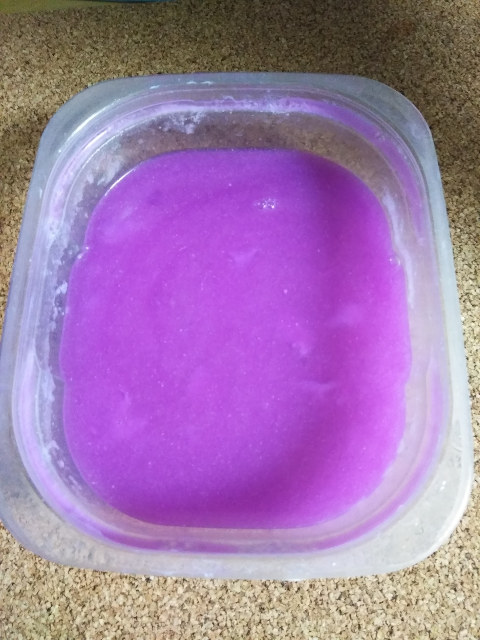 Smart idea: [WayBack] How-to Make Your Own 3D Printing Goo.
It is a large (22g) Elmer’s glue stick dissolved into a cup of warm water.
After applying it with a paper towel, the 3D print sticks to the warm printing bed well, but comes off easily from a cold printing bed.
It is quite easy to make. 1 cup water and 1 large 22g Elmers glue stick. I put both in water and let sit thinking it would dissolve on its own. After several hours I got impatient and put it in the microwave and heated it.(45 seconds I think). That did the trick and was only left with a few big clumps that I broke apart with my fingers to finish the dissolving.
To apply I just dip a paper towel in the solution and wipe on the bed. It leaves an extremely light layer of glue on the bed that PLA sticks very well to. When the bed cools the parts have very light adhesion to the bed. If the bed is hot it takes some force to get off.
[WayBack] Elmer’s School Glue Naturals® 1 pack 22g Glue Stick | All Natural Glue
Via: [WayBack] Recipe to make goo for 3D printer bed. – Jean-Luc Aufranc – Google+
–jeroen
Share this:

Posted in 3D printing, Power User | Leave a Comment »
 The Wiert Corner - irregular stream of stuff