The Wiert Corner – irregular stream of stuff

Jeroen W. Pluimers on .NET, C#, Delphi, databases, and personal interests

  • My badges

  • Twitter Updates

  • Pages

  • All categories

  • Enter your email address to subscribe to this blog and receive notifications of new posts by email.

    Join 1,854 other subscribers

Windows – chance display/screen/monitor resolution from the console

Posted by jpluimers on 2020/01/24

Links:

TODO: find out the differences in both qres tools.

–jeroen

Posted in Power User, Windows | Leave a Comment »

Richard P Feynman – FUN TO IMAGINE (full)

Posted by jpluimers on 2020/01/24

On my watch list: Richard P Feynman – FUN TO IMAGINE (full) – YouTube

The first 5 minutes are already so great and full of imagination, that I need to find time to watch it once more after already watching it 2 times in full with some time in-between to reflect.

Via: [WayBack] Richard P Feynman – FUN TO IMAGINE (full) – DoorToDoorGeek “Stephen McLaughlin” – Google+

–jeroen

Read the rest of this entry »

Posted in LifeHacker, Power User, science | Leave a Comment »

Viewing certbot installed certificates and their expiry dates

Posted by jpluimers on 2020/01/24

A simple tip on the certbot command-line from [WayBackUser Guide — Certbot 0.19.0.dev0 documentation – Managing certificates (Automatically enable HTTPS on your website with EFF’s Certbot, deploying Let’s Encrypt certificates.):

To view a list of the certificates Certbot knows about, run the certificates subcommand:

certbot certificates

This returns information in the following format:

Found the following certs:
  Certificate Name: example.com
    Domains: example.com, www.example.com
    Expiry Date: 2017-02-19 19:53:00+00:00 (VALID: 30 days)
    Certificate Path: /etc/letsencrypt/live/example.com/fullchain.pem
    Private Key Path: /etc/letsencrypt/live/example.com/privkey.pem

Via: [WayBack] It there a command to show how many days certificate you have? – Server – Let’s Encrypt Community Support

–jeroen

Posted in Encryption, Let's Encrypt (letsencrypt/certbot), Power User, Security | Leave a Comment »

If your tool depends on others, at least search for them…

Posted by jpluimers on 2020/01/23

If you auto-configure, then at least try searching the tools you need:

[WayBack] Yeah right Delphi 10.2 Tokyo (for which the shortcut – unlike the Berlin one – does not contain the word Tokyo), they are right on the Windows PATH wher… – Jeroen Wiert Pluimers – Google+

–jeroen

Posted in Delphi, Development, Software Development | Leave a Comment »

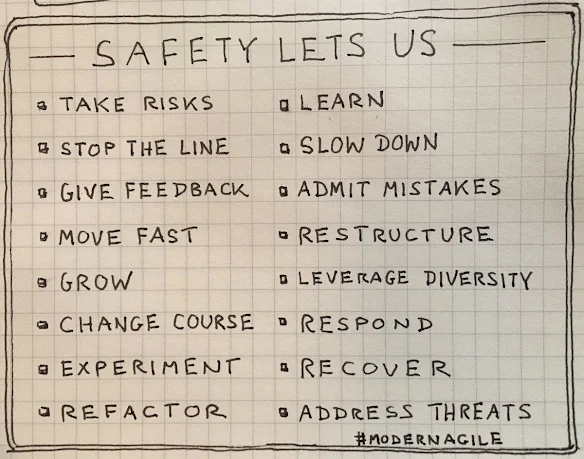
Of Course Psychological Safety…But How? – John Cutler – Medium

Posted by jpluimers on 2020/01/23

On my reading list: [WayBackOf Course Psychological Safety…But How? – John Cutler – Medium

Medium indicates it is an 8 minute tread, but since I’m more on the non-people side of the spectrum, digesting it will take quite some time needing multiple reeds.

Via: [WayBack] Of Course Psychological Safety…But How? – John Cutler – Medium – Marjan Venema – Google+

Marjan is a great coach on the personal and agility side of things.

–jeroen

Posted in Agile, Development, LifeHacker, Power User | Leave a Comment »

Delphi developer switching to C# – Stack Overflow

Posted by jpluimers on 2020/01/23

Another blast from the past. I’ve been using many development environment all my live, so I have been using .NET very early on allowing me to make a good comparison: [WayBackDelphi developer switching to C# – Stack Overflow.

I have a broad toolbox because we’ve never lived in a “silver bullet” era: any problem needs a combination of tools to solve them. Having a broad toolset allows you to pick and choose more easily. Mastering the different tools however requires a lot of effort and time. You really need to love this profession to put that energy in it.

I heavily use both for software development.

Development speed of server apps (web apps, web services, windows services) is much higher in .NET.

Development speed of business apps (pure Windows UI) is much higher in Delphi.

Development of sexy apps is a pain in both environments.

A few things you should know:

  • Learning the .NET framework will take a lot of time: it is huge, but contains a lot of gizmos (some gems are really well hidden).
  • Don’t lose yourself in following all new trends at once: generics, lambda, LINQ, each are nice, but grasping them all at once is only for a few of us
  • For web apps, skip WebForms, but learn ASP.NET MVVC (yes, the Ruby guys were right after all); learn HTML 5 and JavaScript too.
  • For sexy Windows apps, learn WPF, but be prepared for a steep learning curve (designer, and framework are radically different)
  • Don’t get a too sexy UI: it costs you a disproportional amount of time while your users are waiting for functionality
  • Like the market has been bashing Delphi since version 1, the market is bashing SilverLight too
  • Skip WinForms; if you need something like WinForms, then Delphi is way more productive (even more so if you have an existing Delphi VCL codebase).
  • WPF is just as thread-friendly as the VCL or WinForms (read: neither of the 3 is thread friendly)
  • Don’t perform rewrites of your Delphi stuff in .NET (or for that matter any other 1:1 rewrite from platform A into platform B): it is a waste of your time.
  • Threading and synchronization are a pain in all development environments. The pain is not so much in the general stuff (the Concurrent Collections in the .NET 4 framework helps, as do the Delphi OmniThreadLibrary), but in getting the final details and exception cases right is the real pain.
  • Garbage collection does not mean that you won’t leak memory: it means that you won’t leak when your app terminates, but while it runs the leaks are way harder to detect (boy, I wish I had the FastMM memory monitor for .NET)

–jeroen

Posted in .NET, C#, Delphi, Development, Software Development | 3 Comments »

Delphi / Visual Studio build events: xcopy exit code 9009; ensure your PATH indeed includes the Windows directories

Posted by jpluimers on 2020/01/22

If you ever get an exit code 9009 from xcopy like the one below, then try using the full path to xcopy. It should be there, it should not matter, but it does if someone changed your path.

[Exec Error] The command " xcopy ....\Shared\DLL\FastMM\FastMM_FullDebugMode.dll .\Win32\Debug\ /y&& xcopy ....\Shared\DLL\OpenSSL\libeay32.dll .\Win32\Debug\ /y&& xcopy ....\Shared\DLL\OpenSSL\ssleay32.dll .\Win32\Debug\ /y&& xcopy ....\Shared\DLL\gRPC\nghttp2.dll .\Win32\Debug\ /y&& xcopy ....\Shared\DLL\gRPC\sgcWebSockets.dll .\Win32\Debug\ /y" exited with code 9009.

Preliminary solution: replace xcopy    with C:\Windows\System32\xcopy.exe .

Final solution: look with Process Explorer and Process Monitor what the exact environment PATH is. It should include C:\WINDOWS\system32;C:\WINDOWS;C:\WINDOWS\System32\Wbem;

If it does not, then find out what is changing your path.

Related:

–jeroen

Posted in .NET, Delphi, Development, Software Development | Leave a Comment »

Bloemencorso Bollenstreek vanwege warme winters voortaan een week eerder | NOS

Posted by jpluimers on 2020/01/22

Dit jaar is het corso als vanouds op 25 april. Volgend jaar rijden de praalwagens op 17 april. Afgesproken is wel dat het evenement nooit tijdens Pasen zal worden georganiseerd.

[WayBack] Bloemencorso Bollenstreek vanwege warme winters voortaan een week eerder | NOS

Interferentie met mijn verjaardag (29 april!) gaat dus nooit meer gebeuren (:

–jeroen

Posted in About, Adest Musica, LifeHacker, Personal, Power User | Leave a Comment »

CSS Animation How To Tutorial – Dev Tuts

Posted by jpluimers on 2020/01/22

So as the author of CSS3 Animate It I have a good background in CSS animation. Before CSS3 was released you would have to resort to using JS for animation…

Even after CSS3 got introduced, I’m still not sure I’d use animation: [WayBack] CSS Animation How To Tutorial – Dev Tuts

Via:

–jeroen

Posted in CSS, Development, Software Development, Web Development | Leave a Comment »

The intrinsic factory pattern that every Delphi programmer uses

Posted by jpluimers on 2020/01/22

A blast from the past: my 2009 answer to [WayBackWhat Design Patterns do you implement in common Delphi programming? – Stack Overflow which is still very much relevant today.

TL;DR

Every Delphi programmer uses the factory pattern as it is an intrinsic part of how components at design time work.

So he were go:

Only a minority of the Delphi developers knows that every Delphi developer uses a Factory pattern (delphi.about.com has an example in “regular” Delphi), but then implemented using virtual Create constructors.

So: time to shed some light on that :-)

Virtual constructors are to classes like virtual methods are like object instances.

The whole idea of the factory pattern is that you decouple the logic that determines what kind (in this case “class”) of thing (in this case “object instance”) to create from the actual creation.

It works like this using virtual Create constructors:

TComponent has a virtual Create constructor so, which can be overridden by any descending class:

type
  TComponent = class(TPersistent, ...)
    constructor Create(AOwner: TComponent); virtual;
    ...
  end;

For instance the TDirectoryListBox.Create constructor overrides it:

type
  TDirectoryListBox = class(...)
    constructor Create(AOwner: TComponent); override;
    ...
  end;

You can store a class reference (the class analogy to an object instance reference) in a variable of type ‘class type’. For component classes, there is a predefined type TComponentClass in the Classes unit:

type
  TComponentClass = class of TComponent;

When you have a variable (or parameter) of type TComponentClass, you can do polymorphic construction, which is very very similar to the factory pattern:

var
  ClassToCreate: TComponentClass;

...

procedure SomeMethodInSomeUnit;
begin
  ClassToCreate := TButton;
end;

...

procedure AnotherMethodInAnotherUnit;
var
  CreatedComponent: TComponent;
begin
  CreatedComponent := ClassToCreate.Create(Application);
  ...
end;

The Delphi RTL uses this for instance here:

Result := TComponentClass(FindClass(ReadStr)).Create(nil);

and here:

// create another instance of this kind of grid
SubGrid := TCustomDBGrid(TComponentClass(Self.ClassType).Create(Self));

The first use in the Delphi RTL is how the whole creation process works of forms, datamodules, frames and components that are being read from a DFM file.

The form (datamodule/frame/…) classes actually have a (published) list of components that are on the form (datamodule/frame/…). That list includes for each component the instance name and the class reference. When reading the DFM files, the Delphi RTL then:

  1. finds about the components instance name,
  2. uses that name to find the underlying class reference,
  3. then uses the class reference to dynamically create the correct object

A regular Delphi developer usually never sees that happen, but without it, the whole Delphi RAD experience would not exist.

Allen Bauer (the Chief Scientist at Embarcadero), wrote a short blogarticle about this topic as well. There is also a SO question about where virtual constructors are being used.

Let me know if that was enough light on the virtual Create constructor topic :-)

This resulted in this interesting comment by Kenneth Cochran:

Factory pattern implementations in other languages use ordinary static functions (or class functions for pascalites). As such they are capable of returning null(nil). A Delphi constructor, like the nameless constructors in other languages, will always return an object reference unless you raise an exception. You are free, of course, to use a class function just as easily if the need arises.

–jeroen

Posted in Delphi, Development, Software Development | Leave a Comment »