


Cool way of finding BPM for (or submitting) a song or artist: [WayBack] Source: BPM Database.
Found when I was curious how close these were:
–jeroen
Posted by jpluimers on 2019/08/30
Cool way of finding BPM for (or submitting) a song or artist: [WayBack] Source: BPM Database.
Found when I was curious how close these were:
–jeroen

Posted in LifeHacker, Power User | Leave a Comment »
Posted by jpluimers on 2019/08/30
In case it still doesn’t work when I’ve been in the USA (or/and back), then I need to try the things below.
It used to work both in the USA and in The Netherlands.
What I’ve tried so far is this:
So far still very few surveys.
–jeroen
Posted in Android Devices, OnePlus Five, OnePlus One, OnePlus Two, Power User | Leave a Comment »
Posted by jpluimers on 2019/08/30
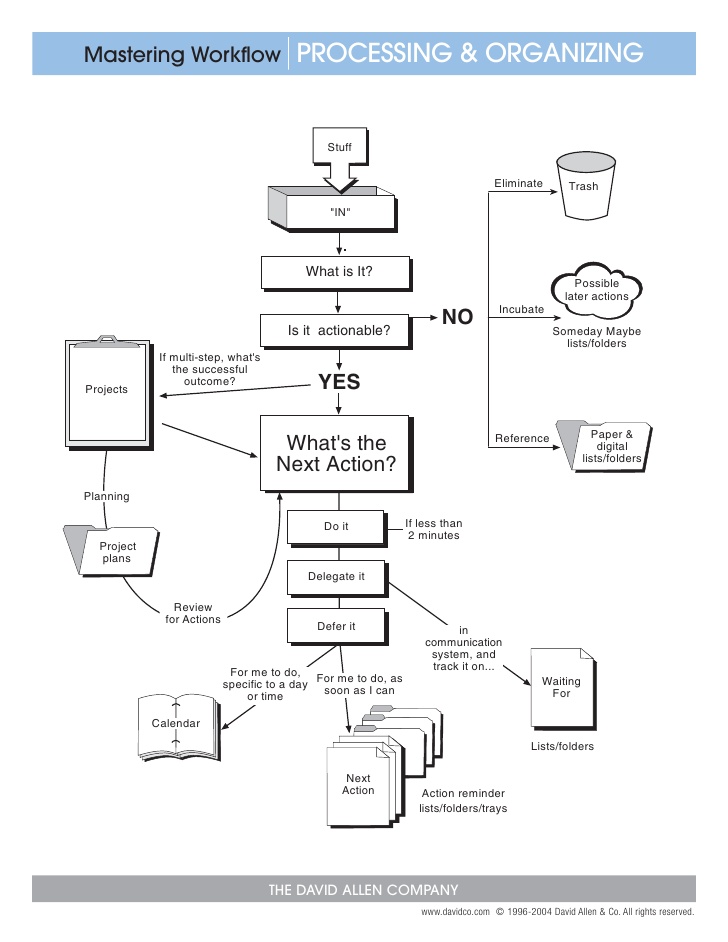
Following the template of Getting Things Done, Macadamian project manager Andrea Carbert details how she makes sure no commitment slips through the cracks.
Source: [WayBack] Getting Things Done with Google – Macadamian
Via: [WayBack] Andrea wrote a great piece on ##gtd Getting Things Done with Google Products – Marjan Venema – Google+
–jeroen

Posted in GTD - Getting Things Done, LifeHacker, Power User | Leave a Comment »
Posted by jpluimers on 2019/08/29
ANWB can superimpose the lane availability indicators on their internap maps software.
Some links so I won’t forget:
–jeroen

Posted in Development, Google, GoogleMaps, Power User, Software Development, Web Development | Leave a Comment »
Posted by jpluimers on 2019/08/29
via [WayBack] Writing solid code the NASA way. – Lars Fosdal – Google+, I bumped into [WayBack] How To Code Like The Top Programmers At NASA — 10 Critical Rules:
Do you know how top programmers write mission-critical code at NASA? To make such code clearer, safer, and easier to understand, NASA’s Jet Propulsion Laboratory has laid 10 rules for developing software.
The rules:
- Restrict all code to very simple control flow constructs – do not use goto statements, setjmp or longjmp constructs, and direct or indirect recursion.
- All loops must have a fixed upper-bound. It must be trivially possible for a checking tool to prove statically that a preset upper-bound on the number of iterations of a loop cannot be exceeded. If the loop-bound cannot be proven statically, the rule is considered violated.
- Do not use dynamic memory allocation after initialization.
- No function should be longer than what can be printed on a single sheet of paper in a standard reference format with one line per statement and one line per declaration. Typically, this means no more than about 60 lines of code per function.
- The assertion density of the code should average to a minimum of two assertions per function. Assertions are used to check for anomalous conditions that should never happen in real-life executions. Assertions must always be side-effect free and should be defined as Boolean tests. When an assertion fails, an explicit recovery action must be taken, e.g., by returning an error condition to the caller of the function that executes the failing assertion. Any assertion for which a static checking tool can prove that it can never fail or never hold violates this rule (I.e., it is not possible to satisfy the rule by adding unhelpful “assert(true)” statements).
- Data objects must be declared at the smallest possible level of scope.
- The return value of non-void functions must be checked by each calling function, and the validity of parameters must be checked inside each function.
- The use of the preprocessor must be limited to the inclusion of header files and simple macro definitions. Token pasting, variable argument lists (ellipses), and recursive macro calls are not allowed. All macros must expand into complete syntactic units. The use of conditional compilation directives is often also dubious, but cannot always be avoided. This means that there should rarely be justification for more than one or two conditional compilation directives even in large software development efforts, beyond the standard boilerplate that avoids multiple inclusion of the same header file. Each such use should be flagged by a tool-based checker and justified in the code.
- The use of pointers should be restricted. Specifically, no more than one level of dereferencing is allowed. Pointer dereference operations may not be hidden in macro definitions or inside typedef declarations. Function pointers are not permitted.
- All code must be compiled, from the first day of development, with all compiler warnings enabled at the compiler’s most pedantic setting. All code must compile with these setting without any warnings. All code must be checked daily with at least one, but preferably more than one, state-of-the-art static source code analyzer and should pass the analyses with zero warnings.
–jeroen
PS: twitter comment
“All code must compile with these settings without any warnings” – I absolutely agree with this. It really annoys me to find code which people have shipped which generates warnings. They’re there for a reason and should be fixed! 👍
Posted in Agile, Code Quality, Conference Topics, Conferences, Development, Event, Software Development | Leave a Comment »
Posted by jpluimers on 2019/08/29
Via [WayBack] SQL select only rows with max value on a column, I bumped into http://sqlfiddle.com/#!9/a6c585/1:
Application for testing and sharing SQL queries.
Source: [WayBack] SQL Fiddle | A tool for easy online testing and sharing of database problems and their solutions.
It is a cool site, currently supporting these SQL back-ends:
You can host it yourself using [WayBack] GitHub – zzzprojects/sqlfiddle2: New version of SQL Fiddle based on OpenIDM (in the past it was [WayBack] GitHub – zzzprojects/sqlfiddle)
Other resources for learning and playing around with SQL:
–jeroen
Posted in Database Development, Development, MySQL, OracleDB, PostgreSQL, Software Development, SQL, SQL Server | Leave a Comment »
Posted by jpluimers on 2019/08/28
Must watch when you do unit testing (no matter the environment): [WayBack] Structure and Interpretation of Test Cases : Kevlin Henney on Vimeo which he presented at Javazone 2018 [Archive.is]
via [WayBack] Kevlin Henney – Google+
–jeroen
Posted in Agile, Conference Topics, Conferences, Development, Event, Software Development, Unit Testing | Leave a Comment »
Posted by jpluimers on 2019/08/28
I had to pass parameters to a method so they became a list:
    threadManager.append(
        UrlMonitorThread(monitor, "http://%s" % targetHost),
        SmtpMonitorThread(monitor, targetHost, 25),
        SmtpMonitorThread(monitor, targetHost, 587),
        SshMonitorThread(monitor, targetHost, 22))
This appeared much easier than I anticipated:
    def append(self, *threads):
        for thread in threads:
            self.threads.append(thread)
It uses the * tag which is explained here:
–jeroen
Posted in Development, Python, Scripting, Software Development | Leave a Comment »
Posted by jpluimers on 2019/08/28
Sometimes you want to count data in all tables on a database to get a feel for the orders of magnitude, but you cannot use the approximated example in How to speed up Count(*) in Interbase/Firebird – Stack Overflow as those require primary keys.
Then the below script can help: it generates the right queries as a union all ordering by the count in the tables.
Example generated code on C:\Program Files (x86)\Firebird\Firebird_2_5\examples\empbuild\EMPLOYEE.FDB:
SQL

--------------------------------------------------------------------------------------------------

select 128 as id, 'COUNTRY' as name, count(*) from "COUNTRY" union all

select 129 as id, 'JOB' as name, count(*) from "JOB" union all

select 130 as id, 'DEPARTMENT' as name, count(*) from "DEPARTMENT" union all

select 131 as id, 'EMPLOYEE' as name, count(*) from "EMPLOYEE" union all

select 133 as id, 'PROJECT' as name, count(*) from "PROJECT" union all

select 134 as id, 'EMPLOYEE_PROJECT' as name, count(*) from "EMPLOYEE_PROJECT" union all

select 135 as id, 'PROJ_DEPT_BUDGET' as name, count(*) from "PROJ_DEPT_BUDGET" union all

select 136 as id, 'SALARY_HISTORY' as name, count(*) from "SALARY_HISTORY" union all

select 137 as id, 'CUSTOMER' as name, count(*) from "CUSTOMER" union all

select 138 as id, 'SALES' as name, count(*) from "SALES" order by 3
Example output on C:\Program Files (x86)\Firebird\Firebird_2_5\examples\empbuild\EMPLOYEE.FDB:
ID NAME COUNT 133 PROJECT 6 128 COUNTRY 14 137 CUSTOMER 15 130 DEPARTMENT 21 135 PROJ_DEPT_BUDGET 24 134 EMPLOYEE_PROJECT 28 129 JOB 31 138 SALES 33 131 EMPLOYEE 42 136 SALARY_HISTORY 49
The generation code below uses a few tricks:
select rdb$relation_namefrom rdb$relationswhere rdb$view_blr is nulland (rdb$system_flag is null or rdb$system_flag = 0);ID the negation of SCORE)SELECT p.name, p.score, COUNT(others.score) + 1 AS "rank"FROM players pLEFT JOIN players others ON others.score > p.scoreGROUP BY 1, 2ORDER BY "rank"The rank helps me distinguish the last row (for the order by 3 clause) and other rows (for the union all clauses).
Generation code:
with tables(id, name) as (
    -- http://www.firebirdfaq.org/faq376/
    select r.RDB$RELATION_ID as id, trim(r.RDB$RELATION_NAME) as name
    from RDB$RELATIONS r
    where 1=1
      and (r.RDB$SYSTEM_FLAG is null or r.RDB$SYSTEM_FLAG = 0)
      and r.RDB$VIEW_BLR is null
    order by 1
  ),
  ranked_tables(id, rank, name) as (
    -- http://www.firebirdfaq.org/faq343/
    select tables.ID, count(others.id)+1 as "rank", tables.NAME
    from tables
    left join tables others on others.ID < tables.ID
    group by "ID", "NAME"
    order by "rank"
  ),
  parts(id, rank, name, suffix) as (
    select ranked_tables.id,
            ranked_tables.rank,
            ranked_tables.name,
      case
        when ranked_tables.rank = 1 then 'union all' -- first
        when ranked_tables.rank = (select count(*) from tables) then 'order by 3' --last
        else 'union all' -- middle
      end as suffix
    from ranked_tables
  )
select -- parts.id, parts.rank, parts.name, parts.suffix,
       'select '||parts.id||' as id, '''||parts.name||''' as name, count(*) from "'||parts.name||'" '||parts.suffix||'' as SQL
from parts
order by parts.id
–jeroen
Posted in Database Development, Development, Firebird, Software Development, SQL | Leave a Comment »
Posted by jpluimers on 2019/08/27
Since I keep forgetting this and the top search for “git remote add” “tracking” do not answer it (see for instance …):
git remote add gitlab https://user@gitlab.com/group/subgroup/repository.git -t master
This adds a new gitlab remote on the repository path https://user@gitlab.com/group/subgroup/repository.git tracking branch master.
–jeroen
Posted in Development, DVCS - Distributed Version Control, git, Source Code Management | Leave a Comment »
 The Wiert Corner - irregular stream of stuff