


Dozens of variations with links to youtube videos by Alex Krasny on how to tie them: [WayBack] Fashion – AGREEorDIE: How to tie a necktie not
–jeroen
Posted by jpluimers on 2019/05/13
Dozens of variations with links to youtube videos by Alex Krasny on how to tie them: [WayBack] Fashion – AGREEorDIE: How to tie a necktie not
–jeroen

Posted in LifeHacker, Power User | Leave a Comment »
Posted by jpluimers on 2019/05/13
Based on [WayBack] command line – How to access a usb flash drive from the terminal? – Ask Ubuntu
Figure out the device:
lsblksudo blkidsudo fdisk -lMount the device (assuming it is /dev/sdb1):
sudo mount /dev/sdb1 /media/usbpmount /dev/sdb1udisksctl mount -b /dev/sdb1Unmounting and eject is in [WayBack] Linux (Ubuntu): safely remove USB flash disk via command line – Stack Overflow
–jeroen
Posted in *nix, *nix-tools, Linux, Power User | Leave a Comment »
Posted by jpluimers on 2019/05/10
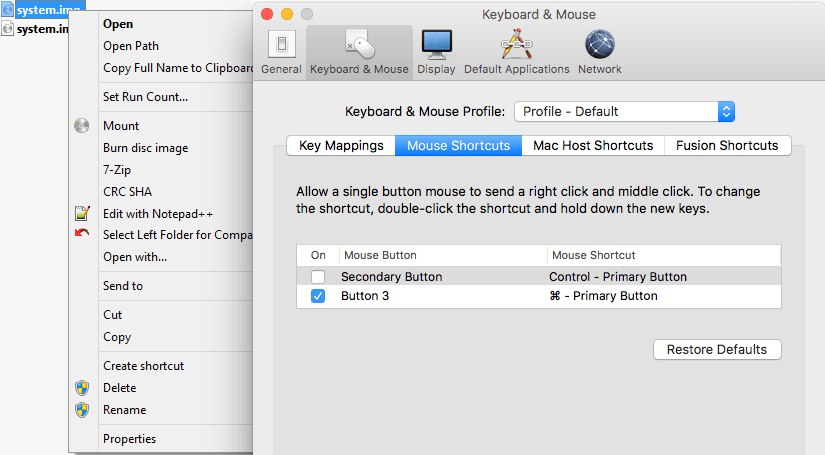
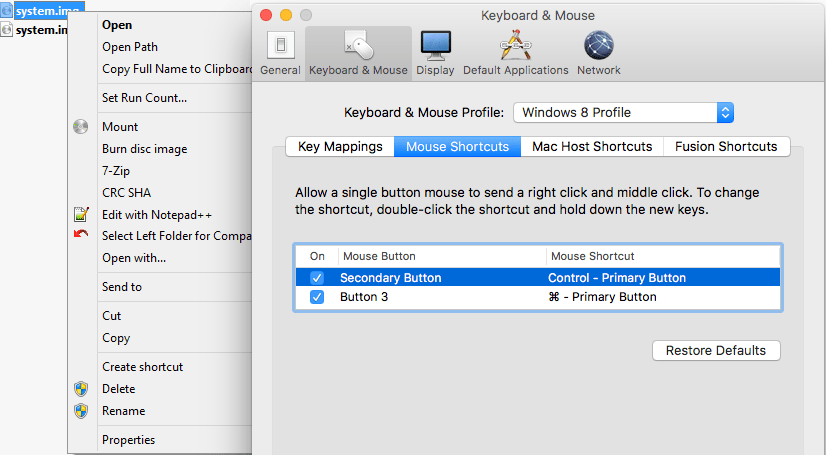
A while ago, I was surprised that in a Windows VM running under VMware Fusion, the Ctrl-Click performed a right click, despite me having changed the configuration:
I was wrong, as I had forgotten I assigned the “Windows 8 Profile” tot hat VM (as it was running Windows 8.1), which had the Secondary Button still mapped to the Control+Primary Button:
Related:
Unlike OS X, most other operating systems require the use of multibutton mice. Most Mac users know you can ctrl-click to simulate a right click, and you can do that in Fusion as well. But what if you actually want to ctrl-click in the guest – say, to select multiple items in Explorer? In Fusion’s […]
–jeroen

Posted in Fusion, Power User, Virtualization, VMware, Windows | Leave a Comment »
Posted by jpluimers on 2019/05/10
 About a year and a half ago, I came across the pie chart far below.
Luckily, the WayBack machine keeps historic copies of that page, so I could deduct the below table over time indicating the historic popularity of each license.
My deduction so far:
I wonder how this evolves further over time.
Oh: and I need to improve my graphing skills to show this table in a nice graph better than the one on the right which has rank over time for reach license from 2016 until 2017.
This is the data extracted from the historic WayBack links:
| License | Rank20170824 | %20170824 | Rank20161006 | %20161006 | Rank20160510 | %20160510 |
|---|---|---|---|---|---|---|
| MIT License | 1 | 32% | 1 | 28% | 1 | 26% |
| GNU General Public License (GPL 2.0) | 2 | 18% | 2 | 20% | 2 | 21% |
| Apache License 2.0 | 3 | 14% | 3 | 16% | 3 | 16% |
| GNU General Public License (GNU) 3.0 | 4 | 7% | 4 | 8% | 4 | 9% |
| BSD License 2.0 (3-clause, New or Revised) License | 5 | 6% | 5 | 6% | 5 | 6% |
| ISC License | 6 | 5% | 8 | 4% | 9 | 2% |
| Artistic License (Perl) | 7 | 4% | 6 | 4% | 7 | 4% |
| GNU Lesser General Public License (LGPL) 2.1 | 8 | 4% | 7 | 4% | 6 | 4% |
| GNU Lesser General Public License (LGPL) 3.0 | 9 | 2% | 9 | 2% | 8 | 2% |
| Eclipse Public License (EPL) | 10 | 1% | 11 | 2% | 11 | 2% |
| Microsoft Public License | 11 | 1% | 10 | 2% | 10 | 2% |
| Simplified BSD License (BSD) | 12 | 1% | 12 | 1% | 14 | < 1% |
| Code Project Open License 1.02 | 13 | 1% | 13 | 1% | 12 | 1% |
| Mozilla Public License (MPL) 1.1 | 14 | < 1% | 14 | < 1% | 13 | < 1% |
| GNU Affero General Public License v3 or later | 15 | < 1% | 16 | < 1% | 16 | < 1% |
| Common Development and Distribution License (CDDL) | 16 | < 1% | 15 | < 1% | 15 | < 1% |
| DO WHAT THE FUCK YOU WANT TO PUBLIC LICENSE | 17 | < 1% | 18 | < 1% | 19 | < 1% |
| Microsoft Reciprocal License | 18 | < 1% | 17 | < 1% | 17 | < 1% |
| Sun GPL with Classpath Exception v2.0 | 19 | < 1% | 19 | < 1% | 18 | < 1% |
| zlib/libpng License | 20 | < 1% | ||||
| CDDL-1.1 | 20 | < 1% | 20 | < 1% |
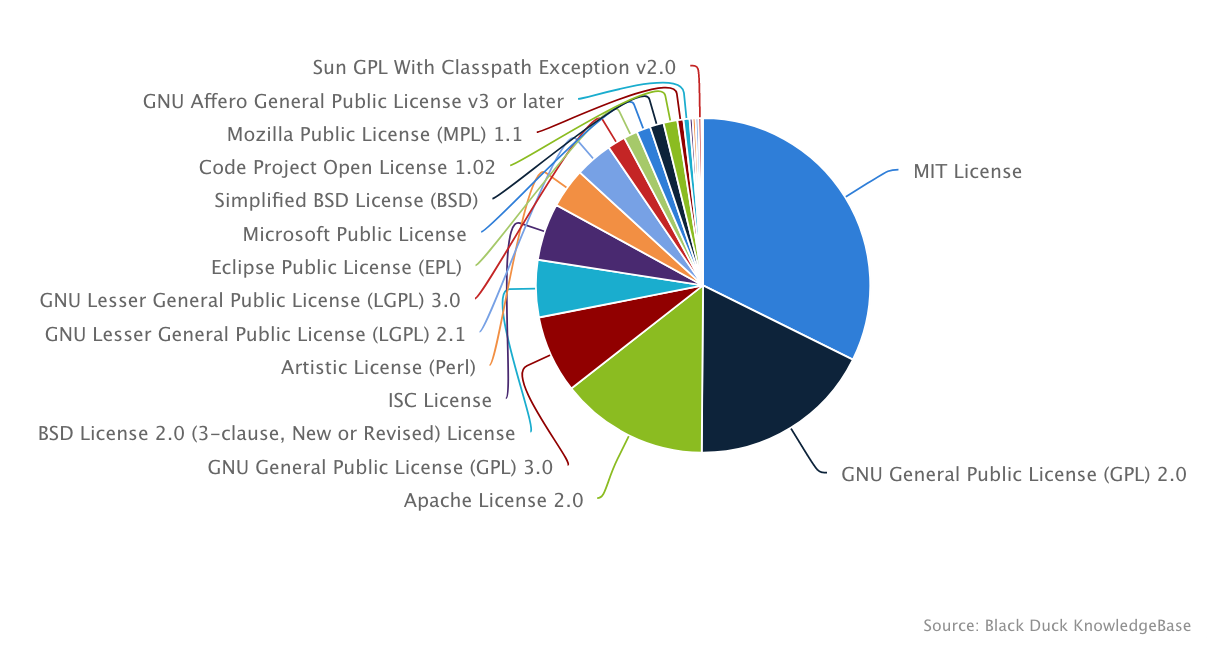
–jeroen
Source: Top Open Source Licenses | Black Duck Software

Posted in Development, Licensing, Software Development | Leave a Comment »
Posted by jpluimers on 2019/05/10
Basically the boot delay during startup is so short that usually you cannot even choose the boot device.
Solution: edit the .vmx configuration file for the Virtual Machine, then change this value:
bios.bootDelay = "15000"
Source:
–jeroen
Posted in Fusion, Power User, Virtualization, VMware | Leave a Comment »
Posted by jpluimers on 2019/05/09
Like there was never an Office 13.0, there was no Visual Studio 13.0: see the below table from Microsoft Visual Studio – Wikipedia: History
This influences tooling that searches for specific versions of Visual Studio or MSBuild (which has been available since Visual Studio 8.0 and up: MSBuild – Wikipedia: History).
Product name Codename Version
numberSupported .NET
Framework versionsSupported .NET
Core versionsRelease date Visual Studio 2019 Unknown 16.0 To be announced To be announced To be announced Visual Studio 2017 Dev15 15.0 3.5 – 4.7 1.0-1.1, 2.0 March 7, 2017 Visual Studio 2015 Dev14 14.0 2.0 – 4.6 1.0 July 20, 2015 Visual Studio 2013 Dev12 12.0 2.0 – 4.5.2 N/A October 17, 2013 Visual Studio 2012 Dev11 11.0 2.0 – 4.5.2 N/A September 12, 2012 Visual Studio 2010 Dev10, Rosario 10.0 2.0 – 4.0 N/A April 12, 2010 Visual Studio 2008 Orcas 9.0 2.0, 3.0, 3.5 N/A November 19, 2007 Visual Studio 2005 Whidbey 8.0 2.0, 3.0 N/A November 7, 2005 Visual Studio .NET 2003 Everett 7.1 1.1 N/A April 24, 2003 Visual Studio .NET (2002) Rainier 7.0 1.0 N/A February 13, 2002 Visual Studio 6.0 Aspen 6.0 N/A N/A June 1998 Visual Studio 97 Boston 5.0 N/A N/A February 1997
–jeroen
Posted in .NET, Continuous Integration, Development, msbuild, Software Development, Visual Studio and tools | Leave a Comment »
Posted by jpluimers on 2019/05/09
Did you hear about the man who got cooled to absolute zero? He’s 0K now.
The oldest reference I could find is at [Archive.is] Science Joke – 5.
Via G+
–jeroen

Posted in Fun | Leave a Comment »
Posted by jpluimers on 2019/05/09
For my own ference:
disk space under VMFS-3 is organized according to four resource types. They are : blocks, sub-blocks, pointer blocks, and file descriptors. Resources are grouped into clusters, which form cluster groups. Every resource type is administered by one or a number of system files. Lets have a look at what those abbreviated file names stand for:
- fbb.sf = file block bitmap.sf
- fdc.sf = file descriptor cluster.sf
- pbc.sf = pointer block cluster.sf
- sbc.sf = sub-block cluster.sf
- vh.sf = volume header.sfs
- dd.sf = scsi device description.sf
The VMFS-5 uses one more system file:
- pb2.sf = pointer block 2.sf
Source: [Archive.is] VMFS metadata files
Posted in ESXi4, ESXi5, ESXi5.1, ESXi5.5, ESXi6, ESXi6.5, Power User, Virtualization, VMware, VMware ESXi | Leave a Comment »
Posted by jpluimers on 2019/05/08
Interesting bits on the bias generator: [WayBack] Inside the die of Intel’s 8087 coprocessor chip, root of modern floating point.
Via
–jeroen
Posted in Development, History | Leave a Comment »
Posted by jpluimers on 2019/05/08
For my reading list:
It might be that Mender 1.7 and up support OpenSuSE:
via:
DTB = Device Tree Blob
–jeroen
Posted in Development, Hardware Development, Raspberry Pi, Software Development | Leave a Comment »

 The Wiert Corner - irregular stream of stuff