The Wiert Corner – irregular stream of stuff

Jeroen W. Pluimers on .NET, C#, Delphi, databases, and personal interests

  • My badges

  • Twitter Updates

  • My Flickr Stream

  • Pages

  • All categories

  • Enter your email address to subscribe to this blog and receive notifications of new posts by email.

    Join 1,860 other subscribers

Archive for the ‘Raspberry Pi’ Category

Some ideas to show a Google Calendar on a TV using a Raspberry Pi and HDMI output

Posted by jpluimers on 2019/01/10

Using OpenSuSE Tumbleweed E20 on Raspberry Pi 3: accessing the enlightenment desktop over VNC after automatic logon I wanted to buy an on-line read-only diary to help my mentally retarded brother see what his next few days are going to be like.

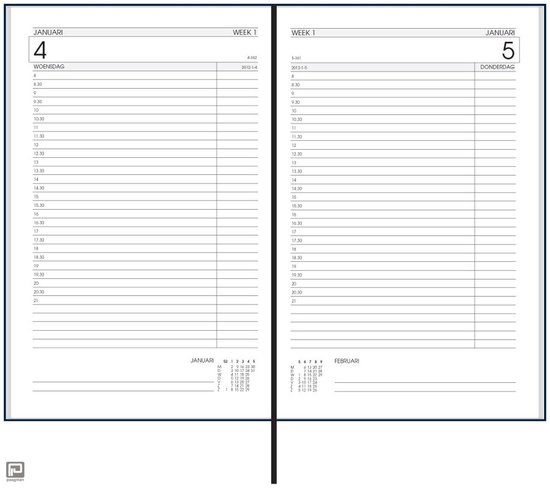
He increasingly has difficulty handling a paper agenda and has an agenda with 30 minute blocks like [Archive.isbol.com | Bureau Agenda 2017 – 1 dag per Pagina | 0041560163422 | Boeken (and the [Archive.is] picture on the right), but actually he needs 15 minute blocks during some portions of the day.

We call that kind “bureau agenda” which I think translates well into “desk diary”.

They were quite different from the agendas I used to have at school (:

[WayBack[Zonder titel] Rijam agenda 1983/84 verzamelen? Stripcatalogus op Catawiki

For most school mates, they were more like this:

Had je een O’Neill of ging je voor De Familie Doorzon? De oude agenda’s uit je middelbare schooltijd zijn de verpersoonlijking van je eigen puber-ik. Afgelopen weekend startte in het Nationaal Onderwijsmuseum in Dordrecht de toffe tentoonstelling Grow Up over die vuistdikke, volgeplakte agenda’s.

[WayBackSchoolagenda vol sentiment | Go with the Vlo

Anyway, some ideas I initially had are below.

This is what I actually did:

Two things for the future:

Initial thoughts

Raspberry based:

Chromecast based:

–jeroen

Read the rest of this entry »

Posted in Development, Google, GoogleCalendar, Hardware Development, JavaScript/ECMAScript, JSFiddle, LifeHacker, Power User, Raspberry Pi, Scripting, Software Development | 2 Comments »

OpenSuSE Tumbleweed on RaspberryPi 3: adding ” modprobe.blacklist=vc4″ to the kernel commandline was a lot tougher than I hoped for.

Posted by jpluimers on 2019/01/08

I run most of my Raspberry Pi systems headless, so I was a bit surprised that OpenSuSE tumbleweed on a Raspberry Pi 3B didn’t show anything on my HDMI monitor after I installed KDE after it switches away from text-mode boot output.

[WayBackHCL:Raspberry Pi3 – openSUSE suggests to

I see HDMI output in U-Boot, but not in Linux

The upstream Linux graphics driver for the Raspberry Pi has problems with a few monitors. The same applies to the 7″ LCD displays. In those cases, please fall back to the efi frame buffer console by passing the following into the kernel command line:

 modprobe.blacklist=vc4

However, it does not explain how to modify that “the kernel command line”.

Searching for obvious ways via “Raspberry Tumbleweed Kernel Command Line” got me to for instance

which all suggest editing /boot/cmdline.txt, however that file does not exist:

# ls -al /boot
total 34624
drwxr-xr-x  6 root root     4096 Jul 23 21:05 .
drwxr-xr-x 24 root root     4096 Jul 16 02:02 ..
-rw-r--r--  1 root root       65 Jul 16 12:42 .Image-4.4.76-7-default.hmac
-rw-r--r--  1 root root        0 Jul 16 16:56 0x75b762d5
lrwxrwxrwx  1 root root       22 Jul 16 16:34 Image -> Image-4.4.76-7-default
-rw-r--r--  1 root root 14878208 Jul 16 12:20 Image-4.4.76-7-default
-rw-r--r--  1 root root  3217519 Jul 16 12:20 System.map-4.4.76-7-default
lrwxrwxrwx  1 root root        1 Jul 16 02:00 boot -> .
-rw-r--r--  1 root root     1725 May 24 20:11 boot.readme
-rw-r--r--  1 root root     2405 Jul 16 16:56 boot.scr
-rw-r--r--  1 root root     2333 Jul 16 16:56 boot.script
-rw-r--r--  1 root root   152522 Jul 16 08:39 config-4.4.76-7-default
lrwxrwxrwx  1 root root       12 Jul 23 16:13 dtb -> dtb-4.11.6-1
drwxr-xr-x  3 root root     4096 Jul 23 16:13 dtb-4.11.6-1
drwxr-xr-x  5 root root    16384 Jan  1  1970 efi
drwxr-xr-x  7 root root     4096 Jul 24 18:27 grub2
lrwxrwxrwx  1 root root       23 Jul 16 16:34 initrd -> initrd-4.4.76-7-default
-rw-------  1 root root  8080932 Jul 23 21:05 initrd-4.4.76-7-default
-rw-r--r--  1 root root   288571 Jul 16 12:42 symvers-4.4.76-7-default.gz
-rw-r--r--  1 root root      377 Jul 16 12:42 sysctl.conf-4.4.76-7-default
-rw-r--r--  1 root root  1484762 Jul 16 16:56 unicode.pf2
drwxr-xr-x  2 root root     4096 Jul 24 09:05 vc
-rw-r--r--  1 root root  7282031 Jul 15 07:00 vmlinux-4.4.76-7-default.gz

There are other config.txt files:

# find / | grep config.txt
/boot/efi/config.txt
/boot/vc/config.txt

However, these seems to be unclear which of the two is actually used and what options can be set at all: [WayBackRaspberry Pi • View topic – aarch64 on Pi3.

So the quest continues, as a lot of settings can be applied in these files:

Setting “modprobe.blacklist=vc4”

I’ve temporarily given up on the /boot/config.txt editing, but continued searching for “modprobe.blacklist=vc4”, which lead to a few interesting results:

All of those suggest adding modprobe.blacklist=vc4 to the grub configuration. The second post actually has the most elaborate steps for this, which I’ve paraphrased into:

  1. As root, edit /etc/default/grub (make a backup first)
  2. Search for the variable GRUB_CMDLINE_LINUX
  3. Add the modprobe.blacklist=vc4to the end of the variable initialisation (ensure there is a space before it and you keep the terminating double-quote)
  4. Re-generate the grub configuration file used at boot time (make a backup first): grub2-mkconfig > /boot/grub2/grub.cfg

This solved my problem: no text output on HDMI.

Note that in order to get graphical output, you need to install any of the non-JeOS images. Installing just kde+kdm and dependencies isn’t enough to get the X server going.

–jeroen

Posted in Development, Hardware Development, Raspberry Pi | Leave a Comment »

Testing SMTP from the console on Linux, BSD and Mac OS: swaks and smtp-cli Perl script clients

Posted by jpluimers on 2019/01/03

Testing SMTP using telnet is tedious as you have to remember the commands and responses in the SMTP protocol. It gets even harder when doing SMTP AUTH, as then you have to base encode a bunch of strings [WayBackHow to Test SMTP AUTH using Telnet [Wiki] | NDCHost

Luckily there is a Perl script swaks: [WayBackSwaks – Swiss Army Knife for SMTP which does ESMTP and LMTP as well as TLS.

The funny thing is that the repository at jetmore/swaks: Swaks – Swiss Army Knife for SMTP only has the readme, but the not the script which you can get from [WayBack] swaks.pl.

Despite that, most Linux distributions have an installation package.

[WayBackswaks for OpenSuse is in the [WayBacknetwork repository, so for Tumbleweed (actually: Factory) on Raspberry Pi you need to perform this:

zypper addrepo http://download.opensuse.org/repositories/network/openSUSE_Factory_ARM/network.repo
zypper refresh
zypper install swaks

On Mac OS X it is even easier: if you have the homebrew package manager installed, you just install the [WayBackswaks formula using the [WayBack] swaks.rb script:

brew install swaks

Note there is also the smtp-cli Perl script which I mentioned before at Fake/Mock SMTP servers and services for use during development, which also does TLS, but few environments have ready built packages for them. If you still want to try it out:

For SMTP AUTH:

swaks -tls --to jeroen.wiert.me@pluimers.com --from jeroen.wiert.me@pluimers.com --server smtp.xs4all.nl --auth-user username

Which prompts for the password, then outputs like this:

=== Trying smtp.xs4all.nl:25...
=== Connected to smtp.xs4all.nl.
<- 220 smtp-cloud3.xs4all.net ESMTP ESMTP server ready -> EHLO rmbpro1tbjwp
<-  250-smtp-cloud3.xs4all.net hello [188.206.68.219], pleased to meet you
<-  250-HELP
<-  250-AUTH LOGIN PLAIN
<-  250-SIZE 157286400
<-  250-8BITMIME
<-  250-STARTTLS
<- 250 OK -> STARTTLS
<- 220 Ready to start TLS === TLS started with cipher TLSv1:DHE-RSA-AES256-SHA:256 === TLS no local certificate set === TLS peer DN="/OU=Domain Control Validated/OU=PositiveSSL Wildcard/CN=*.xs4all.nl" ~> EHLO rmbpro1tbjwp
<~  250-smtp-cloud3.xs4all.net hello [188.206.68.219], pleased to meet you
<~  250-HELP
<~  250-AUTH LOGIN PLAIN
<~  250-SIZE 157286400
<~  250-8BITMIME
<~ 250 OK ~> AUTH LOGIN
<~ 334 ############ ~> anA=
<~ 334 ############ ~> ############################
<~ 235 ... authentication succeeded ~> MAIL FROM:<jeroen.wiert.me@pluimers.com>
<~  250 <jeroen.wiert.me@pluimers.com> sender ok
 ~> RCPT TO:<jeroen.wiert.me@pluimers.com>
<~  250 <jeroen.wiert.me@pluimers.com> recipient ok
 ~> DATA
<~ 354 enter mail, end with "." on a line by itself ~> Date: Wed, 19 Jul 2017 09:09:57 +0200
 ~> To: jeroen.wiert.me@pluimers.com
 ~> From: jeroen.wiert.me@pluimers.com
 ~> Subject: test Wed, 19 Jul 2017 09:09:57 +0200
 ~> Message-Id: <20170719090957.052207@rmbpro1tbjwp>
 ~> X-Mailer: swaks v20170101.0 jetmore.org/john/code/swaks/
 ~> 
 ~> This is a test mailing
 ~> 
 ~> .
<~ 250 smtp-cloud3.xs4all.net accepted mail mXA71v00C4jr6ac01XA9Bo for delivery ~> QUIT
<~  221 smtp-cloud3.xs4all.net ESMTP closing connection
=== Connection closed with remote host.

–jeroen

Posted in *nix, *nix-tools, Communications Development, Development, Hardware Development, Internet protocol suite, Linux, openSuSE, Power User, Raspberry Pi, SMTP, SuSE Linux, Tumbleweed | Leave a Comment »

Need to play with this: Raspberry Pi web simulator from Microsoft Corporation

Posted by jpluimers on 2018/12/26

It’s been a while since [WayBack] +Microsoft Corporation has recently released a preview version of an open source +Raspberry Pi web simulator where you can connect sensors and component… – Jean-Luc Aufranc – Google+

Back then it was convoluted to get going. Hopefully by now that has changed.

So time to take another look during the holiday season:


It reminded me a lot of [WayBackBring ideas to life with free online Arduino simulator and PCB apps | Autodesk Circuits (a.k.a. circuits.io):

Read the rest of this entry »

Posted in *nix, Development, Hardware, Hardware Development, Hardware Interfacing, Linux, Power User, Raspberry Pi, Software Development | Leave a Comment »

SSH: Connection Reset by Peer – Server Fault

Posted by jpluimers on 2018/11/22

One occasion I had SSH throw a Connection Reset by Peer on my when was the SD-card of a Raspberry Pi started failing and the ext4 filesystem got mounted in read-only mode.

Then sshd was still listening on port 22, but since it could not write to disk any more, it threw a Connection Reset by Peer to the client.

It was on OpenSuSE Tumbleweed, but would failed just as well using Raspbian.

Lessons learned:

  • IoT hardware will fail.
  • ext4 breaks when the hardware breaks.

–jeroen

Reference:

Posted in *nix, *nix-tools, Debian, Development, Hardware Development, IoT Internet of Things, Linux, Network-and-equipment, openSuSE, Power User, Raspberry Pi, Raspbian, SuSE Linux, Tumbleweed | Leave a Comment »

Hopefully this is now available: in March you could pre-order the PoE hat for the Raspberry Pi 3 B+ at ~ EUR 15.

Posted by jpluimers on 2018/10/22

Wow, EUR 15 is almost half the price of an Raspberry Pi 3 B+:

[WayBack] RPI3-MODBP-POE RASPBERRY-PI, Add-On Board, Power over Ethernet (PoE) HAT for Raspberry Pi 3 Model B+ | Farnell UK

Via:

–jeroen

Posted in Development, Hardware Development, Power User, Raspberry Pi | Leave a Comment »

Raspberry Pi Power Limitations – Raspberry Pi Stack Exchange

Posted by jpluimers on 2018/10/04

There are very many, often contradictory, claims about the power requirements and limitations of the Pi. What are the exact requirements?

has a very elaborate answer at [WayBackRaspberry Pi Power Limitations – Raspberry Pi Stack Exchange covering all non-zero models.

I’ve archived some of the links it points to:

And some links on how to power a Raspberry Pi when you only have a 12V power source:

Read the rest of this entry »

Posted in Development, Hardware Development, Raspberry Pi | Leave a Comment »

Not cool: openSuse Tumbleweed switched DHCP clientID algorithm on Raspberry Pi 3, so now all devices get a non-static DHCP address

Posted by jpluimers on 2018/09/15

Not sure in which changeset this happened, but here is one example:

  1. old DHCP client ID 1:b8:27:eb:1a:b1:ec
  2. new DHCP client ID ff:eb:78:a9:4:0:1:0:1:22:6:67:49:b8:27:eb:78:a9:4

The first one was marked static in the DHCP server, which means the Raspberry Pi now did get a different IP address.

This messes up a few places that cannot do proper address resolution.

Anyone who knows where this has changed / is configured?

These did not help finding the cause:

Edit

As commented by Leen below, this is about

Wicked changed its defaults to use this DHCPv6 compatible RFC4361 client-id in favour of the older RFC2132 client-id. However, this has caused some issues with older DHCPv4 servers and existing setups where the client-id stored by the server is used to assign a (static) address. It is recommended to fix this server-side, but still, wicked provides several ways of addressing this issue

So here are some links:

–jeroen

Posted in *nix, Hardware Development, Linux, openSuSE, Power User, Raspberry Pi, SuSE Linux, Tumbleweed | 6 Comments »

DFRobot 7″ HDMI Display with Touchscreen Sells for $69 – for use with Raspberry Pi or Adruino

Posted by jpluimers on 2018/09/10

There are plenty of HDMI displays, but if you want a smaller size it become more complicated although some 7″ HDMI displays are available. However, if you

Source: [Archive.isDFRobot 7″ HDMI Display with Touchscreen Sells for $69

Via: [Archive.is] 7″ HDMI touchscreen display with mounting holes for +Raspberry Pi board. – Jean-Luc Aufranc – Google+

–jeroen

Posted in Development, Hardware Development, Power User, Raspberry Pi | Leave a Comment »

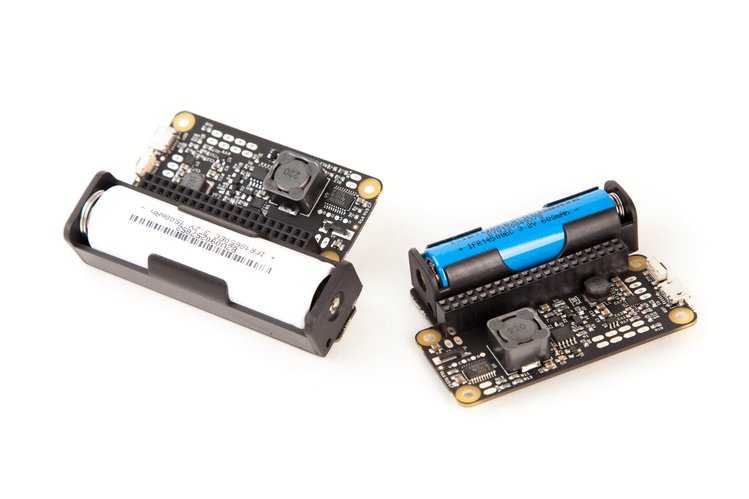
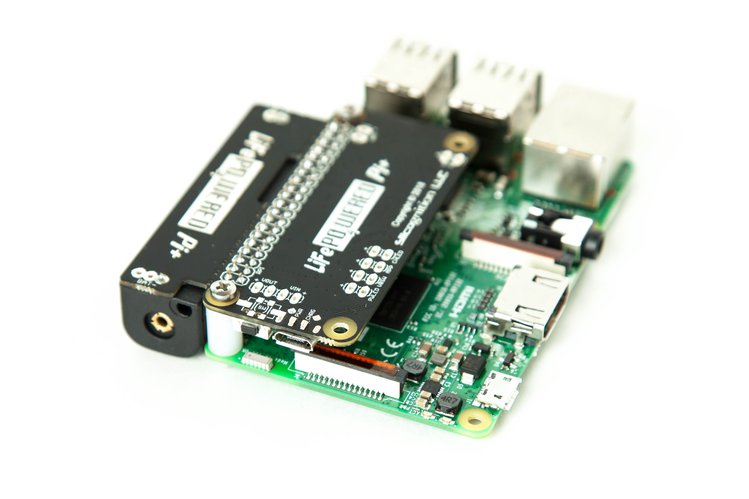
LiFePO4wered/Pi+ | Crowd Supply

Posted by jpluimers on 2018/09/07

A few days left for [WayBack] LiFePO4wered/Pi+ | Crowd Supply: A full-featured LiFePO4 battery, power manager, and UPS for the Raspberry Pi

via:

–jeroen


Posted in Development, Hardware Development, Power User, Raspberry Pi | Leave a Comment »