


ODAC version history is confusing wheres [WayBack] Oracle Data Access Components – FAQ talks about version 6.00, [WayBack] Oracle Data Access Components History talks about version 10.x.y.
The history page is correct.
–jeroen
Posted by jpluimers on 2021/06/01
ODAC version history is confusing wheres [WayBack] Oracle Data Access Components – FAQ talks about version 6.00, [WayBack] Oracle Data Access Components History talks about version 10.x.y.
The history page is correct.
–jeroen

Posted in Delphi, Development, Software Development | Leave a Comment »
Posted by jpluimers on 2021/05/27
A few links for my link archive, as I often edit XML files (usually with different extensions than .xml, because historic choices that software development vendors make, which makes it way harder to tell editors “yes, this too is XML).
This plugin is a small set of useful tools for editing XML with Notepad++. The plugin is libXML2-based. The plugin features are:
– XML syntax Check
– XML Schema (XSD) + DTD Validation
– XML tag autoclose
– Pretty print
– Linarize XML
– Current XML Path
– Conversion XML <-> Text
– Comment / Uncomment
– XPath expression evaluation
Author: Nicolas Crittin
Homepage: https://github.com/morbac/xmltools
–jeroen

Posted in .NET, Development, Notepad++, Power User, Software Development, Text Editors, Visual Studio and tools, vscode Visual Studio Code, XML, XML/XSD | Leave a Comment »
Posted by jpluimers on 2021/05/27
For some Chocolatey installations, I got an error message like this one:
"ERROR: Running ["C:\Users\Developer\AppData\Local\Temp\chocolatey\vmware-tools\10.3.10.12406962\VMware-tools-10.3.10-12406962-x86_64.exe" /S /v /qn REBOOT=R ] was not successful. Exit code was '3010'. See log for possible error messages."
I wish that a Chocolatey install could indicate it is msi based, and Chocolatey would convert this to a soft reboot message, as [WayBack] MsiExec.exe and InstMsi.exe Error Messages – Windows applications | Microsoft Docs indicates it means ERROR_SUCCESS_REBOOT_REQUIRED:
Posted in Chocolatey, Development, InnoSetup, Installer-Development, Power User, Software Development, Windows, Windows Development | Leave a Comment »
Posted by jpluimers on 2021/05/27
Quoting this in full because it nicely illustrated the introduction of an intermediate variable that cannot be assigned to a second time after initial setup by the with statement: [WayBack] Embarcadero Newsgroup Archive :: embarcadero.public.delphi.ide :: Re: Delphi 2010 Compile error E2064 Left side cannot be assigned to.
Subject: Re: Delphi 2010 Compile error E2064 Left side cannot be assigned to Posted by: Uwe Schuster (jediv…@bitcommander.de) Date: Sat, 10 Oct 2009 Finn Tolderlund wrote:
> I get this error in Delphi 2010 with the code below:
> But if I remove the()from the line, it compiles and executes ok.
> Is it a bug in the compiler?
> …
>with (Pal.palPalEntry[i]) do // Compile error: E2064 Left side cannot be assigned to
>with Pal.palPalEntry[i] do // Works fineThis is no bug, because the parenthesis generates an intermediate
non-addressable value and D2010 does not longer allow write access to intermediate values with “with”.—
Uwe
This also might explain Delphi 10.2 Tokyo introduced a “with” warning: for most “with” statements, W1048 is raised ([RSP-17326] with statements generate W1048 unsafe typecast warning – Embarcadero Technologies), assuming that the intermediate is a pointer variable.
–jeroen
Posted in Delphi, Development, Software Development | Leave a Comment »
Posted by jpluimers on 2021/05/26
For my future self:
'Invalid Oracle Home: 'Not sure what exactly fixed this, but likely either of these:
TNS_ADMIN pointing to a directory having a [WayBack] TNSNAMES.ORAPATH.It can also have to do with Win32 versus Win64.
Related:
Status : Failure -Test failed: Listener refused the connection with the following error:

ORA-12514, TNS:listener does not currently know of service requested in connect descriptor
This was using tnsping (actually the alternative McTnsPing); cause was the DBMS server VM being down..
ORA-12545: Connect failed because target host or object does not exist
It meant the VPN connection to the site having the Oracle server was down.
Related: [WayBack] ORA-12545 – Oracle FAQ
ORA-01017: invalid username/password; logon deniedThere was confusion on which test credentials to use.
Related (as there are some bugs, case sensitivity issues, and confusion around special characters like $):
Need Oracle 8 Call Interfacea
ORA-06550: line 2, column 36:Actual error:
ORA-06550: line 2, column 36:
PLS-00103: Encountered the symbol ":" when expecting one of the following:

   ( - + case mod new not null <an identifier>
   <a double-quoted delimited-identifier> <a bind variable>
   continue avg count current exists max min prior sql stddev
   sum variance execute forall merge time timestamp interval
   date <a string literal with character set specification>
   <a number> <a single-quoted SQL string> pipe
   <an alternatively-quoted string literal with character set speci.
The cause was a bit of PL/SQL as per [WayBack] ORA-06550 tips.
It was odd, as I was calling
Source: “SYS.DBMS_APPLICATION_INFO.SET_CLIENT_INFO” – Google Search which is part of package “SYS.DBMS_APPLICATION_INFO”.
In the end it all turned out that the underlying library was trying to use OCI 7 in stead of more modern OCI, so the OCI 7 API did not accept the more modern data.
ORA-03135: connection lost contact
Process ID: 14513
Session ID: 19 Serial number: 8319
VPN connection died; application did not have re-connect logic to restore the database connection.
ORA-12545: Connect failed because target host or object does not exist
a
ORA-12545: Connect failed because target host or object does not exist
a
ORA-12545: Connect failed because target host or object does not exist
a
ORA-12545: Connect failed because target host or object does not exist
a
ORA-12545: Connect failed because target host or object does not exist
a
–jeroen
Posted in Database Development, Development, OracleDB, Software Development | Leave a Comment »
Posted by jpluimers on 2021/05/26
Bummer: I tried to inherit the build events from a base configuration, then add some extra steps for some of the inheriting configurations.
Those configurations just executed the extra steps, not the inherited steps.
This affects Visual Studio, Delphi and any other tool based on msbuild, as this is an ms-build thing:
How do I then specify additional project-specific Post-Build Events? The usual “Inherit from parent or project defaults” is missing, and I would rather not have to manually add
barto every single project as it makes it hard to maintain.
–jeroen
Posted in .NET, Continuous Integration, Delphi, Development, msbuild, Software Development, Visual Studio and tools | Leave a Comment »
Posted by jpluimers on 2021/05/26
Got the below error on Delphi 10.2 Tokyo with ODAC trial from DevArt at Delphi startup time (Error: Access violation at address 188F3528 in module 'DataSetManager250.bpl'. Read of address 00000000.).
My guess it is some configuration prerequisite which – when not existing – is handled very ungracefully.
This might have to do with my installation being a non-administrator Delphi user, but the ODAC installation requiring UAC elevation to administrative level.
In short this means the installing user is different from the user that runs Delphi.
Related (indicating it was fixed years ago, but apparently isn’t) via dsmtoolwindow.getpreferences – Google Search:
try to change the registry branch:
HKEY_CURRENT_USER\Software\Devart\DataSetManager\BDS\13.0to
HKEY_CURRENT_USER\Software\Devart\DataSetManager\BDS\14.0(change the version number
13.0to14.0)
Workaround is to unregister the DataSetManager250.bpl package, though I have to figure out what functionality that disables.
[188F3528]{DataSetManager250.bpl} Dsmtoolwindow.GetPreferences + $18
[23CA524D]{Jcl240.bpl  } Jclhookexcept. + $0
[50060B13]{rtl250.bpl  } System.@HandleAnyException (Line 19991, "System.pas" + 13) + $0
[211B3A05]{designide250.bpl} DockForm.TDockableForm.FormCreate (Line 258, "DockForm.pas" + 11) + $1B
[188F2DEA]{DataSetManager250.bpl} Dsmtoolwindow.TDsmToolWindow.FormCreate + $4E
[50C06BC1]{vcl250.bpl  } Vcl.Forms.TCustomForm.DoCreate (Line 3788, "Vcl.Forms.pas" + 3) + $C
[50C067DD]{vcl250.bpl  } Vcl.Forms.TCustomForm.AfterConstruction (Line 3671, "Vcl.Forms.pas" + 1) + $D
[50060039]{rtl250.bpl  } System.@AfterConstruction (Line 18301, "System.pas" + 2) + $5
[188EBE9B]{DataSetManager250.bpl} Dsmtoolwindow.TDsmToolWindow + $43B
[188EA93D]{DataSetManager250.bpl} Dsmtoolwindow.TDsmToolWindow.CreateForm + $19
[188F7C81]{DataSetManager250.bpl} Dsmexpert.initialization + $31
[50061276]{rtl250.bpl  } System.InitUnits (Line 22833, "System.pas" + 21) + $0
[500612E6]{rtl250.bpl  } System.@PackageLoad (Line 22861, "System.pas" + 8) + $0
[188A1A09]{DataSetManager250.bpl} __dbk_fcall_wrapper + $195
[188F6DA1]{DataSetManager250.bpl} Initialize + $5
[500A0377]{rtl250.bpl  } System.SysUtils.InitializePackage (Line 25779, "System.SysUtils.pas" + 4) + $0
[500A04D1]{rtl250.bpl  } System.SysUtils.LoadPackage (Line 25830, "System.SysUtils.pas" + 18) + $5
[21E1AFAF]{delphicoreide250.bpl} PasCppPakMgr.TIDEDesignPackage.ClearModules (Line 2189, "PasCppPakMgr.pas" + 14) + $10
[204E9A94]{coreide250.bpl} PakLoad.TPackage.DoLoadPackage (Line 146, "PakLoad.pas" + 0) + $8
[204E9C09]{coreide250.bpl} PakLoad.TPackage.Load (Line 220, "PakLoad.pas" + 7) + $7
[204EC425]{coreide250.bpl} PakMgr.TDesignPackage.Load (Line 591, "PakMgr.pas" + 2) + $2
[21E1B2CB]{delphicoreide250.bpl} PasCppPakMgr.TIDEDesignPackage.Load (Line 2292, "PasCppPakMgr.pas" + 4) + $3
[50060039]{rtl250.bpl  } System.@AfterConstruction (Line 18301, "System.pas" + 2) + $5
[21E1B0DF]{delphicoreide250.bpl} PasCppPakMgr.TIDEDesignPackage.DelayLoad (Line 2217, "PasCppPakMgr.pas" + 11) + $4
[21E1572A]{delphicoreide250.bpl} PasCppPakMgr.LoadDesignPackage (Line 463, "PasCppPakMgr.pas" + 10) + $5
[0B6A0F84]{IDEFixPack.dll} SplashProgress2005p.HookedLoadDesignPackage (Line 277, "SplashProgress2005p.pas" + 3) + $3
[21E15A33]{delphicoreide250.bpl} PasCppPakMgr.LoadProjectPackages (Line 534, "PasCppPakMgr.pas" + 52) + $11
[21F20DBF]{delphicoreide250.bpl} BasePasProjOpts.TProjOptsManager.DoLoadPackages (Line 1604, "BasePasProjOpts.pas" + 22) + $6
[21F21BB4]{delphicoreide250.bpl} BasePasProjOpts.TProjOptsManager.LoadPackages (Line 1839, "BasePasProjOpts.pas" + 0) + $0
[21F22BD5]{delphicoreide250.bpl} BasePasProjOpts.TProjectOptions.LoadPackages (Line 2419, "BasePasProjOpts.pas" + 0) + $5
[22585BF3]{delphide250.bpl} DelphiProject.TDelphiProjectCreationTrait.LoadDefaultLibraries (Line 256, "DelphiProject.pas" + 1) + $1F
[2058A109]{coreide250.bpl} ProjectGroup.TDefaultProjectWrapper.LoadDefaultLibraries (Line 3544, "ProjectGroup.pas" + 5) + $31
[206DB2B9]{coreide250.bpl} Desktop.LoadDefaultDesktopState (Line 966, "Desktop.pas" + 3) + $9
[206DC0D5]{coreide250.bpl} Desktop.LoadDesktop (Line 1223, "Desktop.pas" + 73) + $0
[0049FBA8]{bds.exe     } AppMain.PostCreateInit (Line 2154, "AppMain.pas" + 57) + $0
[004A00B6]{bds.exe     } AppMain.TAppBuilder.CMPostCreateInit (Line 2257, "AppMain.pas" + 4) + $1
[50AC4C16]{vcl250.bpl  } Vcl.Controls.TControl.WndProc (Line 7326, "Vcl.Controls.pas" + 91) + $6
[50C110C3]{vcl250.bpl  } Vcl.Forms.TApplication.WndProc (Line 10270, "Vcl.Forms.pas" + 194) + $1
[50AC97FB]{vcl250.bpl  } Vcl.Controls.TWinControl.WndProc (Line 10197, "Vcl.Controls.pas" + 166) + $6
[50C080B5]{vcl250.bpl  } Vcl.Forms.TCustomForm.WndProc (Line 4546, "Vcl.Forms.pas" + 209) + $5
[50AC8DC8]{vcl250.bpl  } Vcl.Controls.TWinControl.MainWndProc (Line 9896, "Vcl.Controls.pas" + 3) + $6
[5016EBC4]{rtl250.bpl  } System.Classes.StdWndProc (Line 17406, "System.Classes.pas" + 9) + $2
[50C11A6F]{vcl250.bpl  } Vcl.Forms.TApplication.ProcessMessage (Line 10613, "Vcl.Forms.pas" + 23) + $1
[50C11AB2]{vcl250.bpl  } Vcl.Forms.TApplication.HandleMessage (Line 10643, "Vcl.Forms.pas" + 1) + $4
[50C11DE5]{vcl250.bpl  } Vcl.Forms.TApplication.Run (Line 10781, "Vcl.Forms.pas" + 26) + $3
[005088E2]{bds.exe     } bds.bds (Line 212, "" + 7) + $7
Notes:
%APPDATA% points to %USERPROFILE%\AppData\Roaming (where usually %USERPROFILE% is on the %HOMEDRIVE%)Fix script (the double backslash \\ is needed, otherwise the final double quote " becomes part of the path name):
setlocal
:: 19.0 is the version for Delphi 10.2 Tokyo
set ProductVersion=19.0
reg add "HKEY_CURRENT_USER\Software\Devart\DataSetManager\BDS\%ProductVersion%" /v "ConfigFilePath" /f /t REG_SZ /d "%APPDATA%\Embarcadero\BDS\%ProductVersion%\\"
endlocal
This allows for an XML file named DataSetManager.cfg to be created in the ConfigFilePath directory.
Even though Process Monitor will show access to the below keys, there is no need to add any values there:
KEY_CURRENT_USER\Software\Devart\DBMonitorKEY_CURRENT_USER\SOFTWARE\Devart\ODACHKLM\Software\WOW6432Node\Devart\ODACHKLM\Software\WOW6432Node\Devart\OdacAnother thing when running ODAC trial and licensed applications
---------------------------
ODAC
---------------------------
%1 is not a valid Win32 application
ODAC Trial version needs additional "bpl" files to be present on the user PC.
If you build your project without run-time packages you need:
  dac250.bpl
  odac250.bpl
---------------------------
OK
---------------------------
This message is incomplete; what it should say is that any BPL dependencies must be deployed. One way to find out about those is to use I wanted to know the loaded DLLs in a process like Process Explorer shows, but from the console: Sysinternals ListDLLs to the rescue.
Another way is to use TDUMP (see [WayBack] TDUMP.EXE, the File Dumping Utility) and search for the import tables. I did just that for the 10.2 trial; below is the full list.
There is way better documentation at Devart ODAC Deployment: Deploying Windows applications built without run-time packages which fails to properly archive in the WayBack machine (it gets into a redirect loop) so I quote it in full:
Deploying Windows applications built without run-time packages
You do not need to deploy any files with ODAC-based applications built without run-time packages, provided you are using a registered version of ODAC.
You can check your application does not require run-time packages by making sure the “Build with runtime packages” check box is not selected in the Project Options dialog box.
Trial Limitation Warning
If you are evaluating deploying Windows applications with ODAC Trial Edition, you will need to deploy the following DAC BPL files:
dacXX.bpl always odacXX.bpl always and their dependencies (required IDE BPL files) with your application, even if it is built without run-time packages:
rtlXX.bpl always dbrtlXX.bpl always vcldbXXX.bpl always Deploying Windows applications built with run-time packages
You can set your application to be built with run-time packages by selecting the “Build with runtime packages” check box in the Project Options dialog box before compiling your application.
In this case, you will also need to deploy the following BPL files with your Windows application:
dacXX.bpl always odacXX.bpl always dacvclXX.bpl if your application uses the OdacVcl unit odacvclXX.bpl if your application uses the OdacVcl unit crcontrolsXX.bpl if your application uses the CRDBGrid component
From those posts and the below full list, you also need to deploy the bold dependencies:
dac250.bpl
rtl250.bpldbrtl250.bplodac250.bpl
rtl250.bpldbrtl250.bpldac250.bplTo get around errors like "E2202 Required package 'odac' not found", you need to ensure the correct .dcp files for ODAC are referenced.
Unlike Delphi, the ODAC .dcp files contain a version number, so in your required packages list, ensure you add them not like rtl;dbrtl, but like dac250;odac250.
dac250.bpl
Imports from kernel32.dll
Imports from rtl250.bpl
Imports from wsock32.dll
Imports from dbrtl250.bpl
Imports from ole32.dll
Imports from user32.dll

dacfmx250.bpl
Imports from kernel32.dll
Imports from rtl250.bpl
Imports from dbrtl250.bpl
Imports from user32.dll
Imports from fmx250.bpl
Imports from dac250.bpl

dacvcl250.bpl
Imports from kernel32.dll
Imports from rtl250.bpl
Imports from dbrtl250.bpl
Imports from user32.dll
Imports from dac250.bpl
Imports from vcl250.bpl

dcldac250.bpl
Imports from vclactnband250.bpl
Imports from wininet.dll
Imports from shell32.dll
Imports from user32.dll
Imports from version.dll
Imports from oleaut32.dll
Imports from dac250.bpl
Imports from dacvcl250.bpl
Imports from vcldb250.bpl
Imports from dcldb250.bpl
Imports from xmlrtl250.bpl
Imports from kernel32.dll
Imports from rtl250.bpl
Imports from designide250.bpl
Imports from ole32.dll
Imports from dbrtl250.bpl
Imports from gdi32.dll
Imports from vcl250.bpl

odac250.bpl
Imports from kernel32.dll
Imports from rtl250.bpl
Imports from dbrtl250.bpl
Imports from version.dll
Imports from user32.dll
Imports from dac250.bpl
Imports from advapi32.dll

odacvcl250.bpl
Imports from kernel32.dll
Imports from odac250.bpl
Imports from rtl250.bpl
Imports from dbrtl250.bpl
Imports from dac250.bpl
Imports from dacvcl250.bpl
Imports from vcl250.bpl

dclodac250.bpl
Imports from vclactnband250.bpl
Imports from odac250.bpl
Imports from dcldac250.bpl
Imports from odacvcl250.bpl
Imports from shell32.dll
Imports from user32.dll
Imports from dac250.bpl
Imports from dcldb250.bpl
Imports from vcldb250.bpl
Imports from dacvcl250.bpl
Imports from vclimg250.bpl
Imports from kernel32.dll
Imports from xmlrtl250.bpl
Imports from rtl250.bpl
Imports from designide250.bpl
Imports from dbrtl250.bpl
Imports from vcl250.bpl

odacfmx250.bpl
Imports from kernel32.dll
Imports from odac250.bpl
Imports from rtl250.bpl
Imports from dacfmx250.bpl
Imports from dbrtl250.bpl
Imports from fmx250.bpl
Imports from dac250.bpl

dclodacfmx250.bpl
Imports from kernel32.dll
Imports from odac250.bpl
Imports from odacfmx250.bpl
Imports from rtl250.bpl
Imports from dacfmx250.bpl
Imports from dbrtl250.bpl
Imports from fmx250.bpl
Imports from dac250.bpl

oraprov250.bpl
Imports from kernel32.dll
Imports from odac250.bpl
Imports from dsnap250.bpl
Imports from rtl250.bpl
Imports from dbrtl250.bpl
Imports from dac250.bpl

dcloraprov250.bpl
Imports from kernel32.dll
Imports from odac250.bpl
Imports from dsnap250.bpl
Imports from rtl250.bpl
Imports from dbrtl250.bpl
Imports from oraprov250.bpl
Imports from dac250.bpl

datasetmanager250.bpl
Imports from vclactnband250.bpl
Imports from dcldac250.bpl
Imports from comctl32.dll
Imports from user32.dll
Imports from dac250.bpl
Imports from vclx250.bpl
Imports from dacvcl250.bpl
Imports from dcldb250.bpl
Imports from vcldb250.bpl
Imports from kernel32.dll
Imports from xmlrtl250.bpl
Imports from rtl250.bpl
Imports from designide250.bpl
Imports from dbrtl250.bpl
Imports from gdi32.dll
Imports from vcl250.bpl

crcontrols250.bpl
Imports from kernel32.dll
Imports from rtl250.bpl
Imports from dbrtl250.bpl
Imports from user32.dll
Imports from dac250.bpl
Imports from vcldb250.bpl
Imports from vcl250.bpl
Imports from gdi32.dll

dclcrcontrols250.bpl
Imports from kernel32.dll
Imports from rtl250.bpl
Imports from dbrtl250.bpl
Imports from crcontrols250.bpl
Imports from dac250.bpl
Imports from vcldb250.bpl
Imports from vcl250.bpl

oramigwizard250.dll
Imports from vclactnband250.bpl
Imports from odac250.bpl
Imports from odacvcl250.bpl
Imports from dcldac250.bpl
Imports from shell32.dll
Imports from user32.dll
Imports from dac250.bpl
Imports from vclx250.bpl
Imports from dcldb250.bpl
Imports from vcldb250.bpl
Imports from dacvcl250.bpl
Imports from vclimg250.bpl
Imports from kernel32.dll
Imports from xmlrtl250.bpl
Imports from dclodac250.bpl
Imports from rtl250.bpl
Imports from designide250.bpl
Imports from dbrtl250.bpl
Imports from vcl250.bpl

packagewizard250.dll
Imports from vclactnband250.bpl
Imports from odac250.bpl
Imports from odacvcl250.bpl
Imports from dcldac250.bpl
Imports from dac250.bpl
Imports from vclx250.bpl
Imports from dacvcl250.bpl
Imports from vcldb250.bpl
Imports from dcldb250.bpl
Imports from vclimg250.bpl
Imports from kernel32.dll
Imports from xmlrtl250.bpl
Imports from dclodac250.bpl
Imports from rtl250.bpl
Imports from designide250.bpl
Imports from dbrtl250.bpl
Imports from vcl250.bpl
–jeroen

Posted in Delphi, Delphi 10.2 Tokyo (Godzilla), Development, Software Development | Leave a Comment »
Posted by jpluimers on 2021/05/25
Since How to do tnsping? | Oracle Community refuses to be archived in the WayBack archive and Archive.is, here a quote of the most important part in the thread:
Boopathy Vasagam wrote:
How to do tnsping?
I am new to databse.
i am using Oracle 10.2 database in windows XP. How to do ‘tnsping’ in that?Others are helping you with how to run a command. In anticipation of what your next question will be ….
Assume you have the following in your tnsnames.ora:
larry =
  (DESCRIPTION =
    (ADDRESS_LIST =
      (ADDRESS = (PROTOCOL = TCP)(HOST = myhost)(PORT = 1521))
    )
    (CONNECT_DATA =
      (SERVICE_NAME = curley)
    )
  )
Now, when you issue a connect, say like this:
$> sqlplus scott/tiger@larrytns will look in your tnsnames.ora for an entry called ‘larry’. Next, tns sends a request to (PORT = 1521) on (HOST = myhost) using (PROTOCOL = TCP), asking for a connection to (SERVICE_NAME = curley).
Where is (HOST = myhost) on the network? When the request gets passed from tns to the next layer in the network stack, the name ‘myhost’ will get resolved to an IP address, either via a local ‘hosts’ file, via DNS, or possibly other less used mechanisms. You can also hard-code the ip address (HOST = 123.456.789.101) in the tnsnames.ora.
Next, the request arrives at port 1521 on myhost. Hopefully, there is a listener on myhost configured to listen on port 1521, and that listener knows about SERVICE_NAME = curley. If so, you’ll be connected.
A couple of important points.
First, the listener is a server side only process. It’s entire purpose in life is the receive requests for connections to databases and set up those connections. Once the connection is established, the listener is out of the picture. It creates the connection. It doesn’t sustain the connection. One listener, running from one oracle home, listening on a single port, will serve multiple database instances of multiple versions running from multiple homes. It is an unnecessary complexity to try to have multiple listeners. That would be like the telephone company building a separate switchboard for each customer.
Second, the tnsnames.ora file is a client side issue. It’s purpose is for addressess resolution – the tns equivelent of the ‘hosts’ file further down the network stack. The only reason it exists on a host machine is because that machine can also run client processes.
What can go wrong?
First, there may not be an entry for ‘larry’ in your tnsnames. In that case you get “ORA-12154: TNS:could not resolve the connect identifier specified” No need to go looking for a problem on the host, with the listener, etc. If you can’t place a telephone call because you don’t know the number (can’t find your telephone directory (tnsnames.ora) or can’t find the party you are looking for listed in it (no entry for larry)) you don’t look for problems at the telephone switchboard.
Maybe the entry for larry was found, but myhost couldn’t be resolved to an IP address (say there was no entry for myhost in the local hosts file). This will result in “ORA-12545: Connect failed because target host or object does not exist”
Maybe there was an entry for myserver in the local hosts file, but it specified a bad IP address. This will result in “ORA-12545: Connect failed because target host or object does not exist”
Maybe the IP was good, but there is no listener running: “ORA-12541: TNS:no listener”
Maybe the IP was good, there is a listener at myhost, but it is listening on a different port. “ORA-12560: TNS:protocol adapter error”
Maybe the IP was good, there is a listener at myhost, it is listening on the specified port, but doesn’t know about SERVICE_NAME = curley. “ORA-12514: TNS:listener does not currently know of service requested in connect descriptor”
Also, please be aware that tnsping goes no further than to verify there is a listener at the specified host/port. It DOES NOT prove anything regarding the status of the listener’s knowledge of any particular database instance.
–jeroen

Posted in Database Development, Development, OracleDB, Software Development | Leave a Comment »
Posted by jpluimers on 2021/05/25
Last week, I wrote about a bit of my command-line and scripting history at I wanted to know the loaded DLLs in a process like Process Explorer shows, but from the console: Sysinternals ListDLLs to the rescue.
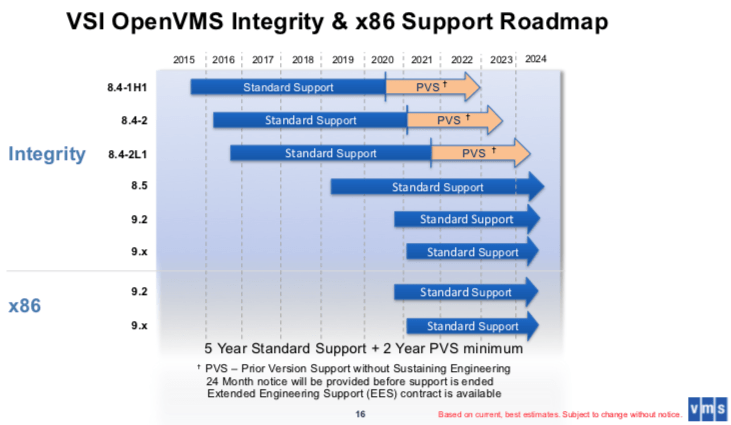
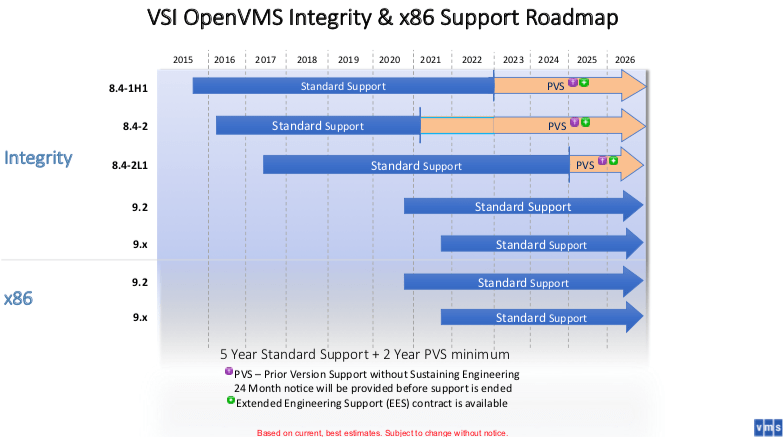
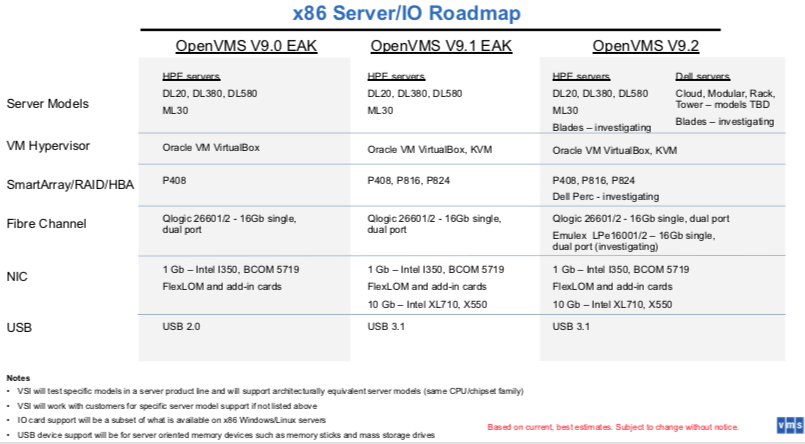
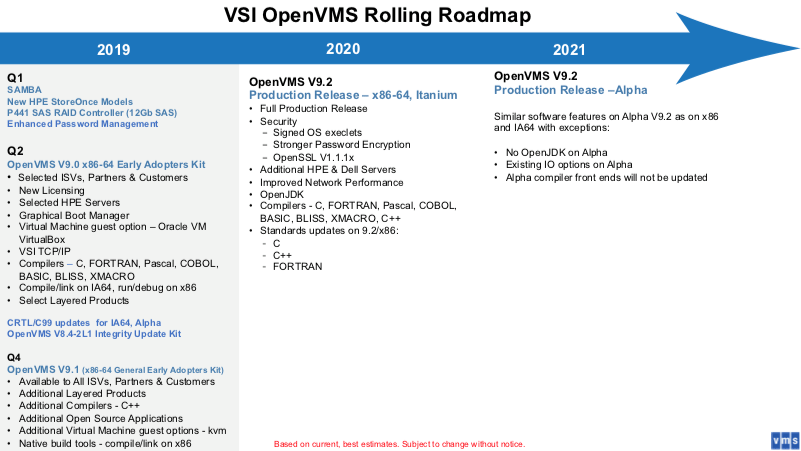
Since information about VMS and DCL is harder to find nowadays, I saved some information in the wayback machine:
By now, there should be a good x86_64 version of OpenVMS, so this is also a reminder to self to see if that can run as a VM and is affordable enough to do some experimentation with.
–jeroen

Posted in Development, History, Scripting, Software Development | Leave a Comment »
Posted by jpluimers on 2021/05/25
Often it is useful to have 3rd party components part of a repository so it is easier to increase portability.
For instance when you want to include or exclude some of them in certain projects by installing/deinstalling them to/from the IDE.
This can be useful for cases where components bite each other, or you want to vary the components in use by version without spinning up new VMs (Delphi registration counts can be a pain for new VMs; you need to be very careful as you can never decrease your registration count).
I usually do this by having 3 batch files:
If successful, I can uninstall the library.
I especially take this approach with 3rd party libraries that stuff to global places (inside the Delphi installation directory, or worse, inside the Windows directories).
That way, I can try to ensure that compilation of running only uses files from the repository, making my options for portability larger.
Examples I did this for are for instance QuickReports and ODAC.
Some bits are tricky to get right, especially loading dependencies.
It helps to understand that for executable files Windows also searches for dependencies in the directory of the executable file.
For libraries, that does not happen. Which means that if a BPL has dependencies, they either have to be explicitly loaded before (for instance by being in the Known Packages registry entries), or on the search PATH.
Delphi has the %BDSCOMMONDIR% directory in the search PATH. It usually points to “%PUBLIC%\Documents\Embarcadero\Studio\%ProductVersion%\Bpl” (where ProductVersion=19.0 for Delphi 10.2 Tokyo).
There might be a away around this using manifests, but this means modifying the BPL files, which is beyond the point of having these copy scripts.
More on those environment variables in a later blog post.
Related:
–jeroen
Posted in Conference Topics, Conferences, Delphi, Delphi 10.2 Tokyo (Godzilla), Development, Event, Software Development | Leave a Comment »


 The Wiert Corner - irregular stream of stuff