The answer to this is very simple. It was a joke. It had to be a number, an
ordinary, smallish number, and I chose that one. Binary representations,
base thirteen, Tibetan monks are all complete nonsense. I sat at my desk,
stared into the garden and thought ’42 will do’ I typed it out. End of story.Best,Douglas Adams
"hey @nickoneill, what's your wifi?" "We don't have wifi." "What? You don't have wifi?!" "No, we don't have wifi" … "Goddamnit, Nick." pic.twitter.com/7LO6DoePsO
The HTML page is interesting because just a minority of it is HTML. The rest is a truckload of CSS and embedded fonts. It is interesting to see how it was built, as the CSS and HTML is very well structured.
stupid project I’ve thought about making for years:
You go through and index your lego box and enter in which bricks you have, and it calculates which sets you probably had.
it’s basically a big nostalgia tool for all us nerds in our 30s who have those few distinctive parts but can’t remember which set they got them in because they were only 5 at the time.
you tell it what pieces you have and it finds official or unofficial sets you can build with them.
Neat!
I don’t know if it can do near-matches (like “you have 98% of the pieces you need for this set”) because you may have lost some parts, but it’s definitely a big step towards what I was wanting
Rebrickable will show you which LEGO sets you can build from the sets and parts you already own. You can choose from official LEGO sets or thousands of MOCs (My Own Creations) submitted by hundreds of designers. All MOCs include building instructions and full parts lists.
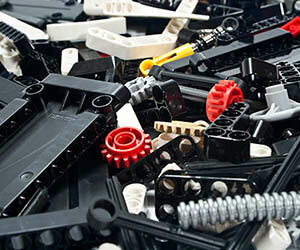
I HAVE THIS
+
AND A BUNCH OF THESE
=
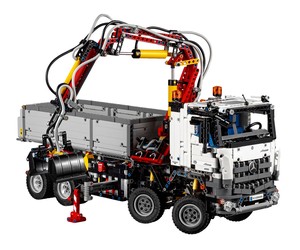
I CAN BUILD THIS, YAY!
Unless you have a LOT of sets, you will usually be missing a few pieces. In these cases Rebrickable will show you exactly what you are missing and even provide suggested sets that you could buy which will get you those pieces – effectively showing you how to buy two sets for the price of one!









 The Wiert Corner - irregular stream of stuff