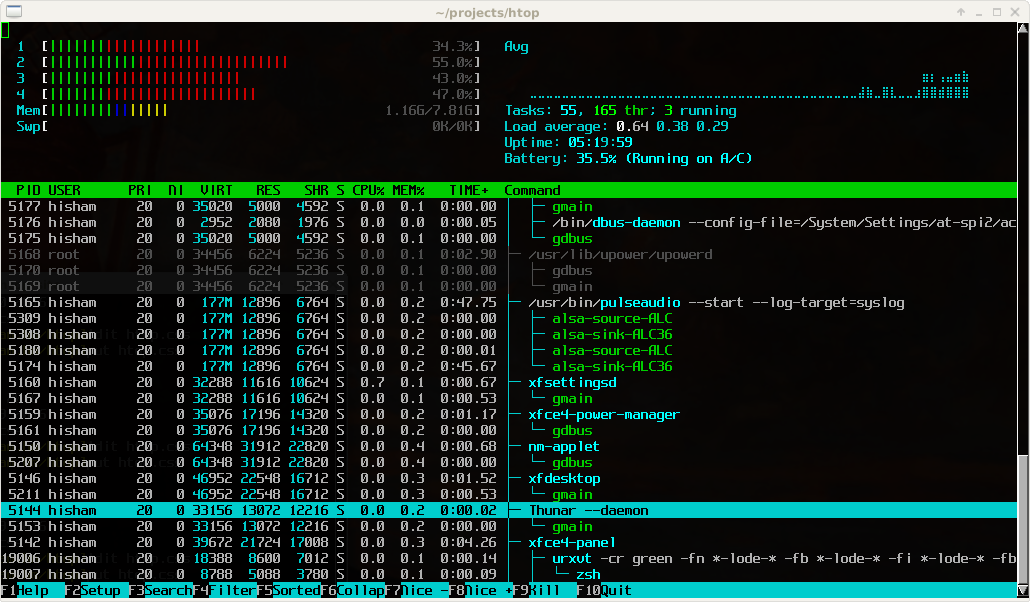
Note that on OS X you get this warning after brew install htop :
htop requires root privileges to correctly display all running processes,

so you will need to run `sudo htop`.

You should be certain that you trust any software you grant root privileges.
Read reviews, compare customer ratings, see screenshots, and learn more about Duplicate File Finder for files & folders. Download Duplicate File Finder for files & folders for Mac OS X 10.9 or later and enjoy it on your Mac.
[WayBack] Objective-See: tracking down the cause a serious authentication flaw in Mac OS X / MacOS / Mac OS 10: resetting the root password by just clicking OK.
(it took an hour to verify the media, then an OK button appeared before continuing to restore in the middle of the night; actual restore took 4+ hours)
Reinstalling OS X 10.9.5 failed: error -4403F
Restoring a prior Time Machine backup hung at less than 50% (taking like 6 hours)
Reinstalling OS X 10.9.5 over a different fiber connection worked
Mounting the image backup succeeded, but took 3 hours to complete “verifying…”
Migration Assistent on the image backup worked fine
In total it took 2.5 days to get the machine back in working condition.
I have the Atom editor and was wondering how you can open a file or folder from the terminal in Atom. I am using a Mac. I am looking for a way to do this: atom . (opens folder) atom file.js (
The answer to it isn’t any good any more (since then, Atom has evolved), but this comment works splendid:
I solved the issue by choosing “Install Shell Commands” under the “Atom” menu.
It will add a script in /usr/local/bin/atom that starts Atom with the parameters you entered.
I didn’t know this was built-in since Mountain Lion and up, but it is, is startable from the keyboard and it’s tremendously convenient when presenting: [WayBack]: OS X Mountain Lion: Zoom content on the screen.
Ensure you are logged in as user with administrative rights.
Use the Finder to open the folder Library at the topmost level of your system volume, and inside it, the folder StartupItems. If the driver is still installed, you will see the folder BRESINKx86Monitoring at this location.
Drag the folder BRESINKx86Monitoring to the Trash. OS X may ask for your administrator password.
Sort of tanslated from the first “via” (note that “mit Alles und Scharf” is hard to translate; it’s somewhere between “everything but the kitchen sink, but done right” and “right on the money”):
Bash Prompt Overkill: https://github.com/nojhan/liquidprompt is a Bash “Prompt doing it all right”-extension, which doesn’t care how much any feature costs as we have cores, gigabytes and SSD.
Liquid Prompt automagically recognises context and enables a plethora of features in the prompt when needed based on that context.
It’s like pixie dust for your prompt.
You can configure everything, but you don’t have to: the out of the box experience is already like pixie dust for your prompt.
It works on OS X too and is part of homebrew:
$ brew install liquidprompt
==> Using the sandbox
==> Downloading https://github.com/nojhan/liquidprompt/archive/v_1.11.tar.gz
==> Downloading from https://codeload.github.com/nojhan/liquidprompt/tar.gz/v_1.11
######################################################################## 100.0%
==> Caveats
Add the following lines to your bash or zsh config (e.g. ~/.bash_profile):
  if [ -f /usr/local/share/liquidprompt ]; then
    . /usr/local/share/liquidprompt
  fi
If you'd like to reconfigure options, you may do so in ~/.liquidpromptrc.
A sample file you may copy and modify has been installed to
  /usr/local/share/liquidpromptrc-dist
Don't modify the PROMPT_COMMAND variable elsewhere in your shell config;
that will break things.
==> Summary
🍺  /usr/local/Cellar/liquidprompt/1.11: 7 files, 125.6K, built in 3 seconds
[jeroenp:~/Versioned] 10s $






 The Wiert Corner - irregular stream of stuff