The Wiert Corner – irregular stream of stuff

Jeroen W. Pluimers on .NET, C#, Delphi, databases, and personal interests

  • My badges

  • Twitter Updates

  • My Flickr Stream

  • Pages

  • All categories

  • Enter your email address to subscribe to this blog and receive notifications of new posts by email.

    Join 1,860 other subscribers

Archive for the ‘Tumbleweed’ Category

ipmi – Linux: Why does Single User mode work on Serial Console but not on the attached Keyboard/Video/Monitor? – Server Fault

Posted by jpluimers on 2020/05/19

From [WayBack] ipmi – Linux: Why does Single User mode work on Serial Console but not on the attached Keyboard/Video/Monitor? – Server Fault (slightly edited; thanks Patrick!):

Because init has not spawned off multiple TTYs yet (getty, mgetty, etc), so you only have the primary TTY. The primary TTY is the last console= parameter on the kernel command line. All the console parameters get the output, but only the last one will be able to act as input.

–jeroen

Posted in *nix, Debian, Linux, openSuSE, Power User, RedHat, SuSE Linux, Tumbleweed | Leave a Comment »

Show openSUSE:Factory / bootchart – openSUSE Build Service

Posted by jpluimers on 2020/05/15

On my research list: [WayBack] Show openSUSE:Factory / bootchart – openSUSE Build Service.

I bumped here when researching on how to list services: [WayBack] init.d – Command to list services that start on startup? – Ask Ubuntu

It seems few people use it on opensuse, but it is interesting for analysing the boot process nonetheless.

I already found out this is in fact bootchart2: [WayBack] GitHub – xrmx/bootchart: merge of bootchart-collector and pybootchartgui

Some links that should help me further are these:

From the last link, this translation:

A. systemd-analyze

You will see the total computer startup time after:

systemd-analyze

A complete list of how much each individual service has taken is when you complete:

systemd-analyze blame

You will see the most problematic processes after you complete:

systemd-analyze critical-chain

You can create a picture:

systemd-analyze plot> /tmp/systemd-analyze.svg

Suitable for: openSUSE 11.4, 12.x, 13.1, Leap 42.x

Not suitable: openSUSE 13.2

B. bootchart

First, install the bootchart package (bootchart 2 version of the program). If you are using openSUSE Leap 42.x or later, enable bootchart2 (and optional bootchart2-done) service:

systemctl enable bootchart2

systemctl enable bootchart2-done

If you are using openSUSE version 13.1 or earlier, go to YaST → (System) → Startup and enter kernel startup parameters:

initcall_debug printk.time = y quiet init = / sbin / bootchartd rdinitrd = / sbin / bootchartd

The next time you start your computer, the /var/log/bootchart.png image will be created to help you further optimize your system startup. For example, if you do not need an AppArmor who cares about security, you can disable the boot.apparmor service through the YaST Service Configuration Module.

Suitable for: openSUSE 11.4, 12.x, 13.1, 13.2, Leap 42.x

–jeroen

Posted in *nix, *nix-tools, Linux, openSuSE, Power User, SuSE Linux, Tumbleweed | Leave a Comment »

Listing services on OpenSuSE Linux

Posted by jpluimers on 2020/05/15

Nowadays, most OpenSuSE Linux services are systemd based. Listing those is simple with systemctl list-units --all (configured ones) and systemctl list-unit-files (nonconfigured ones as well), though their states can be many as the command-completion for the --state parameter:

# systemctl list-unit-files --state
abandoned deactivating failed masked not-found remounting-sigterm start-pre stop-sigkill waiting
activating deactivating-sigkill final-sigkill merged plugged running stop stop-sigterm
activating-done deactivating-sigterm final-sigterm mounted registered sigkill stop-post stub
activating-sigkill dead inactive mounting reload sigterm stop-pre tentative
activating-sigterm elapsed listening mounting-done reloading start stop-pre-sigkill unmounting
active error loaded mounting-sigkill remounting start-chown stop-pre-sigterm unmounting-sigkill
auto-restart exited making mounting-sigterm remounting-sigkill start-post stop-sigabrt unmounting-sigterm

The odd thing: not all states from the service list are in the completion. These are missing from the list-unit-files:

generated
static
transient

In the past, most services were System V based, where you can use service --status-all. Contrary to the documentation (which indicates “The –status-all option displays the status of all loaded service units.”), it lists all services.

On OpenSuSE though, it now lists both System V based and systemd based services in one go. Since usually there are no more System V services (virtually all have been migrated to systemd a few years ago), the netto result is systemd services.

Based on [WayBack] init.d – Command to list services that start on startup? – Ask Ubuntu

–jeroen

Posted in *nix, *nix-tools, Linux, openSuSE, Power User, SuSE Linux, Tumbleweed | Leave a Comment »

How to install patterns in openSUSE and SUSE – TechRepublic

Posted by jpluimers on 2020/04/20

This was much easier than I hoped for: the zypper verbs search and install both support the --type pattern argument.

After that, the names for them are pattern names instead of the normal package names.

So for instance:

zypper search --type pattern
zypper install -type pattern kde kde_plasmaaa

Sources:

–jeroen


Posted in *nix, Linux, openSuSE, Power User, SuSE Linux, Tumbleweed | Leave a Comment »

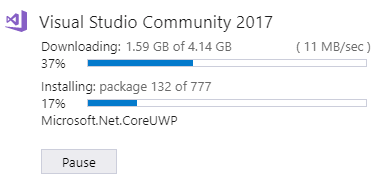
I love installers that can download and install in parallel threads….

Posted by jpluimers on 2020/02/04

[WayBack] I love installers that can download and install in parallel threads. Embarcadero and Zypper can learn from this. – Jeroen Wiert Pluimers – Google+

Most Linux distributions have package managers that can do this (apt and yum can), but OpenSuSE zypper (actually ZYpp) cannot even download packages in parallel:

Embarcadero is in the same state as zypper.

–jeroen

Posted in *nix, Development, openSuSE, Power User, Software Development, SuSE Linux, Tumbleweed | Leave a Comment »

OpenSuSE: location of cron jobs

Posted by jpluimers on 2020/01/20

When you look at how to find listed cron jobs, usually the answer is cron -l or cron -u username -l.

However, on OpenSuSE systems, cron jobs can be in different places, and the sysconfig settings have influence on them too.

These files and directories all influence cron:

Directories:

/etc/cron.d/
/etc/cron.daily/
/etc/cron.hourly/
/etc/cron.monthly/
/etc/cron.weekly/

Files:

/etc/sysconfig/cron
/etc/init.d/rc2.d/K01cron
/etc/init.d/rc2.d/S14cron
/etc/init.d/rc3.d/K01cron
/etc/init.d/rc3.d/S14cron
/etc/init.d/rc5.d/K01cron
/etc/init.d/rc5.d/S14cron
/etc/init.d/cron
/etc/news/crontab.sample
/etc/pam.d/crond
/etc/systemd/system/multi-user.target.wants/cron.service
/etc/omc/srvinfo.d/cron.xml
/etc/cron.deny
/etc/crontab

Most are available for other Linux distributions as well, but each one might have slightly different configurations (especially for the directories). Some background reading:

Some details:

  • The crontab -l will only list what is in /etc/crontab.
  • These directories are influenced by/etc/sysconfig/cron, especially the DAILY_TIME variable (see below) for the daily jobs.
    All of the directories are checked every 15 minutes through /usr/lib/cron/run-crons:/etc/cron.daily/
    /etc/cron.hourly/
    /etc/cron.monthly/
    /etc/cron.weekly/
  • That script then uses these files for checking when to run:/var/spool/cron/lastrun/cron.weekly
    /var/spool/cron/lastrun/cron.daily
    /var/spool/cron/lastrun/cron.hourly

The DAILY_TIME variable:

## Type: string
## Default: ""
#
# At which time cron.daily should start. Default is 15 minutes after booting
# the system. Example setting would be "14:00".
# Due to the fact that cron script runs only every 15 minutes,
# it will only run on xx:00, xx:15, xx:30, xx:45, not at the accurate time
# you set.
DAILY_TIME=""

–jeroen


Posted in *nix, *nix-tools, cron, Linux, openSuSE, Power User, SuSE Linux, Tumbleweed | Leave a Comment »

Eigenes DynDNS mit Bind und Apache – CupRacer.de

Posted by jpluimers on 2019/09/16

Dieser Artikel beschreibt, wie man einen eigenen Mechanismus für DNS-Updates als DynDNS-Alternative aufbaut.

Translated:

This article describes how you can create your own mechanism for DNS-updates as alternative for DynDNS.

Interesting read: [WayBackEigenes DynDNS mit Bind und Apache – CupRacer.de

Edit

The above post disappeared, but this one (which adds calling the DynDNS server from a Fritz!Box) is still up: [WayBack] Eigener DynDNS mit Bind, Apache und PHP | onderka.com with an update at [WayBack] Eigener DynDNS mit dnsmasq, Apache und PHP | onderka.com.

Source code for both:

Related and background reading:

–jeroen

Posted in *nix, bind-named, Linux, openSuSE, Power User, SuSE Linux, Tumbleweed | Leave a Comment »

Introduction to Snapshots/Rollback with Snapper | ActiveDoc

Posted by jpluimers on 2019/07/01

The snapper documentation itself is big and hard to grasp at once, so start here for a few examples on how to get going, or how to assess your current configuration:

For a very good snapper introduction seems to be gone, but was present in the OpenSuSE documentation archive circa version 13.2 at [WayBackChapter 4. Snapshots/Rollback with Snapper | ActiveDoc which I’ve quoted below.

Between that version and LEAP, the retention got moved from “timeline” based to “number” based. More on that in these links:

Man pages:

Introduction

4.1.1 snapshots and Disk Space #

When a snapshot is created, both the snapshot and the original point to the same blocks in the file system. So, initially a snapshot does not occupy additional disk space. If data in the original file system is modified, changed data blocks are copied while the old data blocks are kept for the snapshot. Therefore, a snapshot occupies the same amount of space as the data modified. So, over time, the amount of space a snapshot allocates, constantly grows. As a consequence, deleting files from a Btrfs file system containing snapshots may not free disk space!

Note: Snapshot Location

Snapshots always reside on the same partition or subvolume that has been snapshotted. It is not possible to store snapshots on a different partition or subvolume.

As a result, partitions containing snapshots need to be larger than “normal” partitions. The exact amount strongly depends on the number of snapshots you keep and the amount of data modifications. As a rule of thumb you should consider using twice the size than you normally would.

Tip: Freeing space / Disk Usage

In order to free space on a Btrfs partition containing snapshots you need to delete unneeded snapshots rather than files. Older snapshots occupy more space than recent ones.

Since the df does not show the correct disk usage on Btrfs file systems, you need to use the command btrfs filesystem df MOUNT_POINT. Displaying the amount of disk space a snapshot allocates is currently not supported by the Btrfs tools.

–jeroen

Posted in *nix, Linux, openSuSE, Power User, SuSE Linux, Tumbleweed | Leave a Comment »

ls colour codes on OpenSuSE tumbleweed when accessed from Mac OS X ssh

Posted by jpluimers on 2019/06/07

`ls` colour codes

`ls` colour codes

I got confused as I thought red text would mean an error.

But they’re not: greenish yellow on a read background means error (a symbolic link to a place that’s no longer there).

It’s the output of https://github.com/gkotian/gautam_linux/blob/master/scripts/colours.sh as the one at

Actually the script is here https://raw.githubusercontent.com/gkotian/gautam_linux/master/scripts/colours.sh as the one at [WayBackcommand line – What do the different colors mean in the terminal? – Ask Ubuntu failed with errors like this one:

-bash: *.xbm: bad substitution

The full script output is below.

Since various terminals have a different mapping from colours in the ANSI escape code colour table, I used the standard HTML colours using (which slightly differs from the Terminal.app screenshot on the right):

References:

Note that the shell on Mac OS X uses a different way of configuring colours CLICOLOR as described in [WayBacksettings – CLICOLOR and LS_COLORS in bash – Unix & Linux Stack Exchange. I might cover that another day.

Script output:

Read the rest of this entry »

Posted in *nix, *nix-tools, ANSI escape code, bash, CSS, Development, Encoding, HTML, HTML5, Linux, openSuSE, Power User, Software Development, SuSE Linux, Tumbleweed, Web Development | Leave a Comment »

When your btrfs partition is damaged.

Posted by jpluimers on 2019/05/27

A while ago, I somehow had a damaged btrfs partition that I found out after the virtualisation host without reason decided to reboot.

I’m not sure what caused that (by now the machine has been retired as it was already getting a bit old), but btrfs was panicking shortly after boot, so the VM as is was unusable.

In the end I had to:

  1. Boot from a Tumbleweed Rescue DVD (download Rescue CD – x86_64 from [WayBackopenSUSE:Tumbleweed installation – openSUSE)
  2. Add a fresh backup hard disk in read-write mote
  3. Mount the old one in read-only mode
  4. rsync -avloz over as much as I could
  5. Restore the VM from a backup
  6. Attach the backup hard disk
  7. Diff what I missed (only a few bits in the /etc tree and my home directory for which I hadn’t yet pushed the git repositories).

These didn’t work, but might work for others: [WayBackSDB:BTRFS – openSUSE – How to repair a broken/unmountable btrfs filesystem

–jeroen

Posted in *nix, btrfs, File-Systems, Linux, openSuSE, Power User, SuSE Linux, Tumbleweed | Leave a Comment »