


I use Nirsoft’s [WayBack] CSVFileView. It is a simple lightweight read-only csv viewer.
Source [WayBack] windows – What is a good light-weight CSV viewer? – Stack Overflow
Posted by jpluimers on 2018/08/06
I use Nirsoft’s [WayBack] CSVFileView. It is a simple lightweight read-only csv viewer.
Source [WayBack] windows – What is a good light-weight CSV viewer? – Stack Overflow

Posted in Power User, Windows | 2 Comments »
Posted by jpluimers on 2018/08/03
Cool set of steps on [WayBack] How I use Wireshark – Julia Evans who uses the combination of tcpdump to dump traffic in pcap files and Wireshark to analyse the pcap files after copying them using scp. On many platforms, Wireshark can also capture the ptrace files for you.
Via: [WayBack] 🔎Julia Evans🔍 on Twitter: “how I use Wireshark https://t.co/j699JXrjaH” which has some nice comments including:
ptrace to your tool-kitscp for copying, as you can do [WayBack] dumpcap over an existing ssh connection:
wireshark -k -i <(ssh <IP> "sudo dumpcap -P -w - -f 'not tcp port 22'")–jeroen
Posted in *nix, *nix-tools, Conference Topics, Conferences, Event, Power User, Wireshark | Leave a Comment »
Posted by jpluimers on 2018/08/03
When you start with a blank registry comparison, then you need to compare keys copied from RegEdit with reg:\
For instance, when fixing [WayBack] Delphi fails to start after Windows did some “Program Compatibility Assistant” magic to it when BDS.exe crashed because the compiler ran out of memory:… – Jeroen Wiert Pluimers – Google+ I compared these:
reg:\\HKEY_CURRENT_USER\Software\Embarcadero\BDS
reg:\\HKEY_CURRENT_USER\Software\Embarcadero\JeroenProfile
Note: Beyond compare registry settings are in:
HKEY_CURRENT_USER\Software\Scooter Software\Beyond Compare 4HKEY_LOCAL_MACHINE\SOFTWARE\Scooter Software\Beyond CompareHKEY_LOCAL_MACHINE\SOFTWARE\Scooter Software\Beyond Compare 4HKEY_LOCAL_MACHINE\SOFTWARE\WOW6432Node\Scooter Software\Beyond CompareHKEY_LOCAL_MACHINE\SOFTWARE\WOW6432Node\Scooter Software\Beyond Compare 4—jeroen Not sure where the CacheID entry under HKCU (and sometimes HKLM) is for.
Posted in Beyond Compare, Power User | Leave a Comment »
Posted by jpluimers on 2018/08/03
Somewhere after Yosemite, braindead Mac OS X forcibly maps “Ctrl+Click” to right-click. In past versions, you could disable but those days have gone.
This means that inside Windows on VMware Fusion, you cannot add/remove items to/from a selection any more (for instance in the Windows Explorer).
Various workarounds turned up in my Google Search, but only this one works:
Holding down CTRL + OPTION together and LEFT CLICKING will do this.
Source: [WayBack] vmware fusion – How to use the control key in VM Ware? – Super User
–jeroen
via:
Posted in Apple, Fusion, Mac, Mac OS X / OS X / MacOS, MacBook, MacBook Retina, MacBook-Air, MacBook-Pro, MacMini, macOS 10.12 Sierra, OS X 10.10 Yosemite, OS X 10.11 El Capitan, OS X 10.9 Mavericks, Power User, Virtualization, VMware | Leave a Comment »
Posted by jpluimers on 2018/08/02
This was Delphi Berlin, but Live Bindings is not much better in any other Delphi version when opening a project group having multiple applications none of which use Live Bindings:
This is how you disable them in Delphi 10.1 Berlin from the console; modify your BDS version and BPL version for other Delphi versions:
reg add "HKEY_CURRENT_USER\Software\Embarcadero\BDS\18.0\Disabled Packages" /v "$(BDSBIN)\dclbindcomp240.bpl" /t REG_SZ /d "Embarcadero LiveBindings Components" /f

reg add "HKEY_CURRENT_USER\Software\Embarcadero\BDS\18.0\Disabled Packages" /v "$(BDSBIN)\dclbindcompfmx240.bpl" /t REG_SZ /d "Embarcadero LiveBindings Components FireMonkey" /f

reg add "HKEY_CURRENT_USER\Software\Embarcadero\BDS\18.0\Disabled Packages" /v "$(BDSBIN)\dclbindcompvcl240.bpl" /t REG_SZ /d "Embarcadero LiveBindings Components VCL" /f

reg add "HKEY_CURRENT_USER\Software\Embarcadero\BDS\18.0\Disabled Packages" /v "$(BDSBIN)\dclbindcompdbx240.bpl" /t REG_SZ /d "LiveBindings Expression Components DbExpress" /f

reg add "HKEY_CURRENT_USER\Software\Embarcadero\BDS\18.0\Disabled Packages" /v "$(BDSBIN)\dclbindcompfiredac240.bpl" /t REG_SZ /d "LiveBinding Expression Components FireDac" /f
(Reminder to self: modify bitbucket.org/jeroenp/wiert.me/src/tip/Native/Delphi/Scripts/List-Delphi-Installed-Packages.ps1 so it can generate these)
Edit: I have done just that: it now understands the GenerateDisablePackagesScriptparameter so it generates a small console script to disable various packages.
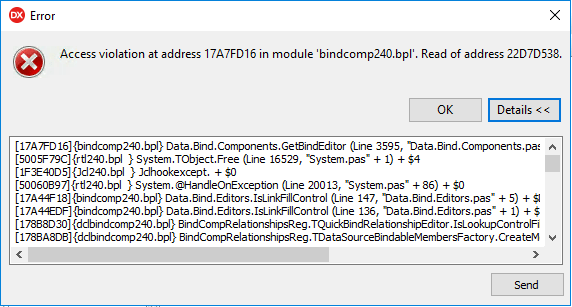
In QualityCentral: 144003 – Automated Incident Report:

Posted in Delphi, Development, Live Bindings, Software Development | 2 Comments »
Posted by jpluimers on 2018/08/02
The diff engine in PlasticSCM is nice in appearance, but it lacks a lot of features for file types that Beyond Compare handles out of the box.
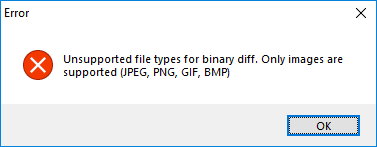 For instance, .RES files cannot be diffed:
---------------------------
Error
---------------------------
Unsupported file types for binary diff. Only images are supported (JPEG, PNG, GIF, BMP)
---------------------------
OK
---------------------------

Posted in Beyond Compare, Development, PlasticSCM, Power User, Source Code Management | 2 Comments »
Posted by jpluimers on 2018/08/02
Reminder to self: see if there was follow-up on [WayBack] Just curious whether anyone has had experience with the Uses Cleaner written by Oleg Zhukov: http://www.olegzhukov.com/UsesCleanupceaf.zip?fileticket=R_… – Bill Meyer – Google+
File: [WayBack] http://www.olegzhukov.com/UsesCleanupceaf.zip?fileticket=R__cxggc2OA%3d&tabid=73&mid=402
–jeroen
Posted in Delphi, Development | 1 Comment »
Posted by jpluimers on 2018/08/01
[Archive.is] Quark Cube – YouTube:
We create tutorials. And all this without the usual stuff. We want to show how you can work with FireMonkey. Our tutorials are not available as source code. We want to show you a look more, and yes, we do it. Fast, reliable, targeted, unambiguous and ahead of its time. We love Delphi with FireMonkey. #ILoveDelphi
The vides are at [Archive.is] (70) Quark Cube – YouTube
Via Dave Nottage
–jeroen
Posted in Delphi, Development, FireMonkey, Software Development | Leave a Comment »
Posted by jpluimers on 2018/08/01
Despite many posts saying you can use it on other than outbound connections, lets quote that it doesn’t:
MaxUserPort controls “outbound” TCP connections
[WayBack] MaxUserPort is used to limit the number of dynamic ports available to TCP/IP applications.
…
It’s never going to be an issue affecting inbound connections.
MaxUserPort is not the right answer if you think you have an inbound connection problem.
Source: [WayBack] MaxUserPort – what it is, what it does, when it’s important – Blog du Tristank
The side of the TCP connection that closes is gets the TIME_WAIT state, which means you should avoid your server to terminate connections because it then will run out of available ports. Clients should disconnect when done (or when done for the foreseeable future) otherwise the server gets the 2MSL TIME_WAIT penalty as for instance explained by [WayBack] TIME_WAIT and its design implications for protocols and scalable client server systems – AsynchronousEvents.
The solution for inbound connections is that your TCP based protocol should enforce either the client to close the connection, or to use some form of client pooling so there is no need for many connection setup/teardowns of short lived connections.
TIME_WAIT can last for about ~10 minutes if you are unlucky.
More recommended reading:
–jeroen
Posted in Communications Development, Development, Internet protocol suite, Software Development, TCP | Leave a Comment »
Posted by jpluimers on 2018/08/01
From a quick scan for LogAllocatedBlocksToFile, I found these links I need to dig deeper into:
This in oder to spot “leaks” at run-time that are being release at process end, but build up memory usage over time. Some might call them “live leaks”.
Basically this is a technique I used a long time ago when I wrote a memory allocation dumper and parsing tool combination in the Turbo/Borland Pascal era called “Korsakov” (I might even have updated that to Delphi 1 once, but soon in Delphi better tools became available).
Another tool that might help here is [WayBack] GitHub – yavfast/dbg-spider: Spider – Delphi profiler with docs at [WayBack] Spider – Delphi profiler:
–jeroen

Posted in Delphi, Development, Software Development | Leave a Comment »

 The Wiert Corner - irregular stream of stuff