Archive for the ‘6502’ Category
Posted by jpluimers on 2026/09/14

H2G2 art box – from Wikipedia
Today, 42 years ago the famous Infocom game The Hitchhiker’s Guide to the Galaxy got released.
There is a bit of confusion on that date, as the above Wikipedia page mentions November 1984 for the USA and January 1985 for the EU.
Those are the time frames the boxes reached the public, but the actual release on 1984-09-14 is documented in [Wayback/Archive] The Infocom Bugs List: The Hitchhiker’s Guide to the Galaxy.
I got reminded last year by [Wayback/Archive] Charles Hawn on X: “Hitchhiker’s guide to the Galaxy was released 41 years ago today on Sept 14, 1984. Written by Steve Meretzky and Douglas Adams. It was #Infocom’s 14th game. What a bad day! As the story begins a bulldozer is preparing to level your house. DON’T PANIC! #Commodore64 #Commodore #C64 …” who was lucky to have the original complete box including button, pocket fluff and fleet (see picture below).
I wasn’t so fortunate back in 1984: I had entered secondary education not long ago, my parents didn’t believe in computers at all, I hardly got any allowance and had no idea where you could by software locally.
An original copy of the game (either Apple II or IBM) is still on my wish list, as well as the InvisiClues hint book mentioned at [Wayback/Archive] Charles Hawn on X: “@odinisamu It took me days to finally figure out how to get the babel fish into my ear to translate Vogon to English. It was before the internet and walk through so you just had to keep trying different things or pay $14.95 for the hint book sold by Infocom. I got this a few years ago. …”
References:
Read the rest of this entry »
Posted in 6502, History, LifeHacker, Power User | Tagged: C64, Commodore, Commodore64, Infocom | Leave a Comment »
Posted by jpluimers on 2026/05/27
Got an error when pushing a relatively large commit to GitLab: error: RPC failed; HTTP 502 curl 22 The requested URL returned error: 502
There was no big difference in information between these commands¹:
git pushgit push --verbose
Read the rest of this entry »
Posted in //e, 6502, Apple, Apple ///, Apple IIgs, Apple ][, Development, DVCS - Distributed Version Control, git, GitLab, History, Power User, Software Development, Source Code Management, Versioning | Leave a Comment »
Posted by jpluimers on 2026/05/06
Cool to see what 3D printing plus a Raspberry Pi emulating a C64 can do [Wayback/Archive] I Built a Commodore 64 Laptop That Never Existed (PI + EMULATION) – The Portable 64 Concept Design – YouTube.
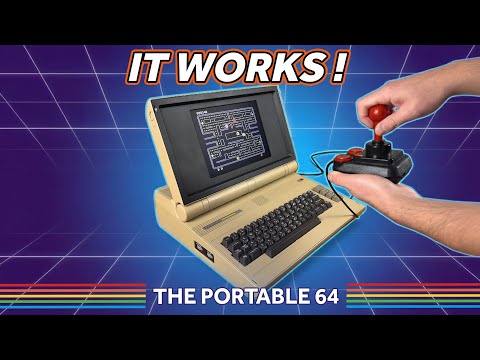
The Portable 64 with an original Commodore 64 joystick
However, published in December 2025 after Commodore had been resurrected from the C= brands, it would have been way cooler if was based on new Commodore 64 Ultimate hardware.
Maybe someone will do such a portable computer based on that hardware, or even better that it becomes available at [Wayback/Archive] Home | Commodore.
--jeroen
Posted in 3D printing, 6502, C64, Commodore, Development, Hardware Development, History, Power User, Retrocomputing | Leave a Comment »
Posted by jpluimers on 2026/02/13
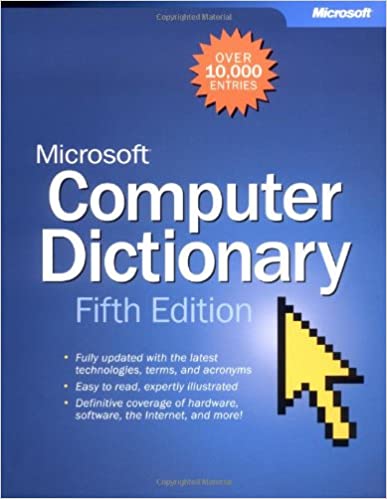 While researching early Intel 8087 documentation distributed via LISTSERV, the below blast from the past also turned up: back in 2002 computer dictionaries were also available as … books!
[Wayback/Archive] Microsoft® Computer Dictionary, Fifth Edition (Cpg-Other): 9780735614956: Computer Science Books @ Amazon.com
- Publisher : Microsoft Press; 5th ed. edition (June 1, 2002)
- Language : English
- Paperback : 637 pages
- ISBN-10 : 0735614954
- ISBN-13 : 978-0735614956
- Item Weight : 2.85 pounds
- Dimensions : 7.33 x 1.76 x 9.25 inches
It is available from various sources including [Wayback/Archive] Microsoft Computer Dictionary – Microsoft Press – Google Books and [Wayback/Archive] microsoft_computer_dictionary__fifth_edition1.pdf.
Read the rest of this entry »
Posted in 6502, 68k, 8086, 8087, 8087, 8088, Development, History, Software Development | Leave a Comment »
Posted by jpluimers on 2026/02/10
I need to check out which ROM my Apple //e and //c have as per [Wayback/Archive] Single Step in Monitor | Applefritter comment by [Wayback/Archive] jeffmazur | Applefritter:
Depends upon which machine and ROM version you have.
The original Apple II monitor does have an S command to single step code in the Monitor. That was removed however to add other features and was not restored until ROM00 of the //c. There are however various 3rd-party ROM images that also have the Step and Trace commands, for example ROMeX and ROM4X, APPLEII.EDM, etc.
There are also hardware boards available to do this as well
Links
Read the rest of this entry »
Posted in //e, 6502, Apple, Apple ][, History, Power User, Retrocomputing | Tagged: 394 | Leave a Comment »
Posted by jpluimers on 2025/11/28
Karateka (which appeared way before the even more famous Prince of Persia which appeared 5 years later) memories of the past, for which I totally agree with the conclusion: the game on Apple ][ was way better:
[Wayback/Archive] 𝔸𝕟𝕒𝕥𝕠𝕝𝕪 𝕊𝕙𝕒𝕤𝕙𝕜𝕚𝕟💾 on Twitter: “@textfiles Jordan’s opinion on the IBM version”
 JULY 31, 1986
Just looked at the “final” version of PC Karateka. It seemed OK, I guessed, except for overall sluggishness, frequent disk accesses, and a few minor graphics glitches. Then I booted up the Apple version to compare… and it was so smooth, it made me want to cry.
The PC version is maybe 50% of what it should be. I can’t even tell these guys s what to fix… it’s a million little things, and they’re just not up to the hassle. That kind of attention to detail is why the Apple version took me two years. This version is probably the best I’ll ever get out of them.
You can play the PC version online at [Wayback/Archive] Karateka IBM Version 1986-01-30 (1986-02-04) (ID 0873) : Jordan Mechner : Free Download, Borrow, and Streaming : Internet Archive
Internal Alpha version (1986-01-30) of the IBM port of Karateka by Jordan Mechner.
It was ported to many platforms, and there was a great documentary too. So there are more YouTube links below than [Wayback/Archive] Karateka IBM PC Model 5150 Longplay – YouTube which has this great description:
Read the rest of this entry »
Posted in 6502, 8086, 8088, C64, Commodore, History, IBM PC Model 5150, Power User, Retrocomputing | Leave a Comment »
Posted by jpluimers on 2025/11/14
The mini micro classic Apple emulators related post last week became way too big, so here is the classic Apple 2/Macintosh hardware upgrade part follow-up I announced in Some notes on mini/micro Apple //e emulators.
Last week, I mentioned [Wayback/Archive] ARC Javmaster – YouTube. Let’s continue from there for an even bigger post (:
Javmaster actually has a shop at [Wayback/Archive] Welcome to the 8-bit stuff store – 8 bit stuff cool retro computer 3D gadgets and geekery with a lot of interesting (mainly Apple ][ era related) retro things like:
Read the rest of this entry »
Posted in //e, 6502, Apple, Apple ][, Classic Macintosh, dial-up modems, History, Internet, Macintosh SE/30, Power User, Retrocomputing | Tagged: 12, 156, 25, 3dprint, 3dprinting, 4, Apple, appleiigs, AprilApples | Leave a Comment »
Posted by jpluimers on 2025/05/16
A while ago I bumped into this video about likely the rarest model in the Apple II series: the Apple IIc Plus:
[Wayback/Archive] Apple IIc Plus – the rarest and fastest Apple II! – YouTube
Returning to one of my favorite subjects – the Apple II – I decide to finally repair a broken Apple IIc Plus gifted to me a little more than a year ago. This machine was the final true hardware revision to the Apple II line, coming in 1988, and the last standalone machine in the line released. It was also the fastest, with a 4Mhz CPU (vs. 1Mhz in most other Apple II’s, and 2.6Mhz in the IIGS). But it was a problematic machine for Apple, with a concept that had been watered down to the point of, well, pointlessness.
The market wanted it even less than it wanted the original IIc (which was my first computer – the one in the thumbnail is my original machine). Still, it is an interesting computer for its accelerated CPU, and its somewhat anachronistic nature at the time of its launch.
It has a cool demo of Flight Simulator II demo mode (which back in those days crashing the plane – demo modes luckily improved from there :) at both 1 Mhz and 4 Mhz. It indeed is not smooth, but a lot faster.
The problem back in those days with acceleration is it would not just improve render speed, but also increase clock time speed. It made most games almost impossible to play in accelerated mode.
If I ever get one, I need to replace the 110V power supply with a 240V/110V auto-switching one as per [Wayback/Archive] IIc + 240v Power:
Read the rest of this entry »
Posted in 6502, Apple, Apple ][, History, Power User | Leave a Comment »


Depends upon which machine and ROM version you have.
The original Apple II monitor does have an S command to single step code in the Monitor. That was removed however to add other features and was not restored until ROM00 of the //c. There are however various 3rd-party ROM images that also have the Step and Trace commands, for example ROMeX and ROM4X, APPLEII.EDM, etc.
There are also hardware boards available to do this as well