Archive for 2020
Posted by jpluimers on 2020/10/22
 Read these tips before playing with any kind of LED strips: [WayBack] Powering NeoPixels | Adafruit NeoPixel Überguide | Adafruit Learning System.
There are more, but these are the most important:
- When connecting NeoPixels to any live power source or microcontroller, ALWAYS CONNECT GROUND (–) BEFORE ANYTHING ELSE. Conversely, disconnect ground last when separating.
- Adding a 300 to 500 Ohm resistor between your microcontroller’s data pin and the data input on the first NeoPixel can help prevent voltage spikes that might otherwise damage your first pixel. Please add one between your micro and NeoPixel.
- Before connecting a NeoPixel strip to ANY source of power, we very strongly recommend adding a large capacitor (1000 µF, 6.3V or higher) across the + and – terminals. This prevents the initial onrush of current from damaging the pixels.
- Be extremely cautious with bench power supplies. Some — even reputable, well-regarded brands — can produce a large voltage spike when initially switched on, instantly destroying your NeoPixels!
If you use a bench supply, do not connect NeoPixels directly. Turn on the power supply first, let the voltage stabilize, then connect the pixels (GND first).
Via: [WayBack] Bouw je eigen ledtafel – Tot slot – Achtergrond – Tweakers
–jeroen
Posted in Arduino, Development, Hardware Development, Hardware Interfacing, Raspberry Pi | Leave a Comment »
Posted by jpluimers on 2020/10/22
Always interesting to see what others put on their Windows development systems, for instance: [WayBack] My toolkit – Roald’s blog
Everytime I (re)install my development computer I need to think about all the tools I need and use on a regular basis. For that reason, and maybe to inspire others, here’s my list of essentia…
–jeroen
Posted in .NET, Delphi, Development, Software Development, Windows Development | Leave a Comment »
Posted by jpluimers on 2020/10/22
An old trick that I tend to forget: [WayBack] delphi – How to convert a null terminated string to string? – Stack Overflow:
You can assign a null-terminated PChar directly to a String:
function GetFileName(DiskName: TFileNameIO): string;
begin
 Result := PChar(@DiskName);
end;
It can work even on string literals and constants, where you can leave out the @, like in:
var
  S: string;
begin
  S := PChar(FastMM4Messages.LogFileExtension;
Probably time to update the unit I mention in ISO 8601 Date, Time and DateTime in Delphi (was: Simple example to show DateTime.Now in ISO 8601 format on ideone.com | Online C# Compiler & Debugging Tool).
–jeroen
Posted in Delphi, Development, Software Development | Leave a Comment »
Posted by jpluimers on 2020/10/21
Cool:
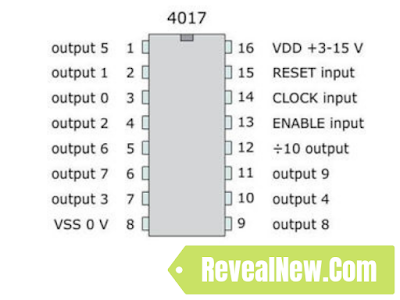
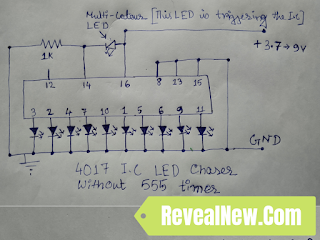
The triggering in this case is the result of a main power drop and recover. The battery is unable to keep the votage at 9V level at the very moment any led is turned on, the voltage is droped down. That is what makes pin 14 to get the clock pulse so the 4017 shifts to the next led. The moment the led is off and right before the next led is turned on the main power gets recovered. When the next led is on again, the main power drops down, and so on.
Schema but less explanation on: [WayBack] LED Chaser with only 4017 – RevealNew
–jeroen
Read the rest of this entry »
Posted in Development, Electronics Development, Hardware Development | 1 Comment »
Posted by jpluimers on 2020/10/21
[WayBack] Top 45 Best Automation Testing Tools Ultimate List • Test Automation Made Easy: Tools, Tips & Training Awesomeness A few notes, partially related to Enable your device for development – UWP app developer | Microsoft Docs.
One research project I had a while ago, was to see how it was possible to use a generic testing tool like Katalon Studio (that can test many platforms), for testing Windows applications.
Katalon uses a Selenium interface that normally is used for web applications through the [WayBack] WebDriver protocol (formerly [WayBack] JsonWireProtocol) that continues to be updated: [WayBack] draft upcoming WebDriver protocol, which is more generic than just web applications:
Read the rest of this entry »
Posted in .NET, Conference Topics, Conferences, Delphi, Development, Event, Software Development, Windows Development, WinForms, WPF | Leave a Comment »
Posted by jpluimers on 2020/10/21
One of the dreaded things when logging on using RDP is that if another user is logged on, you have to first indicate you want to indeed logon (if you don’t, the RDP connection will close after some 15-30 seconds), then wait for their approval time-out before you can logon.
As of writing there is no way around this.
Some links that helped me conclude this:
–jeroen
Posted in Development, Power User, Software Development, Windows, Windows 10, Windows 7, Windows 8, Windows 8.1, Windows Development | Leave a Comment »
Posted by jpluimers on 2020/10/21
On Windows, filenames do not like some characters (including : and +), so this is a quick way to get a timestamp into ISO8601 format that is compatible with filenames.
    TimeStamp := Now();

StartIso8601String := DateToISO8601(TimeStamp, False).Replace('-', '').Replace(':', '') // https://en.wikipedia.org/wiki/ISO_8601#Time_zone_designators
It Depends on the [WayBack] System.DateUtils unit which had the [WayBack] DateToISO8601 function [Archive.is] added in Delphi XE6.
A poor man’s solution (that skips timezones altogether) is this one:
FormatDateTime('yyyymmdd''T''hhnnss''.''zzz', TimeStamp); // note quoted T and ., as otherwise they will be expanded.
–jeroen
Posted in Delphi, Development, Software Development | Leave a Comment »




 The Wiert Corner - irregular stream of stuff