The Wiert Corner – irregular stream of stuff

Jeroen W. Pluimers on .NET, C#, Delphi, databases, and personal interests

  • My badges

  • Twitter Updates

  • My Flickr Stream

  • Pages

  • All categories

  • Enter your email address to subscribe to this blog and receive notifications of new posts by email.

    Join 1,835 other subscribers

Archive for the ‘Windows Development’ Category

winapi – What format is the time member of a MSG structure? – Stack Overflow

Posted by jpluimers on 2020/12/22

Found it. GetMessageTime defines it as the number of milliseconds since the system was started.

Source: [WayBack] winapi – What format is the time member of a MSG structure? – Stack Overflow.

It is not documented in the MSG/tagMSG documentation: [WayBack] tagMSG | Microsoft Docs Contains message information from a thread’s message queue.

Luckily, The Old New Thing does: [WayBack] What clock do MSG.time and GetMessageTime use? – The Old New Thing

The unit is documented in [WayBack] GetMessageTime function | Microsoft Docs: Retrieves the message time for the last message retrieved by the GetMessage function.

–jeroen

Posted in Development, Software Development, The Old New Thing, Windows Development | Leave a Comment »

Old New Thing IAccessible examples

Posted by jpluimers on 2020/12/17

The blog examples are only two:

The book has more: The Old New Thing: Practical Development Throughout the Evolution of Windows – Raymond Chen – Google Books

jeroen

Posted in COM/DCOM/COM+, Development, Software Development, The Old New Thing, Windows Development | Leave a Comment »

About Event Tracing – Windows applications | Microsoft Docs

Posted by jpluimers on 2020/11/24

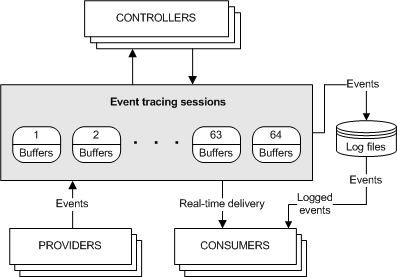
On my list of things to look into: [WayBack] About Event Tracing – Windows applications | Microsoft Docs.

It is so much better than OutputDebugString!

Via Kent Morwath commenting at Never ever put OutpugDebugString in code that is meant to run on production systems « The Wiert Corner – irregular stream of stuff

–jeroen

Posted in Development, Software Development, Windows Development | Leave a Comment »

FeaturesShim: using ShimGen for creating a shim to a program either console or GUI so you need only one bin directory

Posted by jpluimers on 2020/11/17

[WayBack] FeaturesShim is a cool Chocolatey feature that uses ShimGen.

This allows Chocolatey to take only one directory in your search PATH, with a lot of small files, that link to the much larger actual executable files.

ShimGen (like many other parts of Windows and some other parts of Chocolatey) is not open source, but the mechanism is documented.

More information:

–jeroen

Posted in .NET, Development, Power User, Software Development, Windows, Windows Development | Leave a Comment »

performance – How can I produce high CPU load on Windows? – Super User

Posted by jpluimers on 2020/10/28

Reminder to self: [WayBack] performance – How can I produce high CPU load on Windows? – Super User

Poor-mans-solution is a batch file filling one core:

@echo off
:loop
goto loop

To stop, press Ctrl+C in the console.

Far easier is [WayBack] Tools To Simulate CPU / Memory / Disk Load – The Way I See It:

There is an old SysInternals tool from 1996 called “CPU Stress” that still works. (I just tried it on my Windows 10 laptop.)

Custom CPU load

It’s GUI based and allows you to run up to four threads at custom intensities. This allows you to tune the desired CPU load. As a rule of thumb: One thread with Activity set to Maximum will consume about 25% CPU. So as an example: If you run three threads at Maximum, your CPU load goes to about 75%.

Portable

CPUSTRES.EXE is a portable download and does not require installation.

–jeroen

Posted in Development, Software Development, Windows Development | Leave a Comment »

My toolkit – Roald’s blog

Posted by jpluimers on 2020/10/22

Always interesting to see what others put on their Windows development systems, for instance: [WayBack] My toolkit – Roald’s blog

Everytime I (re)install my development computer I need to think about all the tools I need and use on a regular basis. For that reason, and maybe to inspire others, here’s my list of essentia…

–jeroen

Posted in .NET, Delphi, Development, Software Development, Windows Development | Leave a Comment »

Automated testing Windows applications using Katalon and WinAppDriver

Posted by jpluimers on 2020/10/21

[WayBack] Top 45 Best Automation Testing Tools Ultimate List • Test Automation Made Easy: Tools, Tips & Training Awesomeness A few notes, partially related to Enable your device for development – UWP app developer | Microsoft Docs.

One research project I had a while ago, was to see how it was possible to use a generic testing tool like Katalon Studio (that can test many platforms), for testing Windows applications.

Katalon uses a Selenium interface that normally is used for web applications through the [WayBack] WebDriver protocol (formerly [WayBack] JsonWireProtocol) that continues to be updated: [WayBack] draft upcoming WebDriver protocol, which is more generic than just web applications:

Read the rest of this entry »

Posted in .NET, Conference Topics, Conferences, Delphi, Development, Event, Software Development, Windows Development, WinForms, WPF | Leave a Comment »

RDP logon while other user is logged on: no way to automate automatic disconnect/logoff

Posted by jpluimers on 2020/10/21

One of the dreaded things when logging on using RDP is that if another user is logged on, you have to first indicate you want to indeed logon (if you don’t, the RDP connection will close after some 15-30 seconds), then wait for their approval time-out before you can logon.

As of writing there is no way around this.

Some links that helped me conclude this:

–jeroen

Posted in Development, Power User, Software Development, Windows, Windows 10, Windows 7, Windows 8, Windows 8.1, Windows Development | Leave a Comment »

The alphabet, in alphabetical order, in various languages – The Old New Thing

Posted by jpluimers on 2020/10/09

I had to lough so loud when I bumped into this [WayBackThe alphabet, in alphabetical order, in various languages – The Old New Thing.

I got there because I wanted a few examples of languages having more than 26 ASCII letters in their alphabet.

Basically all non English languages (:

–jeroen


Posted in Development, Fun, LifeHacker, Power User, Software Development, The Old New Thing, Windows Development | Leave a Comment »

Delphi XE6 .. 10.1 Berlin truncating non-VCL-control texts to 256 characters when styled

Posted by jpluimers on 2020/09/23

As of Delphi XE6, the VCL also styles non-VCL controls, but this truncates the texts to 256 characters, for instance in non-balloon hints. This is fixed in Delphi 10.2 Berlin, by making the buffer dynamic and switching obtaining those texts from using GetWindowText to sending a WM_GETTEXT message.

A fix for Delphi XE6..10.1 Berlin is at gitlab.com/wiert.me/public/delphi/DelphiVclStylesAndHintText, with many thanks to Stefan Glienke who based the patch on the ones used in Spring4D. I think they are similar to the ones in [Archive.is] VCL Fix Pack 1.4 | Andy’s Blog and Tools.

The Old New Thing explains the difference between GetWindowText and WM_GETTEXT in [WayBack] The secret life of GetWindowText – The Old New Thing. TL;DR:

GetWindowText strikes a compromise.

  • If you are trying to GetWindowText() from a window in your own process, then GetWindowText() will send the WM_GETTEXT message.
  • If you are trying to GetWindowText() from a window in another process, then GetWindowText() will use the string from the “special place” and not send a message.

So for your own process, it does not matter as GetWindowText uses WM_GETTEXT.

–jeroen

Related:

Read the rest of this entry »

Posted in Conference Topics, Conferences, Delphi, Development, Event, Software Development, The Old New Thing, Windows Development | Leave a Comment »