The Wiert Corner – irregular stream of stuff

Jeroen W. Pluimers on .NET, C#, Delphi, databases, and personal interests

  • My badges

  • Twitter Updates

  • My Flickr Stream

  • Pages

  • All categories

  • Enter your email address to subscribe to this blog and receive notifications of new posts by email.

    Join 1,860 other subscribers

Archive for the ‘Learning/Teaching’ Category

Forrest Brazeal on Twitter about their your process for learning a new technology or framework on the job

Posted by jpluimers on 2025/03/03

Interesting responses to [Wayback/Archive] Forrest Brazeal on Twitter: “People who’ve been software engineers for awhile: what’s your process for learning a new technology or framework on the job? (I want the beginners who follow me to read the replies carefully)”.

Not just interesting for beginners to read, but for any developer: understanding how other people acquire new technology helps you to compare your own way of learning to others.

Forrest keeps these simple steps as “[Wayback/Archive] For me:

Read the rest of this entry »

Posted in Conference Topics, Conferences, Development, Event, Learning/Teaching, LifeHacker, Power User, Software Development | Leave a Comment »

Learning from others: how they use diagrams and notes while debugging (via b0rk – Julia Evans🔍 on Twitter)

Posted by jpluimers on 2024/08/30

A while ago there was this interesting question [Wayback/Archive] 🔎Julia Evans🔍 on Twitter: “do you draw diagrams on paper when debugging? what do they look like? I’d love to see examples if anyone is willing to share” that sparked quite a few diagrams I am still learning from.

Some thumbnails are below, but be sure to read them in the responses to the above tweet in full.

Read the rest of this entry »

Posted in Development, Learning/Teaching, LifeHacker, Power User, Software Development | Leave a Comment »

B0rk on her blog: Celebrate tiny learning milestones

Posted by jpluimers on 2023/10/03

I celebrate my tiny milestones by writing blog posts on the things I learn.

What is your way to celebrate them?

Read [Wayback/Archive] Celebrate tiny learning milestones, especially this bit:

It’s really helpful for me to celebrate tiny milestones like this. I celebrate a lot by writing blog posts – I wrote the above list mostly by looking at my list of old blog posts for things I’d written about related to C.
If you don’t blog (it’s definitely not for everyone!), it can be helpful to write down this kind of thing in your [Wayback/Archive] brag document instead.
But I do think it’s important to celebrate these milestones somewhere. It gives me a real sense that I’m making progress and it helps me stay motivated to keep learning about the thing.

–jeroen

Posted in About, Development, Learning/Teaching, LifeHacker, Opinions, Personal, Power User | Leave a Comment »

Gradual Hedy programming language supports many numerals: easier for people not using English or not using Latin based alphabets

Posted by jpluimers on 2023/08/10

Yesterday, I wrote about Learn to program the gradual way: Welcome to Hedy! and today is the next installment: about numerals.

[Archive] /Fay-lee-nuh/ (@Felienne) | Twitter kind of by surprise discovered that the ten numerical digits of the decimal numeral system used in virtually all programming languages are not the original Arabic forms.

Supporting other forms of decimal numerals will help learning to program when your background is non-English or even using ten systems outside the Arabic numeral realm so common in Latin alphabets. And they are a fun learning exercise for every body too!

Some of the related Tweets on this:

Some more related Wikipedia links:

In the Unicode pages, look for “numeral”, “number”, and “numeric” (or just for “num”).

–jeroen

Posted in Development, Hedy, Learning/Teaching, LifeHacker, Power User, Scripting, Software Development | Leave a Comment »

Learn to program the gradual way: Welcome to Hedy!

Posted by jpluimers on 2023/08/09

Cool way to learn programming in a gradual way which works adults just as well as for kids: [Wayback/Archive] Felienne/hedy

Hedy is a gradual programming language to teach children programming. Gradual languages use different language levels, where each level adds new concepts and syntactic complexity. At the end of the Hedy level sequence, kids master a subset of syntactically valid Python.

[Wayback/Archive] Welcome to Hedy!hedycode.com

Read the rest of this entry »

Posted in Development, Hedy, Interactive Tutorials, Learning/Teaching, LifeHacker, Power User, Scripting, Software Development | Leave a Comment »

veltman/clmystery: A command-line murder mystery; an interactive tutorial for learning the *n*x command-line

Posted by jpluimers on 2023/01/18

Since I’m on a series of interactive tutorial sites, yesterday’s The SQL Murder Mystery made me bump into a project by [Archive] Noah Veltman (@veltman) / Twitter: [Wayback/Archive] veltman/clmystery: A command-line murder mystery

There’s been a murder in Terminal City, and TCPD needs your help.

To figure out whodunit, you need access to a command line.

Once you’re ready, clone this repo, or download it as a zip file.

Open a Terminal, go to the location of the files, and start by reading the file ‘instructions’.

I did a quick [Archive] clmystery – Twitter Search / Twitter and found the first ever Twitter mention to be this one from 2013 (boy, have I been living under a stone <g>): [Archive] RoR Group on Twitter: “A command-line murder mystery (clmystery) …” / Twitter.

Cool things:

–jeroen

Posted in *nix, *nix-tools, Apple, Development, Interactive Tutorials, Learning/Teaching, LifeHacker, Linux, Mac OS X / OS X / MacOS, Power User, Software Development, Terminal | 2 Comments »

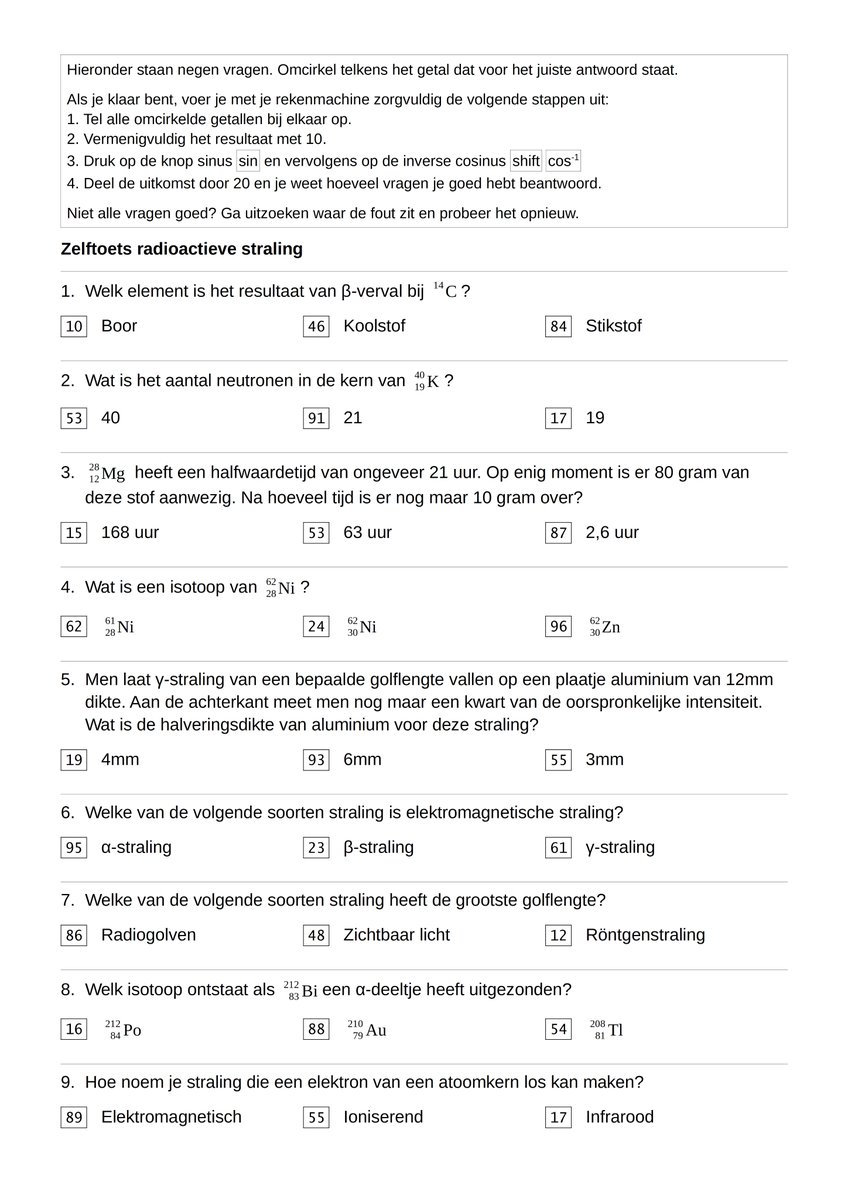
Leerlingen zelf een toets laten maken die ze zelf kunnen nakijken (door Martijn Leisink)

Posted by jpluimers on 2021/12/30

[Archive.is] Martijn Leisink on Twitter: “Soms wil je leerlingen een zelftoets laten maken. Je wil dat ze die zelf na kunnen kijken, maar tegelijkertijd wil je juist niet dat ze meteen de antwoorden op kunnen zoeken. Dat lijkt tegenstrijdig, maar er is een manier! (Ter inspiratie voor andere bèta-docenten.)… “

Thread: [Wayback] Thread by @mleisink on Thread Reader App – Thread Reader App

Truc: [Archive.is] Harry de Jonge on Twitter: “In eerste instantie 8 van de 9 goed. Uit de formule volgt dat ‘t te behalen totaal aantal punten n x 360 – 90 moet zijn, met behulp daarvan bepaald dat ik vraag 8 fout had. Ergens 2 of 4 van aftrekken is nog lastig😀 Natuurkunde is toegepaste wiskunde.… “

Zelf maken: [Archive.is] http://zelftoets.wiskunstelaar.nl/

Maak een aantal vragen met telkens drie antwoordopties.
Zet de getallen in de tabel hierboven voor de antwoorden.
Een leerling kan met het volgende recept controleren hoeveel antwoorden hij goed heeft:

  1. Tel de getallen voor het antwoord van jouw keus bij elkaar op.
  2. Vermenigvuldig het resultaat met 10.
  3. Druk op de knop sinus en vervolgens op de inverse cosinus.
  4. Deel de uitkomst door 20 en je weet hoeveel vragen je goed hebt beantwoord.

Leerlingen kunnen dus wel achterhalen hoeveel antwoorden ze goed hebben, maar niet welke antwoorden goed zijn.
Let er overigens op dat de rekenmachine op graden moet staan en niet op radialen!

–jeroen

Posted in Learning/Teaching, LifeHacker, Power User | Leave a Comment »

Finally learned about the usage of the German word “halt”

Posted by jpluimers on 2021/12/17

German’s use the word “halt” very often, but I never fully understood when and why.

I had a kind of feeling (that’s how I learned speaking German as a kid anyway: we stayed in Germany often, they did not speak Dutch, so it was about the only way to start communicating).

So last year, I asked one of my friends Kristian Köhntopp, see the Tweets further below.

In summary, “halt” is a modal particle, so not like Kristian suggested an interjection (German: interjektion).

This also explains why I had trouble understanding them, as modal particles are only used in a limited number of languages (not English), indicate either a mode or filler, and ofen “the translation is often not straightforward and depends on the context”.

Fillers are used in more languages than modal particles; English contains many (like uh, you know, right, actually) and easier to get right than non-filler modal particles.

Related links for futher reading:

–jeroen

Read the rest of this entry »

Posted in Learning/Teaching, LifeHacker, Power User | Leave a Comment »

Language oddities: siblings (English) and Geschwister (German) have no Dutch equivalent word

Posted by jpluimers on 2021/12/17

A while ago I learned that the English word siblings translates into the German word Geschiwster.

Before that, I thought Geschwister was synonym to Schwester; long story at [Archive.is] Jeroen Pluimers on Twitter: “Dat lukt heel behoorlijk. Over Duits: heeft dar een woord voor ‘sibblings’? In het Nederlands kom je dan af en toe “brussen” tegen. Hoe zit dat in het Duits?… “.

There is Dutch word that comes close “brussen” which:

  • has no wide spread use,
  • does mean brothers and sisters (broers en zussen),
  • but in the context of one or more sibblings that have one sibbling with special needs.

In a time where gender has become less important, privacy more important, I think it is time to put more emphasis on the neutral use of “brussen”.

Links

–jeroen

Read the rest of this entry »

Posted in About, Learning/Teaching, LifeHacker, Personal, Power User | Leave a Comment »

Wat links over formatief en summatief toetsen

Posted by jpluimers on 2021/09/13

Voor mijn link archief:

–jeroen

Posted in Learning/Teaching, LifeHacker, Power User | Leave a Comment »