While in the USA I usually go by Home Depot to get some inspiration.
This time my Eye fell on a lot of Smart Home Products compatible with the Wink Hub: people in the USA have a lot more choice in that area than in The Netherlands.
Even if you think you are familiar with something, it pays to keep your knowledge current.
I’ve been always struggling with the crontab syntax. It’s flexible, but for most cases overly complex, for instance I still thought I needed “0 0 * * 0” to run something weekly, which I needed.
Not so any more, and if I’d had the crontab documentation more often, I had known about the crontab shortcuts @reboot, @yearly, @annually, @monthly, @weekly, @daily, @midnight and @hourly many years ago: Read the rest of this entry »
Even though many people complained about 1.6.x. being bad (read the comments on the release page), and quite a few ask for a way to downgrade, a downgrade option isn’t provided there.
One of the features that bites me over and over again is the ZEROBASEDSTRINGS that got introduced in Delphi XE3 and is by default ON in mobile compilers and OFF in Desktop compilers.
Back then, Mark Edington showed a small example of the effects:
This file contains hidden or bidirectional Unicode text that may be interpreted or compiled differently than what appears below. To review, open the file in an editor that reveals hidden Unicode characters. Learn more about bidirectional Unicode characters
The XE3 RTL source code has been refactored to be string index base agnostic. In most cases this is done by utilizing string helper functions which are always zero based.
When it is necessary to traverse a string, the Char[] property is often used to access the individual characters without concern for the current state of the compiler with respect to zero based strings.
In addition, the “Low” and “High” standard functions can now be passed a string variable to provide further flexibility as needed.
When zero based strings are enabled, Low(string) will return 0, otherwise it will return 1. Likewise, High() returns a bounds adjusted length variation.
The problem is the non-existent forward compatibility of the other compilers (Delphi XE2 and lower).
So if you have library code that needs to work in Delphi versions, you cannot use the High and Low to make the code ZEROBASEDSTRINGS neutral.
Many Delphi developers regularly skip many Delphi versions, so these are still popular:
Delphi XE1 and XE2 (the last 2 compilers before Delphi really started to support mobile)
Delphi 2007 (the last non-Unicode Delphi compiler)
Delphi 7 (the last non-Galileo IDE)
The result is that library code is full of conditionan IF/IFDEF blocks like these:
This file contains hidden or bidirectional Unicode text that may be interpreted or compiled differently than what appears below. To review, open the file in an editor that reveals hidden Unicode characters. Learn more about bidirectional Unicode characters
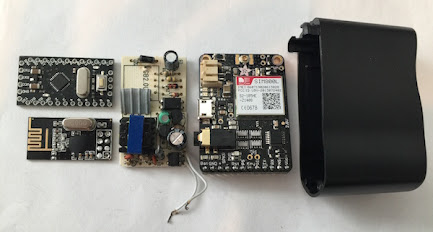
“KeySweeper is a stealthy Arduino-based device, camouflaged as a functioning USB wall charger, that wirelessly and passively sniffs, decrypts, logs and reports back (over GSM) all keystrokes from any Microsoft wireless keyboard in the vicinity.”


 The Wiert Corner - irregular stream of stuff