The Wiert Corner – irregular stream of stuff

Jeroen W. Pluimers on .NET, C#, Delphi, databases, and personal interests

  • My badges

  • Twitter Updates

  • My Flickr Stream

  • Pages

  • All categories

  • Enter your email address to subscribe to this blog and receive notifications of new posts by email.

    Join 1,860 other subscribers

Archive for the ‘UTF8’ Category

The mojibake “creëer”

Posted by jpluimers on 2024/08/22

A while ago, I found the “creëermojibake in a Dutch page on the IKEA site.

They were not alone to make this mistake which is easily explained using [Wayback/Archive] ftfy:

>>> ftfy.fix_and_explain("creëer")
ExplainedText(text='creëer', explanation=[('encode', 'latin-1'), ('decode', 'utf-8')])

(you can run this on-line at [Wayback/Archive] Welcome to Python.org: interactive shell, see my post The things I didn’t notice during cancer survival: ftfy 6.0 and more versions got released during my recovery on how to do this)

So the text is easily fixed:

Read the rest of this entry »

Posted in Development, Encoding, ftfy, ISO-8859, ISO8859, Software Development, Unicode, UTF-8, UTF8, Web Development | Leave a Comment »

A while ago I bumped into some GPI Mojibake examples, but soon found out I should use the ftfy test cases

Posted by jpluimers on 2022/11/22

I have been into more and more Mojibake example pages like [Wayback] Mojibake: Question Marks, Strange Characters and Other Issues | GPI

Have you ever found strange characters like these ���  when viewing content in applications or websites in other languages?

They made me realise that all these (including the Mojibake examples on my blog) are just artifacts, but the real list of examples is the set of ftfy test cases at [Wayback/Archive.is] python-ftfy/test_cases.json at master · LuminosoInsight/python-ftfy

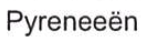
I got reminded when Waternet moved from paper mail using “Pyreneeën” to email using “Pyreneeën“. Not as bad as Waterschap AGV did earlier: they took it one level further and made “Pyreneeën” out of it, see Last year, a classic Mojibake was introduced when Waterschap Amstel, Gooi en Vecht redesigned their IT systems.

This seems like a trend where newer systems perform worse than older systems. I wonder why that is.

BTW: the trick on the [Wayback/Archive] Python.org shell to run ftfy (which is not installed by default) is first dropping to the shell (see my post How do I drop a bash shell from within Python? – Stack Overflow), then starting python again:

Read the rest of this entry »

Posted in CP850, Development, Encoding, ftfy, ISO-8859, Mojibake, Python, Scripting, Software Development, Unicode, UTF-8, UTF8 | Leave a Comment »

Last year, a classic Mojibake was introduced when Waterschap Amstel, Gooi en Vecht redesigned their IT systems

Posted by jpluimers on 2022/03/16

Last year, Waterschap Amstel, Gooi en Vecht sent me a paper letter notifying the yearly water bill was going to be late as they were redesigning their IT systems.

Their letter introduced a classic Mojibake that had not been present in all their older paper letter communication.

  • Street name on a letter via the old IT systems is "Pyreneeën":

    Pyreneeën goed geprint.

  • Street name on a letter via the new IT systems is "Pyreneeën":

    Pyreneeën geprint met Mojibake vervormingen.

Read the rest of this entry »

Posted in Development, Encoding, ftfy, Mojibake, Python, Software Development, Unicode, UTF-8, UTF8 | Leave a Comment »

C# Effective way to find any file’s Encoding – Stack Overflow

Posted by jpluimers on 2022/02/09

Note: notepad cannot correctly guess the encoding, see the “old new thing”: [Wayback] Some files come up strange in Notepad | The Old New Thing (talking about ANSI a.k.a. Windows-1252, UTF-16LE, UTF-16BE, UTF-8, UTF-7 somewith and some without BOM as Notepad does not understand all permutations)

David Cumps discovered that certain text files come up strange in Notepad. The reason is that Notepad has to edit files in a variety of encodings, and when its back against the wall, sometimes it’s forced to guess.

[Wayback] C# Effective way to find any file’s Encoding – Stack Overflow shows how to detect various byte order marks in C#.

–jeroen

Posted in ASCII, Development, Encoding, Software Development, Unicode, UTF-16, UTF-32, UTF-8, UTF16, UTF32, UTF8 | Leave a Comment »

UTF-8 web adoption is huge, closing 100%, but only soured up since around 2006.

Posted by jpluimers on 2022/02/08

As a precursor to a post tomorrow showing that serving UTF8 does not mean organisations go without unicode problems, first some statistics.

The first Unicode ideas got drafted some 30 years ago in 1987. In 1991, more than 30 years ago, the Unicode Consortium saw the light. Nowadays more than 95% percent of the web-pages (close to 100% when you include plain ASCII) is served using the UTF-8 encoding.

It means that nowadays there is a very small chance you

will see mangled characters (what Japanese call mojibake) when you’re surfing the web.

Some nice graphs of unicode growth are at these locations are at these locations:

I think especially important are 2008 (when UTF-8 had outgrown all other individual encodings) and slightly after 2010, when UTF-8 alone covered more than 50% of the pages served. These exclude ASCII-only pages. Adding those would make the figures even larger.

graph showing a steep rise in the use of UTF-8 and a steep decline in other major encodings

Historical yearly trends in the usage statistics of character encodings for websites, June 2021

Historical yearly trends in the usage statistics of character encodings for websites, June 2021

–jeroen

Posted in Development, Encoding, Software Development, UTF-8, UTF8, Web Development | Leave a Comment »

When MySQL characterset ‘utf’ does not allow you to enter some Unicode code points

Posted by jpluimers on 2022/01/06

Contrary to what many believe is that MySQL utf8 is not always full blown UTF-8 support, but actually utf8mb3, which has been deprecated for a while now.

Only utf8mb4 will give you full blown UTF-8 support.

This when someone reminded me of this in a Delphi application:

When I insert :joy: emoji into mysql varchar filed I got an error :
#22007 Incorrect string value: '\xF0\x9F\x98\x82' for column 'remarks' at row 1

database charset is utf8

Note that the :joy: emoji is 😂 and has Unicode code point U+1F602 which is outside the basic multilingual plane.

See:

–jeroen

Posted in Conference Topics, Conferences, Database Development, Delphi, Development, Encoding, Event, MySQL, Software Development, UTF-8, UTF8 | Leave a Comment »

PowerShell error in a script but not on the console: The string is missing the terminator: “.

Posted by jpluimers on 2021/09/29

The below one will fail in a script, both both work from the PowerShell prompt:

Success

Get-NetFirewallRule -DisplayGroup "File and Printer Sharing" | ForEach-Object { Write-Host $_.DisplayName ; Get-NetFirewallAddressFilter -AssociatedNetFirewallRule $_ }

Failure

Get-NetFirewallRule –DisplayGroup "File and Printer Sharing" | ForEach-Object { Write-Host $_.DisplayName ; Get-NetFirewallAddressFilter -AssociatedNetFirewallRule $_ }

The error you get this this:

At C:\bin\Show-File-and-Printer-Sharing-firewall-rules.ps1:5 char:52
+ ... -TCP-NoScope" | ForEach-Object { Write-Host $_.DisplayName ; Get-NetF ...
+                 ~~~~~~~~~~~~~~~~~~~~~~~~~~~~~~~~~~~~~~~~~~~~~~~~~~~~~~~~~
The string is missing the terminator: ".
    + CategoryInfo          : ParserError: (:) [], ParentContainsErrorRecordException
    + FullyQualifiedErrorId : TerminatorExpectedAtEndOfString

Via [WayBack] script file ‘The string is missing the terminator: “.’ – Google Search, I quickly found these that stood out:

Cause and solution

Before DisplayGroup, the first line has a minus sign and the second an en-dash. You can see this via [WayBack] What Unicode character is this ?.

Apparently, when using Unicode on the console, it does not matter if you have a minus sign (-), en-dash (–), em-dash (—) or horizontal bar (―) as dash character. You can see this in [WayBack] tokenizer.cs at function [WayBack] NextToken and [WayBack] CharTraits.cs at function [WayBack] IsChar).

When saving to a non-Unicode file, it does matter, even though it does not display as garbage in the error message.

Similarly, PowerShell has support for these special characters:

    internal static class SpecialChars
    {
        // Uncommon whitespace
        internal const char NoBreakSpace = (char)0x00a0;
        internal const char NextLine = (char)0x0085;

        // Special dashes
        internal const char EnDash = (char)0x2013;
        internal const char EmDash = (char)0x2014;
        internal const char HorizontalBar = (char)0x2015;

        // Special quotes
        internal const char QuoteSingleLeft = (char)0x2018; // left single quotation mark
        internal const char QuoteSingleRight = (char)0x2019; // right single quotation mark
        internal const char QuoteSingleBase = (char)0x201a; // single low-9 quotation mark
        internal const char QuoteReversed = (char)0x201b; // single high-reversed-9 quotation mark
        internal const char QuoteDoubleLeft = (char)0x201c; // left double quotation mark
        internal const char QuoteDoubleRight = (char)0x201d; // right double quotation mark
        internal const char QuoteLowDoubleLeft = (char)0x201E; // low double left quote used in german.
    }

The easiest solution is to use minus signs everywhere.

Another solution is to save files as Unicode UTF-8 encoding (preferred) or UTF-16 encoding (which I dislike).

–jeroen

Posted in .NET, CommandLine, Development, Encoding, PowerShell, PowerShell, Scripting, Software Development, Unicode, UTF-16, UTF-8, UTF16, UTF8 | Leave a Comment »

Default XML encoding is UTF-8 (or better: utf-8). If it contains other byte sequences, this is an error.

Posted by jpluimers on 2021/01/21

I should have had the below answer when writing about StUF – receiving data from a provider where UTF-8 is in fact ISO-8859.

A while ago, a co-worker did not believe when I told that default XML encoding really is UTF-8 (and tried to force it to utf-8), and that if the content had byte sequences different from the (either specified or default) encoding, it was a problem.

I though I blogged about the default, and where to find it, but apparently, I did not.

My blog had (and has <g>) a truckload of articles mentioning UTF-8, less articles containing UTF-8, encoding and xml, but the ones having UTF-8, default, encoding and xml did not actually tell about a standard that really defines XML uses UTF-8 as default encoding when there is no other encoding information – like BOM (byte order mark), HTTP, or MIME encoding) available.

W3C indeed specifies it. [WayBack] utf 8 – How default is the default encoding (UTF-8) in the XML Declaration? – Stack Overflow has a summary (thanks James Holderness!):

The Short Answer

Under the very specific circumstances of a UTF-8 encoded document with no external encoding information (which I understand from the comments is what you’re interested in), there is no difference between the two declarations.

The long answer is far more interesting though.

and an elaboration:

Read the rest of this entry »

Posted in Development, Encoding, Software Development, UTF-8, UTF8, XML, XML/XSD | Leave a Comment »

Bad surprise of the day: SysUtils.TEncoding in XE2+ defaults to ANSI, while in XE it defaulted to UTF-8.

Posted by jpluimers on 2020/03/11

Bad surprise of the day: SysUtils.TEncoding in XE2+ defaults to ANSI, while in XE it defaulted to UTF-8 .Among other things this means that TStringList… – Eric Grange – Google+

Source: Bad surprise of the day: SysUtils.TEncoding in XE2+ defaults to ANSI, while i…

Delphi

Eric Grange's profile photo

+Stefan Glienke Indeed, you’re right. The issue must be deeper somewhere. Don’t have time to investigate too much, I’m bypassing the RTL now (also have to work around the limitation that for utf-8 the TEncoding.GetString method returns an empty string if one character in the buffer isn’t utf-8)

Asbjørn Heid's profile photo

I wouldn’t trust the RTL at all with loading non-ascii text, we’ve had it hang on invalid UTF-8 codes more than once.

–jeroen

Posted in Ansi, Delphi, Development, Encoding, Software Development, UTF-8, UTF8 | Leave a Comment »

Which encoding failure did encode “vóór” into “v3/43/4r”? – Stack Overflow

Posted by jpluimers on 2020/02/24

From quite some time ago, but still very relevant as encoding issues keep occurring:

A while ago, I saw the text “v3/43/4r” in a document.I know it comes from “vóór” (the acute accent emphasises in Dutch), and wonder which encoding failure was applied to get this wrong.

Source: [WayBackWhich encoding failure did encode “vóór” into “v3/43/4r”? – Stack Overflow

From the [WayBack] answer by rodrigo:

  • ó: is U+00F3, and occupies the same codepoint (0xF3) in a lot of different encodings (most ISO-8859-* and most western Windows-*).
  • In CP850 the codepint 0xF3 is ¾ (U+00BE), that is the three-quarters character. It is the same in other, less used, codepages (CP775, CP856, CP857, CP858).
  • The ¾ is sometimes transliterated to 3/4 when the character is not directly available.

And there you are! “vóór” -> “v¾¾r” -> “v3/43/4r”.

The first part (ó -> ¾) is the usual corruption of ANSI vs. OEM codepages in the Western Windows versions (in my country ANSI=Windows-1252, OEM=CP850). You can see it easily creating a file with NOTEPAD, writing vóór and dumping it in a command prompt with type.

–jeroen

Posted in CP850, Development, Encoding, Software Development, UTF-8, UTF8, Windows-1252 | Leave a Comment »