The Wiert Corner – irregular stream of stuff

Jeroen W. Pluimers on .NET, C#, Delphi, databases, and personal interests

  • My badges

  • Twitter Updates

  • My Flickr Stream

  • Pages

  • All categories

  • Enter your email address to subscribe to this blog and receive notifications of new posts by email.

    Join 1,860 other subscribers

Archive for the ‘Python’ Category

A few observations on Python while I made my first steps into it

Posted by jpluimers on 2018/11/28

A while back, I made my first steps into Python.

Coming from a mixed language back-ground (including Pascal, Delphi, C#, SQL, batch files, PowerShell, bash, C, Java) it was an interesting experience.

A few observations:

More observations likely to follow.

–jeroen

Read the rest of this entry »

Posted in Development, Python, Scripting, Software Development | Leave a Comment »

Spelling with element symbols from the Periodic table

Posted by jpluimers on 2018/09/11

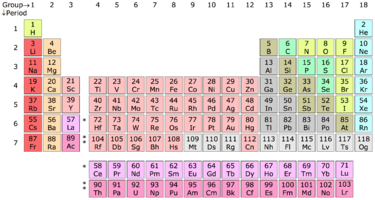
The [WayBackPeriodic table – Wikipedia contains many symbols.

Combing them allows you to spell word. Not all words, but many of them can be spelled.

So I was glad finding the below article that started with the same fascination I had in chemistry class.

[WayBackSpelling with Elemental Symbols

It has a great explanation of the algorithm, references to computer science literature and a nice Python implementation.

via: [WayBack] One of the best programming articles I’ve read in a while – This is why I Code – Google+

–jeroen

Read the rest of this entry »

Posted in Algorithms, Development, Fun, LifeHacker, Power User, Python, science, Scripting, Software Development | Leave a Comment »

Just I in case I need to port CombineApacheConfig.py to OpenSuSE properly

Posted by jpluimers on 2018/07/24

I came across a nice tool that combines httpd.conf files:

python CombineApacheConfig.py /etc/apache2/httpd.conf /tmp/apache2.combined.conf

In case I ever need to fully port it to OpenSuSE, I’ve put it in the gist below.

For now it works fine on OpenSuSE when used with the above command. I might make the default depend on the kind of nx it runs on.

via:

–jeroen

Read the rest of this entry »

Posted in *nix, *nix-tools, Apache2, Development, Linux, openSuSE, Power User, Python, Scripting, Software Development, SuSE Linux | Leave a Comment »

I wish the Delphi language supported multi-line strings

Posted by jpluimers on 2018/06/21

Very often, I see people ask for how to embed multi-line strings in a Delphi source file.

The short answer is: you can’t.

The long answer is: you can’t and if you want you have to hack your way around.

The answer should be: just like any of these languages that do support multiline strings:

Many languages support this through a feature called HEREDOC.

Now in Delphi and other languages like Java are building ugly workarounds like for instance this one: [WayBackRAD Studio Tip: Using resource scripts to organize project dependencies. – Chapman World.

–jeroen

Posted in .NET, C#, Delphi, Development, JavaScript/ECMAScript, Python, Ruby, Scripting, Software Development | 17 Comments »

Ben, blogging: Show the complete apache config file

Posted by jpluimers on 2018/03/20

Quite a while back, I got attended to Ben, blogging: Show the complete apache config file:

If you really want to see all the complete config settings, there is no existing tool for that. This Stack Overflow page  answered this question pretty well: You can use apachectl -S to see the settings of Virtual Host, or apachectl -M to see the loaded modules, but to see all settings, there is no such tool, you will have to go through all the files , starting from familiar yourself with the  general structure of the httpd config files.
… script …

The usage is simple: Run it as python  CombineApacheConfig.py . Since there is no additional parameters given, it will retrieve the default Ubuntu apache config file from  /etc/apache2/apache2.conf and generate the result complete config file in /tmp/apache2.combined.conf. If your config file is in different location, then give the input file and output file location.

Note: Apache server-info page http://127.0.0.1/server-info also provide similar information, but not in the config file format. It is in human readable format. The page works only when it is open from the same computer.

Since I could not find how to post comments there, and it works better for me having a repo, I put it into a gist with attribution to hist post: https://gist.github.com/jpluimers/fd300f3a500cbc78cd862d2a248e7b03
I need to adapt it for OpenSuSE; until then run it as this:
python CombineApacheConfig.py /etc/apache2/httpd.conf /tmp/apache2.combined.conf

–jeroen


#!/usr/bin/python2.7
# CombineApacheConfig.py
__author__ = 'ben'
import sys, os, os.path, logging, fnmatch
def Help():
print("Usage: python CombineApacheConfig.py inputfile[default:/etc/apache2/apache2.conf] outputfile[default:/tmp/apache2.combined.conf")
def InputParameter():
if len(sys.argv) <> 3:
Help()
return "/etc/apache2/apache2.conf", "/tmp/apache2.combined.conf"
return sys.argv[1], sys.argv[2]
def ProcessMultipleFiles(InputFiles):
Content = ''
LocalFolder = os.path.dirname(InputFiles)
basenamePattern = os.path.basename(InputFiles)
for root, dirs, files in os.walk(LocalFolder):
for filename in fnmatch.filter(files, basenamePattern):
Content += ProcessInput(os.path.join(root, filename))
return Content
def RemoveExcessiveLinebreak(s):
Length = len(s)
s = s.replace(os.linesep + os.linesep + os.linesep, os.linesep + os.linesep)
NewLength = len(s)
if NewLength < Length:
s = RemoveExcessiveLinebreak(s)
return s
def ProcessInput(InputFile):
Content = ''
if logging.root.isEnabledFor(logging.DEBUG):
Content = '# Start of ' + InputFile + os.linesep
with open(InputFile, 'r') as infile:
for line in infile:
stripline = line.strip(' \t')
if stripline.startswith('#'):
continue
if stripline.lower().startswith('include'):
match = stripline.split()
if len(match) == 2:
IncludeFiles = match[1]
IncludeFiles = IncludeFiles.strip('"') #Inserted according to V's comment.
if not IncludeFiles.startswith('/'):
LocalFolder = os.path.dirname(InputFile)
IncludeFiles = os.path.join(LocalFolder, IncludeFiles)
Content += ProcessMultipleFiles(IncludeFiles) + os.linesep
else:
Content += line # if it is not pattern of 'include(optional) path', then continue.
else:
Content += line
Content = RemoveExcessiveLinebreak(Content)
if logging.root.isEnabledFor(logging.DEBUG):
Content += '# End of ' + InputFile + os.linesep + os.linesep
return Content
if __name__ == "__main__":
logging.basicConfig(level=logging.DEBUG, format='[%(asctime)s][%(levelname)s]:%(message)s')
InputFile, OutputFile = InputParameter()
try:
Content = ProcessInput(InputFile)
except Exception as e:
logging.error("Failed to process " + InputFile, exc_info=True)
exit(1)
try:
with open(OutputFile, 'w') as outfile:
outfile.write(Content)
except Exception as e:
logging.error("Failed to write to " + outfile, exc_info=True)
exit(1)
logging.info("Done writing " + OutputFile)

Posted in *nix, *nix-tools, Apache2, Development, Linux, openSuSE, Power User, Python, Scripting, Software Development, SuSE Linux | Leave a Comment »

pandas/Pandas_Cheat_Sheet.pdf at master · pandas-dev/pandas

Posted by jpluimers on 2018/02/07

pandas – Flexible and powerful data analysis / manipulation library for Python, providing labeled data structures similar to R data.frame objects, statistical functions, and much more

Pandas is on my research list. Some links to get started:

–jeroen

Posted in Development, Python, Scripting, Software Development | Leave a Comment »

How did this shit ever work? – The Isoblog.

Posted by jpluimers on 2018/01/09

Though I like Python, I can feel the pain when maintaining in other’s code: [WayBackHow did this shit ever work? – The Isoblog reporting [WayBacknetwork.py does not handle interface resets properly · Issue #663 · python-diamond/Diamond.

Via: [WayBack] How did this shit ever work? – Kristian Köhntopp – Google+

Image from Reddit: parodies on O RLY Books: [WayBackimgur.com/qErVcwA: Life on an Ops team…

–jeroen

Read the rest of this entry »

Posted in Development, Python, Scripting, Software Development | Leave a Comment »

Let’s stop copying C / fuzzy notepad

Posted by jpluimers on 2017/12/07

Ah, C. The best lingua franca we have… because we have no other lingua francas. Linguae franca. Surgeons general? C is fairly old — 44 years, now! — and comes from a time when there were possibly more architectures than programming languages. It works well for what it is, and what it is is a relatively simple layer of indirection atop assembly. Alas, the popularity of C has led to a number of programming languages’ taking significant cues from its design, and parts of its design are… slightly questionable. I’ve gone through some common features that probably should’ve stayed in C and my justification for saying so. The features are listed in rough order from (I hope) least to most controversial. The idea is that C fans will give up when I call it “weakly typed” and not even get to the part where I rag on braces. Wait, crap, I gave it away.

Great re-read towards the end of the year: [WayBackLet’s stop copying C / fuzzy notepad

Via: [WayBack] Old and busted: emacs vs vi. New and hot: Language war, everybody against everybody else. – Kristian Köhntopp – Google+

–jeroen

Posted in .NET, APL, Awk, bash, BASIC, C, C#, C++, COBOL, CoffeeScript, CommandLine, D, Delphi, Development, F#, Fortran, Go (golang), Java, Java Platform, JavaScript/ECMAScript, Pascal, Perl, PHP, PowerShell, PowerShell, Python, Ruby, Scala, Scripting, Software Development, TypeScript, VB.NET, VBScript | 3 Comments »

Data Science Advent – franz.media

Posted by jpluimers on 2017/12/05

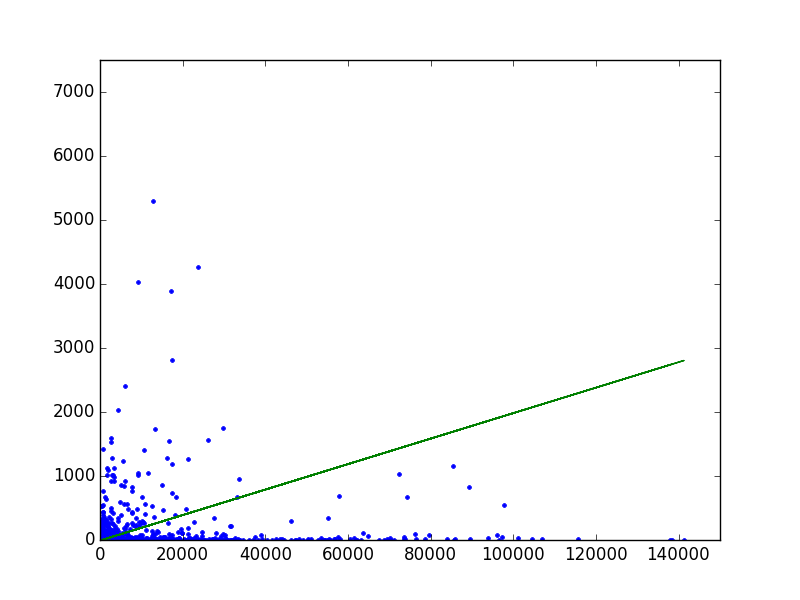
Cool: @filmfranz made an advent calendar on Python data analysis featuring a lot of Pandas examples referring to source code found on the interwebz: [WayBackData Science Advent – franz.media.

First example is to eliminate outliers in the below graph.

He also has a really cool (German) Playlist on data analysis with Python called Datenanalyse in Python and has a great site with examples at franz.media.

–jeroen

via: [WayBack] Very cool idea: an advent calendar with tips for doing data science with Python and Pandas created by @filmfranz 👉 http://franz.media/advent.html – ThisIsWhyICode – Google+

Posted in Development, Python, Scripting, Software Development | Leave a Comment »

Until 20171201 you can get free access to “Automate the Boring Stuff with Python”? 

Posted by jpluimers on 2017/11/29

A very interesting course: [WayBack] Want to learn how to “Automate the Boring Stuff with Python”? Check out this reddit post by Al Sweigart for free access to his online course on Udemy… – ThisIsWhyICode – Google+

If you get it before 20171201, then you can still access it for free after that date.

If you get it later, then you pay either USD 50, or USD 10; see this reddit fragment:

[WayBack] I’m releasing a free code for the “Automate the Boring Stuff with Python” Udemy course

Use this link to sign up for the “Automate the Boring Stuff with Python” Udemy online course: https://www.udemy.com/automate/?couponCode=PY_ALL_THE_THINGS

It’s free until the end of Friday, Dec 1, 2017. Afterwards it goes back to its normal $50 price. (Though you can use this link https://www.udemy.com/automate/?couponCode=FOR_LIKE_10_BUCKS to buy it for $10. And it’s an open secret that if you browse Udemy in privacy mode, they’ll show you the discount price to lure in a “new” customer. But course creators get a much larger cut when people use their referral codes.)

The course follows the book of the same name, which is available for free, in full, at [WayBackhttps://automatetheboringstuff.com under a Creative Commons license. (Which I encourage you to use to share your own creative works.)

The course is 50 videos and made for people with no previous programming experience. The first 15 videos are free to view on YouTube: https://www.youtube.com/watch?v=1F_OgqRuSdI&list=PL0-84-yl1fUnRuXGFe_F7qSH1LEnn9LkW

And now I will go self-flagellate to atone for my part in legitimizing “cyber monday”.

–jeroen

Read the rest of this entry »

Posted in Development, Python, Scripting, Software Development | Leave a Comment »