


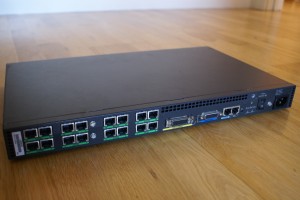
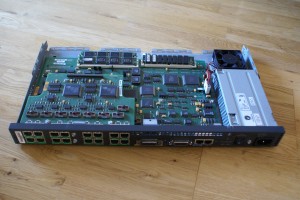
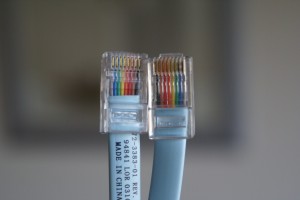
Relics from the serial communications history are still in use today: [WayBack] homecomputerlab » Cisco 2511-RJ remote access terminal server
–jeroen
Posted by jpluimers on 2020/03/02
Relics from the serial communications history are still in use today: [WayBack] homecomputerlab » Cisco 2511-RJ remote access terminal server
–jeroen

Posted in History, Network-and-equipment, Power User | Leave a Comment »
Posted by jpluimers on 2020/02/14
A long time ago, I named a tool Cerberus after the mythical multi-headed dog that guards the gates of the Underworld, as it was to inspect client systems configurations to prevent they would enter a bad state.
Since I need a multi-headed tool later on, below are some links on multi-headed (Polycephaly – Wikipedia) creatures to give me inspiration.
Some of them are centered around war, others around hell, are dragons or monsters, and a few are guardians. Later I will try to put a classification in a table or so.
The idea is to replace my current Apache TLS offloading (that uses letsencrypt/certbot for the certificates) with something else like an nginx one, and maybe even make the internal part TLS too (so it becomes TLS upstreaming) so these will come in useful too:
Instead of nginx, HAproxy might be a an option too, especially as it understands TCP traffic other than http much better than nginx:
This means I should first look into nginx vs haproxy – Google Search, for instance these posts:
–jeroen

Posted in Geeky, History, Infrastructure | 2 Comments »
Posted by jpluimers on 2020/02/06
Interesting bit of history: [WayBack] Why does HRESULT begin with H when it’s not a handle to anything? – The Old New Thing.
TL;DR:
–jeroen
Posted in Development, History, Software Development, The Old New Thing, Windows Development | Leave a Comment »
Posted by jpluimers on 2020/01/15
Two decades before the personal computer, a shy engineer unveiled the tools that would drive the tech revolution
Don’t read this as a historic piece, but as the potential we are still going to experience what was not just sketched by a true visionary in 1968, but also demonstrated back then: [Archive.is] How Douglas Engelbart Invented the Future | Innovation | Smithsonian.
I am including one of the pictures below by Christie Hemm Klok that shows how far Engelbart was ahead of his time: not his initial invention of an input device (the mouse) “chord” kind.
After that, read about his 1968 presentation: The Mother of All Demos – Wikipedia
Finally, watch the video below, well worth watching the more than one and a half hours.
–jeroen
Via:
Posted in Development, Future, Hardware, History, Network-and-equipment, Power User, Software Development | Leave a Comment »
Posted by jpluimers on 2020/01/06
This is a reminder to check when the source code was actually released:
–jeroen
Posted in 6502, Apple, Classic Macintosh, History, Power User | Leave a Comment »
Posted by jpluimers on 2020/01/06
Cool tool if you have industrial machinery that uses DOS and needs a slowdown on modern hardware (because for instance your serial communications program is running way too fast): [WayBack] The Throttle homepage. Slow that machine down!
Downloads:
- Q) How does throttle work?
- A) Throttle enables power management bits in the chipset to control CPU clock. Any chipset that conforms to the ACPI (advanced configuration and power interface) specification has a means to enable and control the throttle.
The intended purpose of these bits is to provide a means of power savings, typically utilized in notebooks or other battery powered devices.
When the CPU is in a throttled state, it uses less power. It just so happens that a throttled CPU creates a perfect environment to emulate the performance of an older generation CPU!
- Q) I have a chipset that supports ACPI. Why isn’t it supported in throttle?
- A) Probably because I don’t know about it. Because the ACPI specification can be implemented in different ways by different chipset manufacturers, it’s impossible to create one generic program that works with all ACPI compliant hardware. This creates the problem of constantly updating the internal database of known hardware. So far, the biggest problem has been finding the documentation for known ACPI compliant chipsets. Adding support for them is the easy part! You may also be using an older version of throttle. Contact me for the latest.
- Q) Can I have more speed options than just the 8 (or 16) provided?
- A) No. Throttle provides you with as many different CPU throttling options as the chipset allows. The ACPI spec only defines 8 different modes, each one 12.5% more throttled than the previous. VIA technologies has taken the spec 1 step further and allowed for throttling on 6.25% increments, thus doubling the amount of options available, which provides for more slowdown and a finer tunability.
If you want to run oldskool games, get a VIA motherboard!There’s nothing I can do to change the available options, and no further options will be available unless the ACPI spec changes.
–jeroen
Posted in History, MS-DOS, Power User | Leave a Comment »
Posted by jpluimers on 2020/01/05
Given that I’m fighting rectal cancer and am extremely low on energy, I am keeping this much shorter than I want to.
Recently, I learned that Rudy Velthuis passed away on 2019-05-13. Born on 1960-10-30, he passed away at only age 58.
 After asking permission from his family, I wrote a small im memoriam.
We frequently encountered each other on-line in the Delphi community, especially in the early days when I was way more active on forums, newsgroups and chat channels. He was famous there, with good reason.
Though colloquially known as [WayBack] “dentist with a strong interest in programming”, he was a great Delphi programmer and very well known for thoroughly documenting the many gaps that Embarcadero left in their documentation.
In 2009, Edwin van der Kraan and I had an opportunity to have dinner with Rudy. We met at his house, where we learned he not only ran a fully fledged dentistry practice, but also was married someone who origilally was from the Philippines. A truly happy couple they were.
In retrospect, I wish we had had met in real life more often, but I’m learning the hard way that life is finite giving you only so much time to do things.
I will remember Rudy because of his knowledge, wit and odd – but great – combination of work and interests.
In the mean time, I have asked a few archival organisations (including the WayBack machine) to archive his sites:
Some of his profiles that I archived on 20190103:
I love the “Kraftwerk – Autobahn” picture on his Stack Overflow profile page, so I included that song below the fold.
Related:
–jeroen

Posted in About, Delphi, Development, History, Personal, Software Development | 4 Comments »
Posted by jpluimers on 2019/12/23
Een overzicht van alles wat ik via de Top2000 site en Twitter bij elkaar geschraapt heb.
Edit 20190228
Edit 20190229; wachttijden: [WayBack] Top 2000 Cafe | Beeld en Geluid
| Start | Eind | DJ | Sidekick/Producer | Sidekick | Nieuwslezer | ||||
|---|---|---|---|---|---|---|---|---|---|
| 8:00 | 9:00 | Jan-Willem Roodbeen | Jeroen Kijk in de Vegte | @JWRoodbeen | @jeroenkidv | Carmen Verheul | @carmenverheul | ||
| 9:00 | 10:00 | ||||||||
| 10:00 | 11:00 | Bart Arens | @BartRadio2 | ||||||
| 11:00 | 12:00 | ||||||||
| 12:00 | 13:00 | Gijs Staverman | @GijsStaverman | ||||||
| 13:00 | 14:00 | Matijn Nijhuis | @matijn | ||||||
| 14:00 | 15:00 | Rob Stenders | Caroline Brouwer | @robstenders | @radiocarol (toch niet op vakantie) |
||||
| 15:00 | 16:00 | ||||||||
| 16:00 | 17:00 | Ruud de Wild | Cielke Sijben
Georgina Gulsen |
Thijs Maalderink
Gijs Hakkert |
@ruuddewild | @CielkeSijben is vervangen door @GeorginaGulsen |
@OnwijsThijs @GijsHakkert |
||
| 17:00 | 18:00 | ||||||||
| 18:00 | 19:00 | Wouter van der Goes | @woutervdgoes | ||||||
| 19:00 | 20:00 | ||||||||
| 20:00 | 21:00 | Annemieke Schollaardt (vervangt Stefan Stasse) |
Nathan Tamis | @Annemiekeishere | @NathanTamis | Wouter Walgemoed | @wouwal | ||
| 21:00 | 22:00 | ||||||||
| 22:00 | 23:00 | Paul Rabbering | @paul_rabbering | ||||||
| 23:00 | 24:00 | ||||||||
| 0:00 | 1:00 | Leo Blokhuis | @LeoBlokhuis | Nachtlezer | |||||
| 1:00 | 2:00 | ||||||||
| 2:00 | 3:00 | Rick van Velthuysen | @rickvanv | ||||||
| 3:00 | 4:00 | ||||||||
| 4:00 | 5:00 | Frank van ’t Hof | @frankvanthof | ||||||
| 5:00 | 6:00 | ||||||||
| 6:00 | 7:00 | Emmely de Wilt | @EmmelydeWilt | ||||||
| 7:00 | 8:00 | Carmen Verheul | @carmenverheul |
Matijn’s quiz in de top 2000 tent:
Bronnen:
–jeroen
Posted in History, LifeHacker, Personal, Power User | Leave a Comment »
Posted by jpluimers on 2019/12/23
I love this image so much: [WayBack] Walts_Lede_v04_3.1495666767.gif (2040×1164)
It is how I learned about the word “lede” [WayBack].
It indeed is a perfect fit introducing the article by Nilay Patel “Mossberg: The Disappearing Computer – The Verge” [WayBack] which I only discovered quite a while after Walt Mossberg retired in June 2017: I was a regular listener to and thought he had completely stopped contributing to columns too. I was wrong: he occasionally still does.
–jeroen

Posted in History, Power User | Leave a Comment »
Posted by jpluimers on 2019/12/12
From [WayBack] Borland’s legendary development tools Do you remember Turbo Languages from Borland? There are Pascal, C, Assembler, Basic, Prolog and many other produc… – Jaroslav Beran – Google+:
Borland’s legendary development tools
Do you remember Turbo Languages from Borland? There are Pascal, C, Assembler, Basic, Prolog and many other products. Here there is link to directory containing original documentation of many these products:
http://bitsavers.informatik.uni-stuttgart.de/pdf/borland/
Did you work with some of them? Which one was your favorite?
[WayBack] Bitsavers Index of /pdf/borland:
Via: [WayBack] Borland’s legendary development tools Do you remember Turbo Languages from Borland? There are Pascal, C, Assembler, Basic, Prolog and many other produc… – Adrian Marius Popa – Google+
–jeroen

Posted in Development, History, Pascal, Software Development, Turbo Pascal | Leave a Comment »

![[ICO]](https://web.archive.org/web/20181006190037im_/http://bitsavers.informatik.uni-stuttgart.de/icons/blank.gif)
![[DIR]](https://web.archive.org/web/20181006190037im_/http://bitsavers.informatik.uni-stuttgart.de/icons/folder.gif)
![[ ]](https://web.archive.org/web/20181006190037im_/http://bitsavers.informatik.uni-stuttgart.de/icons/layout.gif)
 The Wiert Corner - irregular stream of stuff
:no_upscale()/cdn.vox-cdn.com/uploads/chorus_image/image/54935887/Walts_Lede_v04_3.1495666767.gif)