


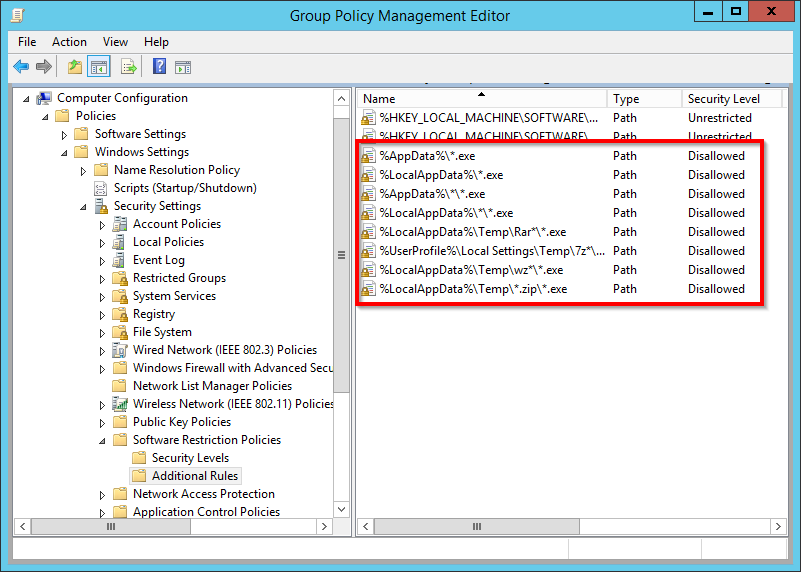
Interesting: [Ardhive.is] Use Software Restriction Policies to block viruses and malware | Branko Vucinec
via: [WayBack] Ransomware treft Tweede Kamer – Malware versleutelt overheidsbestanden – IT Pro – Nieuws – Tweakers
–jeroen
Posted by jpluimers on 2018/06/25
Interesting: [Ardhive.is] Use Software Restriction Policies to block viruses and malware | Branko Vucinec
via: [WayBack] Ransomware treft Tweede Kamer – Malware versleutelt overheidsbestanden – IT Pro – Nieuws – Tweakers
–jeroen

Posted in Microsoft Surface on Windows 7, Power User, Windows, Windows 10, Windows 7, Windows Server 2003, Windows Server 2003 R2, Windows Server 2008, Windows Server 2008 R2, Windows Server 2012, Windows Server 2012 R2, Windows Server 2016, Windows Vista, Windows XP | Leave a Comment »
Posted by jpluimers on 2018/03/16
From a note a very long time ago: [WayBack] 0x8024400E error with WSUS SP2
TL;DR:
Related: [WayBack] windows – WSUS clients failing to get updates with error 80072EE2 – Server Fault
–jeroen

Posted in Power User, Windows, Windows Server 2008, Windows Server 2008 R2 | Leave a Comment »
Posted by jpluimers on 2018/02/26
This seems to work on other Windows versions as well: [WayBack] Windows 10 auto-logout on <5 minutes of inactivity – Super User
Posted in Power User, Windows, Windows 10, Windows 7, Windows 8, Windows 8.1, Windows Server 2008, Windows Server 2008 R2, Windows Server 2012, Windows Server 2012 R2, Windows Server 2016 | Leave a Comment »
Posted by jpluimers on 2018/02/02
Here’s how you can find out when your domain password will expire.
net user %USERNAME% /domain
It figures this out for the current logon domain (so it doesn’t work cross-domain) but it is a great help, especially when filtering out just the password information:
net user %USERNAME% /domain | findstr "Password"
This can be done in a more complex way with dsquery or adinfo that are tools to query
Posted in Power User, Windows, Windows 10, Windows 7, Windows 8, Windows 8.1, Windows 9, Windows Server 2000, Windows Server 2003, Windows Server 2003 R2, Windows Server 2008, Windows Server 2008 R2, Windows Server 2012, Windows Server 2012 R2, Windows Server 2016, Windows Vista, Windows XP | Leave a Comment »
Posted by jpluimers on 2017/12/29
For shrinking VM disk images, it’s important to consolidate NTFS free space towards the end of the this.
I’ve tried many tools, starting with defrag C: /X (which tries, but doesn’t give good results) and found out these steps give the best results:
Consolidate free space script on the drive.If shrinking still fails then:
 |
|
 |
|

 where you cannot find much information about “$badclus:$bad:$data” but appear to be clusters marked as
 bad on NTFS level using something like chkdsk /B.ntfsfix which ships with GParted live boot:
ntfsfix -b /dev/sda1Mounting volume... OK
Processing of $MFT and $MFTMirr completed successfully.
Checking the alternate boot sector... OK
NTFS volume version is 3.1.
Going to un-mark the bad clusters ($BadClus)... OK
NTFS partition /dev/sda1 was processed successfully.chkdsk D: /Bdiskmgmt.mscIf you still cannot shrink, then try [WayBack] http://ftp.raxco.com/pub/download/pd14.0/pd14.0_pro.exe PerfectDisk by Raxco free trial.
Note:
MyDefrag (formerly named JkDefrag) is not maintained any more but the 4.3.1 version in the WayBack machine still works very well as the underlying defragmentation APIs in Windows haven’t changed.
References:
For FAT32:
For GParted / ntfsfix:
ntfsfix)
TuxBoot as per instructions at [WayBack] GParted Live on USBsafe boot options that uses VGA mode. Not nice, but very effectivesudo ntfsresize --info --force --no-progress-bar /path-to-your-ntfs-partitionntfsfix above to try and fix it.PerfectDisk via:
–jeroen

Posted in Power User, Windows, Windows 10, Windows 7, Windows 8, Windows 8.1, Windows Server 2008, Windows Server 2008 R2, Windows Server 2012, Windows Server 2012 R2, Windows Server 2016, Windows Vista | Leave a Comment »
Posted by jpluimers on 2017/12/18
This will bite me some time for sure, so for my link archive: [WayBack] TRestClient and Cipher restrictions to TLSv1.2 does not work on Windows7 and Server2008R2 … and how it can be solved… – Günther Schoch – Google+
References:
For at least some Windows 7 and Server 2008 R2 systems, that update (KB3140245) doesn’t automatically turns up in the Windows Update list.
To make matters worse, the page cannot be archived in either the WayBack machine or Archive.is (I tried multiple times with empty results).
Luckily, there is a copy at [WayBack] KB3140245 DefaultSecureProtocols – Security.NL.
After installing the update, you have to ensure you set the DefaultSecureProtocols registry value to the bitmap value that indicates with SSL/TLS versions you want to support:
The DefaultSecureProtocols registry entry can be added in the following path:
HKEY_LOCAL_MACHINE\SOFTWARE\Microsoft\Windows\CurrentVersion\Internet Settings\WinHttpOn x64-based computers, DefaultSecureProtocols must also be added to the Wow6432Node path:
HKEY_LOCAL_MACHINE\SOFTWARE\Wow6432Node\Microsoft\Windows\CurrentVersion\Internet Settings\WinHttpThe registry value is a DWORD bitmap. The value to use is determined by adding the values corresponding to the protocols desired.
DefaultSecureProtocols Value Protocol enabled 0x00000008 Enable SSL 2.0 by default 0x00000020 Enable SSL 3.0 by default 0x00000080 Enable TLS 1.0 by default 0x00000200 Enable TLS 1.1 by default 0x00000800 Enable TLS 1.2 by default For example:
The administrator wants to override the default values for WINHTTP_OPTION_SECURE_PROTOCOLS to specify TLS 1.1 and TLS 1.2.
Take the value for TLS 1.1 (0x00000200) and the value for TLS 1.2 (0x00000800) then add them together in calculator (in programmer mode), the resulting registry value would be 0x00000A00.
–jeroen
Posted in .NET, Delphi, Development, Power User, Software Development, Windows, Windows 7, Windows Server 2008 R2 | 2 Comments »
Posted by jpluimers on 2017/12/11
schtasks /End [/S <system> [/U <username> [/P [<password>]]]] /TN taskname
Every now and then you have those Scheduled Tasks consisting of batch files that – despite trying – still ask for user input.
If – even after a reasonable time out – the Task Scheduler still hasn’t killed them, you can kill them by hand with the above schtasks in a snap.
–jeroen
Posted in Console (command prompt window), Power User, Windows, Windows 10, Windows 7, Windows 8, Windows 8.1, Windows Server 2008, Windows Server 2008 R2, Windows Server 2012, Windows Server 2012 R2, Windows Server 2016 | Leave a Comment »
Posted by jpluimers on 2017/09/25
For my link archive: Can I invoke Windows Update from the command line? – Super User [WayBack]
–jeroen
Posted in Power User, Windows, Windows 10, Windows 7, Windows 8, Windows 8.1, Windows 9, Windows Server 2003, Windows Server 2003 R2, Windows Server 2008, Windows Server 2008 R2, Windows Server 2012, Windows Server 2012 R2, Windows Server 2016, Windows Vista, Windows XP | Leave a Comment »
Posted by jpluimers on 2017/06/26
Source: The Most Common VPN Error Codes Explained
- VPN Error 800 “Unable to establish connection”
- VPN Error 619 “A connection to the remote computer could not be established”
- VPN Error 51 “Unable to communicate with the VPN subsystem”
- VPN Error 412 “The remote peer is no longer responding”
- VPN Error 721 “The remote computer did not respond”
- VPN Error 720 “No PPP control protocols configured”
- VPN Error 691 “Access denied because username and/or password is invalid on the domain”
- VPN Errors 812, 732 and 734 “The connection was prevented because of a policy configured on your RAS/VPN server”
- VPN Error 806 “A connection between your computer and the VPN server has been established but the VPN connection cannot be completed.”
–jeroen
via: Could be useful. – Joe C. Hecht – Google+
Posted in Power User, Windows, Windows 10, Windows 7, Windows 8, Windows 8.1, Windows Server 2008, Windows Server 2008 R2, Windows Server 2012, Windows Server 2012 R2, Windows Vista, Windows XP | Leave a Comment »
Posted by jpluimers on 2017/05/26
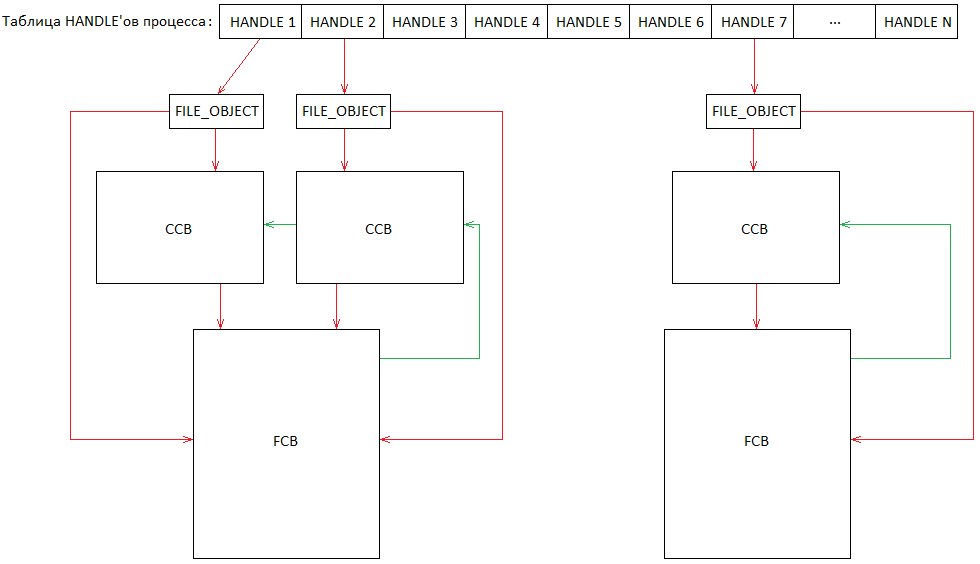 Source:
History repeating itself: [Archive.is] 31607 – C:\nul\nul crashes/BSOD then, now it’s this:
Via:
All versions prior to Windows 10 and Windows Server 2016 seem vulnerable.
So add $MFT to this list:
The following device names have been known to render a system unstable: CON,
NUL, AUX, PRN, CLOCK$, COMx, LPT1, and CONFIG$.
In short, Steven Sheldon created a rust package named nul which broke the complete package manager on Windows:
nul is not a valid name in windows 10, so cargo fails to update the registry, and then aborts whatever it was doing (building, searching, ect.).I think this project should be re-published to crates.io under a new name, something like null-strings perhaps?https://github.com/rust-lang/crates.io-indexBTW: one of my gripes on learning new languages is that they come with a whole new idiom of their ecosystem: rust, cargo, crates, all sound like being a truck mechanic to me.
–jeroen

Posted in Development, Microsoft Surface on Windows 7, NTFS, Power User, Security, Software Development, The Old New Thing, Windows, Windows 10, Windows 7, Windows 8, Windows 8.1, Windows 9, Windows 95, Windows 98, Windows Defender, Windows Development, Windows ME, Windows NT, Windows Server 2000, Windows Server 2003, Windows Server 2003 R2, Windows Server 2008, Windows Server 2008 R2, Windows Server 2012, Windows Server 2012 R2, Windows Server 2016, Windows Vista, Windows XP | Leave a Comment »
 The Wiert Corner - irregular stream of stuff