The Wiert Corner – irregular stream of stuff

Jeroen W. Pluimers on .NET, C#, Delphi, databases, and personal interests

  • My badges

  • Twitter Updates

  • My Flickr Stream

  • Pages

  • All categories

  • Enter your email address to subscribe to this blog and receive notifications of new posts by email.

    Join 1,828 other subscribers

Archive for 2021

Postfix TLS Support

Posted by jpluimers on 2021/02/25

For my link archive:

–jeroen

Posted in *nix, *nix-tools, Communications Development, Development, Internet protocol suite, postfix, Power User, SMTP | Leave a Comment »

Fun with Delphi RTTI – Dump a TRttiType | The Road to Delphi

Posted by jpluimers on 2021/02/25

For my link archive a non-recursive DumpTypeDefinition method:

Here ‘s a sample code of how you can dump the declaration of a TRttiType using the Rtti. Supports classes, records and interfaces. Delphi Use in this way OutPut the output is this the output …

Source: [WayBack] Fun with Delphi RTTI – Dump a TRttiType | The Road to Delphi

–jeroen

Posted in Delphi, Development, Software Development | Leave a Comment »

NanoPi NEO2 1GB Metal Complete Kit, NP-NEO2-1G-STK – Antratek Electronics

Posted by jpluimers on 2021/02/24

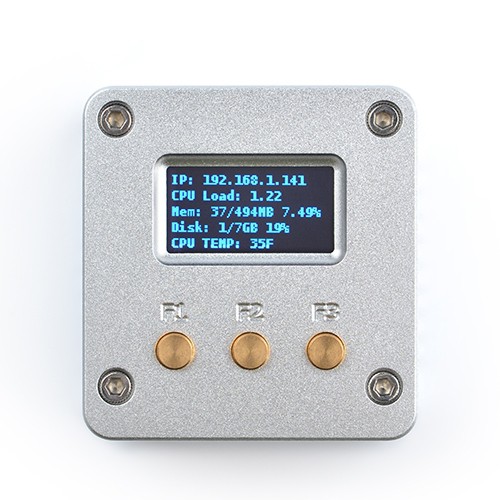
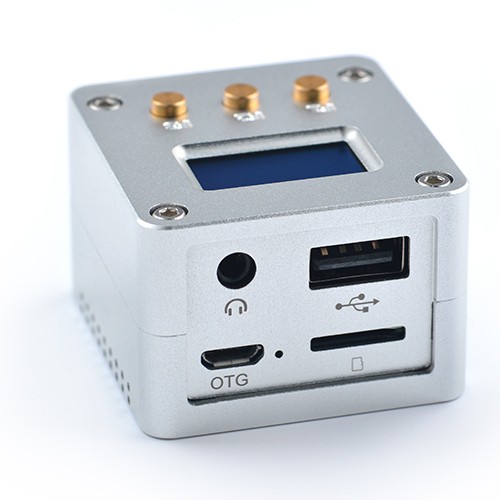
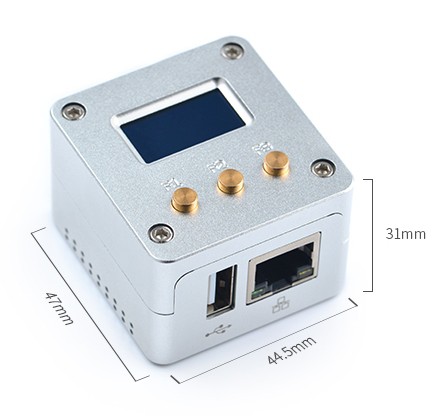
Still an interesting device: [WayBack] NanoPi NEO2 1GB Metal Complete Kit, NP-NEO2-1G-STK – Antratek Electronics:

The NEO2 Metal Complete Kit includes:

  • NanoPi NEO2 1GB
  • NanoHat OLED
  • Aluminum housing with 3 brass buttons
  • Paste and pads
  • MicroUSB cable
  • 8GB MicroSD Card with pre-installed FriendlyCore Ubuntu
  • Screws and screw driver
  • NanoPi NEO2 quick start guide

The NanoPi NEO2 LTS (Long Term Support) is a super tiny ARM board made by FriendlyElec and uses Allwinner’s 64-bit H5 quad-core SoC (ARM Cortex-A53). It has internal hexa-core Mali450 GPU and 512MB DDR3 RAM.

The NanoPi NEO2 has Gigabit Ethernet and one USB host port. These features make it especially suitable for applications that require high data throughput, high-speed data transmission and high performance.


–jeroen

Posted in Development, Hardware Development | Leave a Comment »

I still print (relevant parts of) code. Have been for a long time. Will keep doing it.

Posted by jpluimers on 2021/02/24

Edit 20260622: added Nitter¹ links, queries, the TEX map, LISTSERV dump and 1987+1988 lists of USENET nodes (some bit BITNET, others via UUCP).

In a response to [WayBack/Archive] Iris Classon on Twitter: “I’m curious, how many of you guys and gals have printed out code on paper to read later? Doing it during earlier years also counts 🤓”, I started the long read below starting with [WayBack] Jeroen Pluimers on Twitter: “Still do.… “ or [Wayback/Archive] Iris Classon | Author & programmer (@IrisClasson): “I’m curious, how many of you guys and gals have printed out code on paper to read later? Doing it during earlier years also counts 🤓” | nitter.

The reactions show quite a bit of history (:

Basically my response was a more in depth coverage of my 2017 post Happy 60th birthday, Fortran.

Read the rest of this entry »

Posted in Algorithms, Development, Fortran, Power User, Printers, Software Development | Leave a Comment »

Like Circuit City and Radio Shack, Fry’s Electronics closed down. We all saw it coming, but: damn.

Posted by jpluimers on 2021/02/24

https://twitter.com/pulcrano/status/1364483921509978112

https://twitter.com/geekgalgroks/status/1364579109762985985

https://twitter.com/SwiftOnSecurit1/status/1364458241997086720

https://twitter.com/akashkumarfilm/status/1364445888622387202

https://twitter.com/tipadaknife/status/1364538040681566209

Posted in Uncategorized | Leave a Comment »

Delphi compile time assertions

Posted by jpluimers on 2021/02/24

My post on Delphi intrinsic functions that evaluate to consts as a step up to Delphi compile time assertions.

This is a corner case of Delphi language use, which can come in very handy when your code is changed in the future, and you want to be prepared to ensure that some changes do not violate some predefined boundaries.

Hopefully a future post will elaborate a bit more on actual usage, but for now, lets first show some examples, then some other languages that have a richer set of compile time assertions.

My original goal was to see if I could come up with a mechanism that allowed for better validation of generic types because Delphi generic constraints – still – are quite limited: Delphi Constraints in Generics – RAD Studio XE documentation wiki, so limiting or verifying the aspects of the concrete type often cannot be done by constraints.

C# had a similar limitation for constraining to enum, which finally got added some 13 years after adding generics, in 2018: [WayBack] Unmanaged, delegate and enum type constraints – C# 7.3 in Rider and ReSharper – .NET Tools Blog.NET Tools Blog.

Let’s start simple:

const
  // forbidden const values to check compile time assert:
  A = 0;
  B = 1;
  C = -1;
  // The below expressions all each generate a "[dcc32 Error] E2098 Division by zero" (so multiple errors in one compile)
  // Asserting at compile time using boolean expressions:
  BooleanAssertAIsNotZero =  1 div Ord(A <> 0);
  BooleanAssertBIsNotOne = 1 div Ord(B <> 1);
  // Asserting at compile time using numeric expressions:
  AssertAIsNotZero = 1 div A;
  AssertBIsNotOne =  1 div (B - 1);
  AssertBIsNotAbsOne =  1 div (Abs(B) - 1);
  AssertCIsNotAbsOne =  1 div (Abs(C) - 1);

This is all centered around generating a compile time error "[dcc32 Error] E2098 Division by zero", of which multiple can occur in one compile go (after compilation, the cursor focus will be at the first error) and which has been in the language for a very long time [WayBack] E2098: Division by zero.

The conversion of Boolean to Integer is done using Ord, a very powerful compile time intrinsic that evaluates to a constant.

You can use this for other intrinsics as well, for example:

type
  TDigits = 0..9;

const
  DigitsAreInteger = GetTypeKind(TDigits) = tkInteger;
  DigitsAreIntegerIsTrue = 1 div Ord(DigitsAreInteger);
  DigitsAreEnumeration = GetTypeKind(TDigits) = tkEnumeration; // compiles fine
  DigitsAreEnumerationIsTrue = 1 div Ord(DigitsAreEnumeration); // [dcc32 Error] E2098 Division by zero

The above learns that integer subranges are not enumerations, but stay integers.

You can now extend this to check longer boolean expressions, for instance to check if a record size matches certain criteria. For this we create records having zero to four bytes in size (yes, you can have empty record in Delphi, it in fact the only data structure that can be zero bytes in length, though the documentation [WayBack] Structured Types: record types does not state this is in fact possible ), then validate the sizes:

type
  TRecord0 = record
  end;

  TRecord1 = packed record
    FByte0: Byte;
  end;

  TRecord2 = packed record
    FByte0: Byte;
    FByte1: Byte;
  end;

  TRecord3 = packed record
    FByte0: Byte;
    FByte1: Byte;
    FByte2: Byte;
  end;

  TRecord4 = packed record
    FByte0: Byte;
    FByte1: Byte;
    FByte2: Byte;
    FByte3: Byte;
  end;

const
  AssertTRecord0SizeOf0 = 1 div Ord(SizeOf(TRecord0) = 0); // When expression is false: [dcc32 Error] E2098 Division by zero
  AssertTRecord0SizeOf1 = 1 div Ord(SizeOf(TRecord1) = 1); // When expression is false: [dcc32 Error] E2098 Division by zero
  AssertTRecord0SizeOf2 = 1 div Ord(SizeOf(TRecord2) = 2); // When expression is false: [dcc32 Error] E2098 Division by zero
  AssertTRecord0SizeOf3 = 1 div Ord(SizeOf(TRecord3) = 3); // When expression is false: [dcc32 Error] E2098 Division by zero
  AssertTRecord0SizeOf4 = 1 div Ord(SizeOf(TRecord4) = 4); // When expression is false: [dcc32 Error] E2098 Division by zero
  AssertTRecord0SizeOfMultipleOf4 = 1 div Ord(SizeOf(TRecord0) mod 4 = 0); // When expression is false: [dcc32 Error] E2098 Division by zero
  AssertTRecord4SizeOfMultipleOf4 = 1 div Ord(SizeOf(TRecord4) mod 4 = 0); // When expression is false: [dcc32 Error] E2098 Division by zero
  AssertTRecord0SizeOfMultipleOf4AndGreaterThan0 = 1 div Ord((SizeOf(TRecord0) mod 4 = 0) and (SizeOf(TRecord0) > 0)); // When expression is false: [dcc32 Error] E2098 Division by zero
  AssertTRecord4SizeOfMultipleOf4AndGreaterThan0 = 1 div Ord((SizeOf(TRecord4) mod 4 = 0) and (SizeOf(TRecord4) > 0)); // When expression is false: [dcc32 Error] E2098 Division by zero

That’s how far I got in my first experiments using this mechanism. Hopefully it gave you some inspiration too, so I welcome any usages you made with it.

Inline use of intrinsics can lead to no generated code at all

Since Delphi has no macro language, you cannot create your own intrinsic functions that evaluate to const. You could use a pre-processor though, as described in [WayBack] How to write Delphi compile-time functions – Stack Overflow.

The answer by Johan there however mentions clever use of in-line functions that do not generate any code at all (so effectively evaluate to a const). More on that in a future post.

Compile time assertions in other languages

Many languages support a form of [WayBack] Compile-time calculation – Rosetta Code. If such a language can errors out on compiling such a calculation, then you can have compile time assertions.

Compile time assertions are very much used in C and C++, where they are often called static assertions. Often they depend on macros, but C11 (C standard revision 11) has it built-in.

Since I also do quite a bit of .NET: [WayBack] Can C# Provide a static_assert? – Stack Overflow

Some links on how they work in C and C++, and what you can do with them:

–jeroen

Posted in .NET, C, C#, C++, Conference Topics, Conferences, Delphi, Development, Event, Software Development | Leave a Comment »

Automatically closing ABBY Finereader 5.0 windows after scanning is completed

Posted by jpluimers on 2021/02/23

Both my Fujitsu ScanSnap ix500 and ix100 scanners can be used from Windows to automatically scan to PDF.

PDF conversion is done through the included ABBYY FineReader 5.0 software.

However, on each scan, it keeps a dialog open with the scan results, even if scanning went fine.

When scanning lots of documents, lots of dialogs are open, causing two problems:

  • a lot of memory and window handle resource usage
    • this can be ~100 megabytes per instance
  • a lot of disk usage:
    • it keeps both the non-OCR and OCR PDF files active (only when closing, the non-OCR PDF file is deleted)

I wanted to close that dialog automatically, but none of the configuration settings allow it.

So I wrote a quick and dirty solution, that could have been in any tool supporting the Windows API and call backs. The solution below should easily translate to tools other than Delphi.

These are the only Windows API functions used:

these types:

and these constants:

The basic structure is an EumWindows call passing a callback that gets called for all top level Windows, then in the callback, for matching captions: call EnumChildWindows with another callback. In that callback, for matching captions and child captions, perform a click or close.

Related posts:

Log of Windows related to both programs:

ParentHWnd=$00000000;HWnd=$00030602;IsVisible=-1;IsOwned=0;IsAppWindow=-1;WindowTextLength=33;WindowText="ABBYY FineReader for ScanSnap 5.0"
> Recursive child windows for ABBYY
  ParentHWnd=$00030602;HWnd=$000205E2;IsVisible=-1;IsOwned=0;IsAppWindow=0;WindowTextLength=0;WindowText=""
  ParentHWnd=$00030602;HWnd=$000205E0;IsVisible=-1;IsOwned=0;IsAppWindow=0;WindowTextLength=0;WindowText=""
  ParentHWnd=$00030602;HWnd=$000205EC;IsVisible=-1;IsOwned=0;IsAppWindow=0;WindowTextLength=0;WindowText=""
  ParentHWnd=$00030602;HWnd=$000205EA;IsVisible=-1;IsOwned=0;IsAppWindow=0;WindowTextLength=74;WindowText="Register your copy of ABBYY FineReader and receive the following benefits:"
  ParentHWnd=$00030602;HWnd=$000205E8;IsVisible=-1;IsOwned=0;IsAppWindow=0;WindowTextLength=25;WindowText="- Free technical support;"
  ParentHWnd=$00030602;HWnd=$000205E6;IsVisible=-1;IsOwned=0;IsAppWindow=0;WindowTextLength=51;WindowText="- Information about new versions of ABBYY products."
  ParentHWnd=$00030602;HWnd=$000205E4;IsVisible=-1;IsOwned=0;IsAppWindow=0;WindowTextLength=12;WindowText="Registration"
  ParentHWnd=$00030602;HWnd=$000205FC;IsVisible=-1;IsOwned=0;IsAppWindow=0;WindowTextLength=0;WindowText=""
  ParentHWnd=$00030602;HWnd=$000205FA;IsVisible=-1;IsOwned=0;IsAppWindow=0;WindowTextLength=6;WindowText="&Close"
  > Child is Close button: clicking.
  < ParentHWnd=$00000000;HWnd=$00030602;IsVisible=-1;IsOwned=0;IsAppWindow=-1;WindowTextLength=33;WindowText="ABBYY FineReader for ScanSnap 5.0"
  ParentHWnd=$00030602;HWnd=$000205F6;IsVisible=-1;IsOwned=0;IsAppWindow=0;WindowTextLength=34;WindowText="Processing finished (warnings: 1)."
  ParentHWnd=$00030602;HWnd=$000205F4;IsVisible=-1;IsOwned=0;IsAppWindow=0;WindowTextLength=31;WindowText="Converting to searchable PDF..."
  ParentHWnd=$00030602;HWnd=$000205F0;IsVisible=-1;IsOwned=0;IsAppWindow=0;WindowTextLength=0;WindowText=""
  ParentHWnd=$00030602;HWnd=$000205EE;IsVisible=-1;IsOwned=0;IsAppWindow=0;WindowTextLength=0;WindowText=""
  ParentHWnd=$00030602;HWnd=$000205D2;IsVisible=-1;IsOwned=0;IsAppWindow=0;WindowTextLength=63;WindowText="Page 1. Make sure the correct recognition language is selected."

ParentHWnd=$00000000;HWnd=$00010248;IsVisible=-1;IsOwned=-1;IsAppWindow=0;WindowTextLength=14;WindowText="Creative Cloud"
> Recursive child windows for Creative Cloud
  ParentHWnd=$00010248;HWnd=$0001024A;IsVisible=-1;IsOwned=0;IsAppWindow=0;WindowTextLength=28;WindowText="Main Container Client Dialog"
  ParentHWnd=$00010248;HWnd=$0002034A;IsVisible=-1;IsOwned=0;IsAppWindow=0;WindowTextLength=3;WindowText="IMS"
  ParentHWnd=$00010248;HWnd=$0001035A;IsVisible=-1;IsOwned=0;IsAppWindow=0;WindowTextLength=0;WindowText=""
  ParentHWnd=$00010248;HWnd=$00020350;IsVisible=-1;IsOwned=0;IsAppWindow=0;WindowTextLength=18;WindowText="Sign in - Adobe ID"
  > Child is Signin button: closing parent.
  < ParentHWnd=$0003011A;HWnd=$00010248;IsVisible=-1;IsOwned=-1;IsAppWindow=0;WindowTextLength=14;WindowText="Creative Cloud"
    < ParentHWnd=$00000000;HWnd=$0003011A;IsVisible=0;IsOwned=0;IsAppWindow=0;WindowTextLength=4;WindowText="Core"

It appears that ABBYY has a different set of booleans than Creative Cloud.

This is kind of odd, as delphi – How to get captions of actual windows currently running? – Stack Overflow points to Window Features – Windows applications | Microsoft Docs: Owned Windows stating:

The Shell creates a button on the taskbar whenever an application creates a window that isn’t owned. To ensure that the window button is placed on the taskbar, create an unowned window with the WS_EX_APPWINDOW extended style. To prevent the window button from being placed on the taskbar, create the unowned window with the WS_EX_TOOLWINDOW extended style. As an alternative, you can create a hidden window and make this hidden window the owner of your visible window.

Apparently, ABBYY fully plays by the rules, but Creatheive Cloud cheats a bit: none of the Windows are WS_EX_APPWINDOW, but the hidden unowned “Core” owner of the “Creative Cloud” still makes it appear on the taskbar.

–jeroen

Read the rest of this entry »

Posted in Delphi, Development, Fujitsu ScanSnap, Hardware, ix100, ix500, Power User, Scanners, Software Development, Windows Development | Leave a Comment »

Unittesting FizzBuzz

Posted by jpluimers on 2021/02/23

Keep a version history of how you approach the below TDD driven approach, then discuss it with one of your co-workers.

Note there is no “right” approach, though probably you will experience that some environments and approaches may lead to code that is better, for instance because it is:

  • easier to explain
  • shorter
  • more performant

The above 3 might points bite each other (;

Based on FizzBuzz: One Simple Interview Question – YouTube.

Write initial tests

Write unit tests for this unit under test in pseudo code:

type OutputMethod: method(string Value)
class FizzBuzzGame:
    method Construct(OutputMethod Value)
    method Process(int Value)

Unit test that captures Output with a certain set of Values, then tests for the four possible combinations:

  • number
  • Fizz
  • Buzz
  • FizzBuzz

and also ensures that the passed OutputMethod is being called once for each call to Process.

Extend the tests

Now extend the tests to cover the below multiples and all the permutations caused by the longer list. Think carefully about the permutations.

  • 3 -> Fizz
  • 5 -> Buzz
  • 7 -> Fuzz
  • 11 -> Bizz
  • 13 -> Biff

Write the unit under test

The least tricky bit should be this step.

Be sure to test the solution with your co-workers as well.

Non positive numbers.

Did you think about negative numbers?

Did you think about the number zero?

What would you do about them in the tests and unit under test?

–jeroen

Read the rest of this entry »

Posted in Conference Topics, Conferences, Development, Event, Software Development | Leave a Comment »

Delphi intrinsic functions that evaluate to consts

Posted by jpluimers on 2021/02/23

A long time ago, I wondered Are these really Windows compiler unsupported Delphi Intrinsic Routines about [WayBack/Archive.is] Delphi Intrinsic Routines – RAD Studio.

Today, I limited the documented intrinsic list to the constant intrinsic functions:

const
  _Abs = System.Abs(1);
  _Chr = System.Chr(1);
  _Concat = System.Concat(1);
  _Hi = System.Hi(1);
  _High = System.High(1);
  _Length = System.Length('');
  _Lo = System.Lo(1);
  _Low = System.Low(1);
  _Odd = System.Odd(1);
  _Ord = System.Ord(1);
  _Pi = System.Pi();
  _Pred = System.Pred(1);
  _Ptr = System.Ptr(1);
  _Round = System.Round(1);
  _SizeOf = System.SizeOf(1);
  _Sqr = System.Sqr(1);
  _Succ = System.Succ(1);
  _Swap = System.Swap(1);
  _Trunc = System.Trunc(1);

The limited table is below the fold.

There is also a set of undocumented generic intrinsics that I wrote about in Source: Delphi Compiler Intrinsics can help you collapse generated code for generics a lot.

Of the those undocumented functions, these are constant intrinsic functions:

const // undocumented compiler intrinsics
  _Default = Default(Integer);
  _IsManagedType = IsManagedType(1);
  _GetTypeKind = GetTypeKind(1);
  _IsConstValue = IsConstValue(1);

–jeroen

Read the rest of this entry »

Posted in Conference Topics, Conferences, Delphi, Development, Event, Software Development, Undocumented Delphi | 2 Comments »

Redux: Mac OS X – Spotlight not finding many files: force a rescan solved it

Posted by jpluimers on 2021/02/22

I bumped into a case where none of the steps in Mac OS X – Spotlight not finding many files: force a rescan solved it helped.

The problem was that my SD card at  /Volumes/SanDisk400GB/ was not indexed any more, but the SSD was.

These steps solved it:

$ sudo mdutil -i off /Volumes/SanDisk400GB/
2019-02-25 16:32:47.097 mdutil[14810:3728038] mdutil disabling Spotlight: /Volumes/SanDisk400GB -> kMDConfigSearchLevelFSSearchOnly
    Indexing disabled.
$ sudo mdutil -i on /Volumes/SanDisk400GB/
/Volumes/SanDisk400GB:
    Indexing enabled. 
$ sudo mdutil -E /Volumes/SanDisk400GB/
/Volumes/SanDisk400GB:
    Indexing enabled. 
$ sudo mdutil -E /
/:
    Indexing enabled. 
$ sudo mdutil -p

I am not sure if any of these can be omitted.

An odd thing: sudo mdutil -s does not show any output on progress. It is too late now, but I suspect it requires a volume parameter, just like -i and -E require.

–jeroen

Posted in Apple, Mac OS X / OS X / MacOS, Power User | Leave a Comment »