Archive for the ‘8086’ Category
Posted by jpluimers on 2026/03/03
A few years back I tweeted [Wayback/Archive] Jeroen Wiert Pluimers @wiert@mastodon.social on Twitter: “@b0rk @jilles_com Acids vs bases.”

It was a kind of tongue-in-cheek reaction (with a way better picture below) to a very valuable post by b0rk (Julia Evans) on both Twitter and Mastodon [Wayback/Archive] Julia Evans on Twitter: “bases” / [Wayback/Archive] Julia Evans: “bases title: bases # we usually…” – Mastodon for two reasons:
- There are various interpretations of bases
- Octal is very important to educate as errors introduced by its support are hard to spot even if you do know about octal.
Back to Julia’s post:
Read the rest of this entry »
Posted in *nix, *nix-tools, 68k, 8086, Assembly Language, bash, bash, C, C++, Chemistry, Conference Topics, Conferences, Development, EPS/PostScript, Event, Haskell, History, Java, Java Platform, JavaScript/ECMAScript, Jon Skeet, LifeHacker, Mathematics, PDP-11, Perl, PHP, Power User, Python, science, Scripting, Software Development, x86 | Leave a Comment »
Posted by jpluimers on 2026/02/13
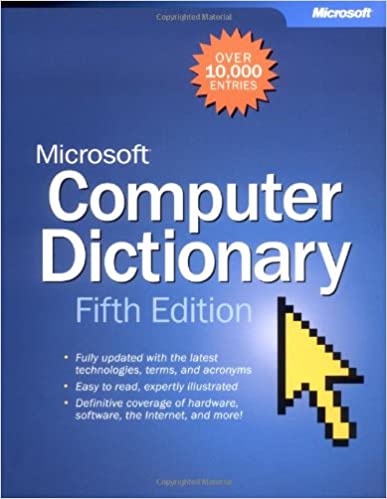 While researching early Intel 8087 documentation distributed via LISTSERV, the below blast from the past also turned up: back in 2002 computer dictionaries were also available as … books!
[Wayback/Archive] Microsoft® Computer Dictionary, Fifth Edition (Cpg-Other): 9780735614956: Computer Science Books @ Amazon.com
- Publisher : Microsoft Press; 5th ed. edition (June 1, 2002)
- Language : English
- Paperback : 637 pages
- ISBN-10 : 0735614954
- ISBN-13 : 978-0735614956
- Item Weight : 2.85 pounds
- Dimensions : 7.33 x 1.76 x 9.25 inches
It is available from various sources including [Wayback/Archive] Microsoft Computer Dictionary – Microsoft Press – Google Books and [Wayback/Archive] microsoft_computer_dictionary__fifth_edition1.pdf.
Read the rest of this entry »
Posted in 6502, 68k, 8086, 8087, 8087, 8088, Development, History, Software Development | Leave a Comment »
Posted by jpluimers on 2026/02/10
Sometimes Wikipedia entries are way too short, for instance Philip A. Kaufman – Wikipedia, who in 1992 – at the age of around 50 – died way to early, does not do justice to his time at Intel.
His name rang a bell when searching for early Intel 8087 documentation distributed via LISTSERV, so below is a bit more information on Phil.
True, his life after Intel was very important especially on the front of electronic design automation. That in fact sparked the posthumous instantiation of the Phil Kaufman Award which you can read for instance at [Wayback/Archive] The Phil Kaufman Award Dinner Is Later this Month. Who Was Phil Kaufman? – Breakfast Bytes – Cadence Blogs – Cadence Community.
After his floating-point endeavours at Intel and the IEEE, he was also very instrumental at Intel in finding another big market for silicon: network controller chips (and getting the Ethernet standard going: think DIX (Digital/Intel/Xerox) [Wayback/Archive] Ethernet Blue Book (1980) which was named that way earlier than the PostScript Blue Book (1986) and CD Blue Book (1986)).
This period is very well described in the [Wayback/Archive] 1988 Computer History Museum interview of Phil Kaufman by James L. Pelkey (via [Wayback/Archive] Phil Kaufman | History of Computer Communications).
Back to floating point: Phil’s post from 1987 way better describes what early processor technologies at Intel he was involved with than the above links. That period was instrumental in getting IEEE_754-1985 going (it was released way after the 8087!) and still shapes the floating point aspects of almost any CPU from any vendor today so I quote it in full from [Wayback/Archive] Info-IBMPC V6 #59:
Read the rest of this entry »
Posted in Development, History, Assembly Language, x86, Algorithms, Floating point handling, 8087, 8086, 8088, 8087 | Leave a Comment »
Posted by jpluimers on 2026/01/20
Nice memories of the TBAV/ThunderByte Anti-Virus story.
Together with Jeroen Smulders, I was sort of on the sideline in the early days as we both were at the university had access to FidoNet (I as host, other Jeroen as point), Internet, mailing lists and newsgroups.
I used it because it was the fastest Virus Scanner around and a need when scanning all incoming FidoNet data for viruses (I had seen at university what damage a spread could do).
Some VIRUS-L, comp.virus and book links from that past:
Read the rest of this entry »
Posted in 8086, 8088, Antivirus, BBS, Compuserve, FidoNet, History, Internet, Power User, SearchEngines, Security | Tagged: 96 | Leave a Comment »
Posted by jpluimers on 2025/11/28
Karateka (which appeared way before the even more famous Prince of Persia which appeared 5 years later) memories of the past, for which I totally agree with the conclusion: the game on Apple ][ was way better:
[Wayback/Archive] 𝔸𝕟𝕒𝕥𝕠𝕝𝕪 𝕊𝕙𝕒𝕤𝕙𝕜𝕚𝕟💾 on Twitter: “@textfiles Jordan’s opinion on the IBM version”
 JULY 31, 1986
Just looked at the “final” version of PC Karateka. It seemed OK, I guessed, except for overall sluggishness, frequent disk accesses, and a few minor graphics glitches. Then I booted up the Apple version to compare… and it was so smooth, it made me want to cry.
The PC version is maybe 50% of what it should be. I can’t even tell these guys s what to fix… it’s a million little things, and they’re just not up to the hassle. That kind of attention to detail is why the Apple version took me two years. This version is probably the best I’ll ever get out of them.
You can play the PC version online at [Wayback/Archive] Karateka IBM Version 1986-01-30 (1986-02-04) (ID 0873) : Jordan Mechner : Free Download, Borrow, and Streaming : Internet Archive
Internal Alpha version (1986-01-30) of the IBM port of Karateka by Jordan Mechner.
It was ported to many platforms, and there was a great documentary too. So there are more YouTube links below than [Wayback/Archive] Karateka IBM PC Model 5150 Longplay – YouTube which has this great description:
Read the rest of this entry »
Posted in 6502, 8086, 8088, C64, Commodore, History, IBM PC Model 5150, Power User, Retrocomputing | Leave a Comment »
Posted by jpluimers on 2024/12/31
A small introduction is the Pentium FDIV bug – Wikipedia article which already has some of the highlights..
Ken Shirriff however went all the way in, and used a microscope to focus in on to the actual cause.
He wrote two Mastodon threads on it watching (most recent first, with a link to his blog post) making a good year’s end read:
And there is of course this, that predated his microscope work [Wayback/Archive] Ken Shirriff: “I recently saw an amazing Navajo rug…” – OldBytes Space – Mastodon Read the rest of this entry »
Posted in 8086, Development, Hardware Development, History | Leave a Comment »


 The Wiert Corner - irregular stream of stuff