The Wiert Corner – irregular stream of stuff

Jeroen W. Pluimers on .NET, C#, Delphi, databases, and personal interests

  • My badges

  • Twitter Updates

  • My Flickr Stream

  • Pages

  • All categories

  • Enter your email address to subscribe to this blog and receive notifications of new posts by email.

    Join 1,854 other subscribers

Archive for the ‘History’ Category

Blast from the past Windows 2003 Service Pack 1..2 era hotpatching

Posted by jpluimers on 2016/02/12

For a short while (from Windows 2003 Service Pack 1 till Windows 2003 service pack 2) some updates used Windows Hotpatching.

Some links on the how/why and how to abuse it:

All because of this little post:

Hier ein Einblick in die Denkweise von Leuten, die Software auf CD-ROM verteilen und bei denen Release Zyklen in Monaten und nicht Minuten gemessen werd… – Kristian Köhntopp – Google+

–jeroen


Posted in C, Development, History, Software Development, The Old New Thing, Windows Development | Leave a Comment »

The Famous Photo of Chernobyl’s Most Dangerous Radioactive Material Was a Selfie | Atlas Obscura

Posted by jpluimers on 2016/02/11

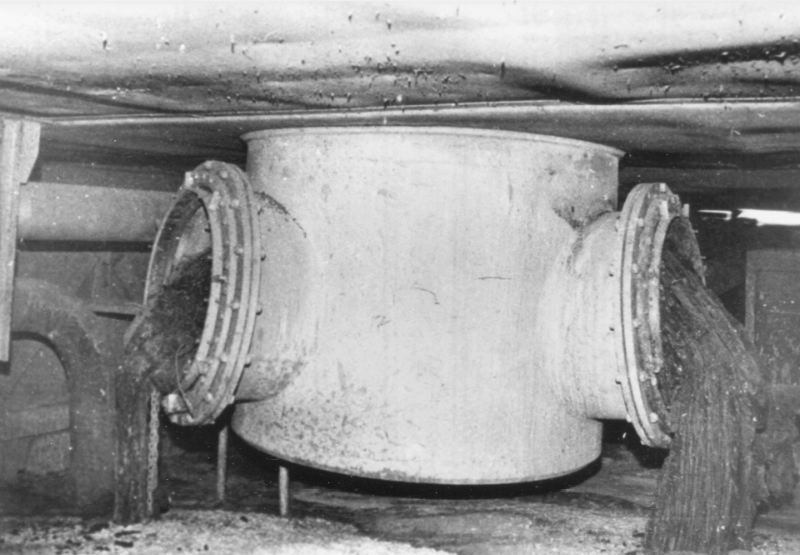
Photos from source: The Famous Photo of Chernobyl’s Most Dangerous Radioactive Material Was a Selfie | Atlas Obscura

Corium elephant foot selfie:

Posted in History | Leave a Comment »

You find a lot of stuff when you are reorganizing your office #TP6 Library…

Posted by jpluimers on 2016/02/11

You find a lot of stuff when you are reorganizing your office #TP6  Library….

I must clean out my closets as well. I think I have similar stuff lying around.

–jeroen

Posted in Delphi, Development, History, Software Development, Turbo Pascal | Leave a Comment »

Some links and references to IBM CUA: Common User Access which defines a lot of the UIs and UX we still use.

Posted by jpluimers on 2016/02/04

Back in the late 80s and early 90s of last century, engineers Richard E. Berry, Cliff J. Reeves set a standard that still influences the user interfaces and user experience of today: the IBM Common User Access.

I mentioned CUA a few times before, but since an old client of mine managed to throw away their paper originals in a “we don’t need that old stuff any more as we are now all digital” frenzy, I wanted to locate some PDFs. And I promised to write more about CUA.

If anyone has printed versions of the non-PDF documents below, please donate them to aek at bitsavers.org or scanning at archive.org as they are really hard to get.

A few search queries I used:

The PDFs I think are most interesting:

Read the rest of this entry »

Posted in BitSavers.org, Development, History, IBM SAA CUA, Keyboards and Keyboard Shortcuts, Power User, Software Development, UI Design, Usability, User Experience (ux) | 3 Comments »

Nostalgie: KPN zet inbelplatform uit en laat Xs4all inbelverkeer afhandelen – IT Pro – Nieuws – Tweakers

Posted by jpluimers on 2016/01/17

This Dutch caught my eye: “Dutch telecom operator KPN has turned off the inbound internet dial-up equipment. It keeps possible to dial the number, as dial-up traffic is now handled by provider xs4all”:

KPN heeft de apparatuur van zijn inbelplatform voor internet uitgezet. Het blijft nog wel mogelijk om in te bellen via het nummer 06760-12321, maar het inbelverkeer wordt voortaan afgehandeld door provider Xs4all.

Source: KPN zet inbelplatform uit en laat Xs4all inbelverkeer afhandelen – IT Pro – Nieuws – Tweakers

The thread is full of nostalgia on Dial-up Internet access, like:

I still have my original Courier HST Dual Standard modem from USRobotics I got around 1987. It’s looks like the second from the bottom at (image via: Do Modems Still Matter?) the picture below (one day I will make a picture when I’ve cleaned out the glass cabinet it is in; there are some more USRobotics, ZyXEL and DrayTek modems in it too).

There is a very interesting piece of USRobotics (in Russian, but Google Translate does a nice job on it): The history of the US Robotics.

I wrote mentioned the Courier HST Dual Standard before in Going to try PowerLine (next to CAT5, and having used 10Base2, 10Base-T, 100Base-TX and 1000Base-T), but never about the why, so here it is:

The Courier HST standard would train faster and at better speeds over Intercontinental lines than the Trailblazer and Hayes and later V.32bis technologies. In addition, they were also faster with firmware upgrades to support faster speeds than competing brands.

This mattered a lot to me, as initially CompuServe was only accessible by dial-up to the USA. The same for a lot of BBS and FidoNet uplinks.

For me, they weren’t any cheaper buying them (as the BBS discounts for them were not valid in Europe; I bought mine for a more than DM 1000 in Germany) but it was cheaper gaining knowledge (my motto always has been “a life long learning”).

Since the above article,

  • the Sportster magic string entry on Wikipedia vanished, but the info is still at USRobotics Sportster magic string – WOW.com,
  • I stopped using PowerLine as it wasn’t stable enough, so during the replacement of our solar panels with more modern equipment a few years ago, had CAT-6 pulled up to the utility closed on the bedroom floor.

More info about modem training and standards in this 1998 article:

Everything you wanted to know about modem and fax standards and software, but were afraid to ask is covered in this great overview article by Frank Gao from Gao Research. This article discusses all the functions that go into today’s modem products, but is not tied to any particular hardware implementation.

Source: Modem and Fax Standards and Software | EE Times

–jeroen

Read the rest of this entry »

Posted in BBS, FidoNet, History, Power User | 1 Comment »

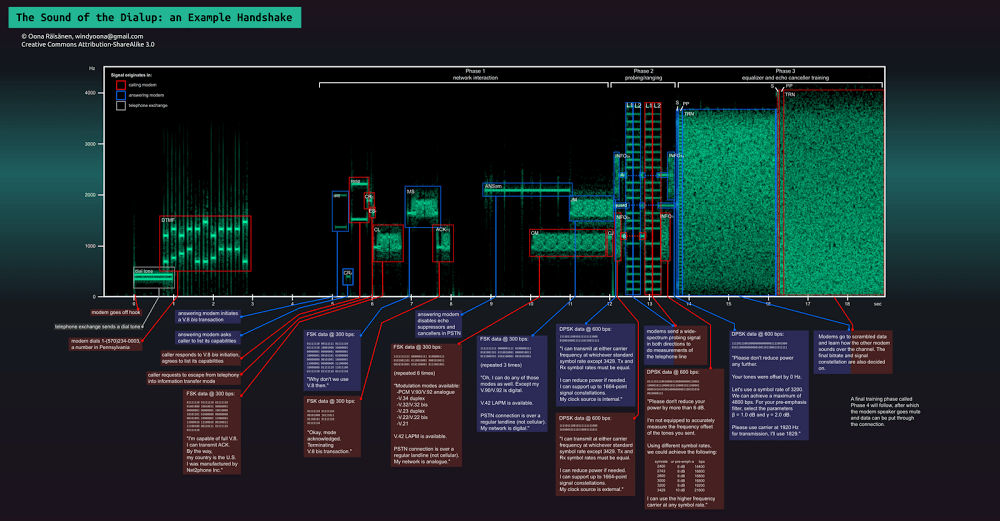
The Sounds of Dialup Modems and Related Equipment

Posted by jpluimers on 2016/01/10

While researching how to record analog PSTN call recording:

Via:

Edit 20250318: added Wayback/Archive archived links for the first three bullets above.

--jeroen

Posted in History, Power User, PSTN, Telephony | Leave a Comment »

In Memoriam: Peter Naur 1928-2016 | News | Communications of the ACM

Posted by jpluimers on 2016/01/06

Just learned that Peter Naur, a Danish computer scientist and 2005 recipient of the ACM A.M. Turing Award, died January 3 after a brief illness.

In memoriams:

Peter was the N in BNF; some more background info:


Posted in Development, History, Software Development | Leave a Comment »

From my paper archives: early QuickReport materials and BDE network installation tips

Posted by jpluimers on 2016/01/01

[WayBack] While cleaning up my “attic”, I came across some old QuickReport 1.0 documents and BDE installation tips so I scanned them.

I think the first document is by this Lars Søndergaard.

The last is by Dave Robinson, then working at Amber Computer Systems Inc, but I could not find on-line activity of him If you know him, please let me know his on-line contact info.

–jeroen

Posted in Delphi, Delphi 1, Development, History, Software Development | 2 Comments »

Tijdreis, over 200 jaar topografie

Posted by jpluimers on 2015/12/24

Ons huist staat er nog maar 20 jaar. Sommige andere al veel langer…

Wilt u weten hoe uw omgeving er 50, 100 of zelfs 200 jaar geleden uitzag? Hoe het land om u heen is veranderd door verkaveling en andere ingrepen? Dat kan eenvoudig op topotijdreis.nl, de website van het Kadaster die 200 jaar topografie ontsluit.

Source: Tijdreis, over 200 jaar topografie

via:

Hoe zag Amsterdam er 200 jaar geleden van boven uit? Dat is te zien op een nieuwe website van het Kadaster, waarop topografische kaarten van Nederland door de jaren heen zijn verzameld. Op de website Topotijdreis  kun je inzoomen op stadsniveau en met een slider kaarten uit verschillende jaartallen met elkaar vergelijken.

Source: Bestond jouw wijk al in 1815? Bekijk het op deze oude kaarten van Amsterdam – AMSTERDAM – PAROOL

Posted in History, Personal | Leave a Comment »

Nice #geekporn history lesson. With Linus, SUN, kissing a girl (or not), the overpriced POSIX manual… by @landley

Posted by jpluimers on 2015/12/18

Thanks Jan Wildeboer for pointing to a well written history piece by Rob Landley (Twitter @landley).

Nice #geekporn history lesson. With Linus, SUN, kissing a girl (or not), the overpriced POSIX manual and more. Enjoy. http://article.gmane.org/gmane.linux.toybox/1890 (already archived at the WayBack machine)

The piece is about SunOS, Solaris, Linux, Posix, IBM, AT&T, BSD, System V and much more.

–jeroen

via: Nice #geekporn history lesson. With Linus, SUN, kissing a girl (or not), the….

Posted in History | 1 Comment »