The Wiert Corner – irregular stream of stuff

Jeroen W. Pluimers on .NET, C#, Delphi, databases, and personal interests

  • My badges

  • Twitter Updates

  • My Flickr Stream

  • Pages

  • All categories

  • Enter your email address to subscribe to this blog and receive notifications of new posts by email.

    Join 1,861 other subscribers

Archive for the ‘VMware ESXi’ Category

When registering for ESXi 7: “Content Not Available Dear user, the web content you have requested is not available.”

Posted by jpluimers on 2021/04/15

VMware ESXi 7 registration fails on Chrome

VMware ESXi 7 registration fails on Chrome

The “free-esxi#” pages are the only place where you can register for and view your ESXi licenses, as they are not part of my.vmware.com/group/vmware/my-licenses (that would make it easy, but that’s not how VMware is a corporate).

It really is the only place, and the documentation is buried deep in the KB pages: [Archive.is] Downloading and licensing vSphere Hypervisor (ESXi 6.x & 7.x) (2107518).

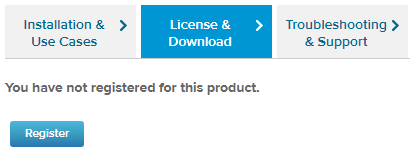
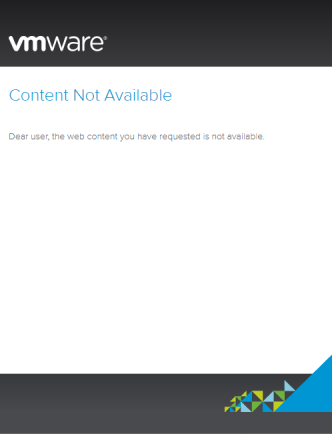
If you get “content not avaiable” while registering for ESXi 7 [Wayback] maintenance.vmware.com/info4.html?source=dwnp&p=free-esxi7 by clicking on the “Register” button on [Wayback] my.vmware.com/en/web/vmware/evalcenter?p=free-esxi7

The dreaded register button.

The dreaded register button.


Content Not Available

Dear user, the web content you have requested is not available.

… then remember that VMware has been as corporate as banks for years, which means that their web-sites only work properly in a limited set of browsers. Chrome is not one of them any more, but Firefox seems to for for me.

I am not alone bumping into this, many have and the site has been working/failing for years, for instance back in 2019: [Wayback] Is there still a free version of ESXI that is not … – VMware Technology Network VMTN

–jeroen

Posted in ESXi7, Power User, Virtualization, VMware, VMware ESXi | Leave a Comment »

Need to do some reading on local domains on the internal network

Posted by jpluimers on 2021/04/09

A long time I wondered why I saw ESXi systems on my local network have two entries in their /etc/hosts file:

[root@ESXi-X10SRH-CF:~] cat /etc/hosts
# Do not remove the following line, or various programs
# that require network functionality will fail.
127.0.0.1   localhost.localdomain localhost
::1     localhost.localdomain localhost
192.168.71.91   ESXi-X10SRH-CF ESXi-X10SRH-CF

Then I bumped into someone who had a different setup:

[root@ESXi-X10SRH-CF:~] cat /etc/hosts
# Do not remove the following line, or various programs
# that require network functionality will fail.
127.0.0.1   localhost.localdomain localhost
::1     localhost.localdomain localhost
192.168.0.23    esxi.dynamic.ziggo.nl esxi

So now I knew that the first entry can have a domain resolving it (it still makes be wonder why ziggo is using a top-level domain to resolve local stuff; but searching for  dynamic.ziggo.nl did not get me further on that).

So I installed a quick ESXi machine on that local network, and got the same.

When back home the machine still thought it was esxi.dynamic.ziggo.nl, though clearly I was outside a Ziggo network

I wanted to get rid of it, but that was hard.

Since I forgot to take screenshots beforehand, I can only provide the ones without a search domain bellow.

Reminder to self: visit someone within the Ziggo network, then retry.

Normally you can edit things like these in the default TCP/IP stack. There are two places to change this:

Neither of these allowed me to change it to a situation like this, but luckily the console did.

In the below files, I had to remove the bold parts, then restart the management network (I did keep a text dump, lucky me):

[root@esxi:/etc] grep -inr ziggo .
./vmware/esx.conf:116:/adv/Misc/HostName = "esxi.dynamic.ziggo.nl"
./resolv.conf:2:search dynamic.ziggo.nl 
./hosts:5:192.168.71.194    esxi.dynamic.ziggo.nl esxi
[root@esxi:/etc] cat /etc/resolv.conf 
nameserver 192.168.71.3
search dynamic.ziggo.nl 
[root@esxi:/etc] cat /etc/hosts
# Do not remove the following line, or various programs
# that require network functionality will fail.
127.0.0.1   localhost.localdomain localhost
::1     localhost.localdomain localhost
192.168.71.194  esxi.dynamic.ziggo.nl esxi

Future steps

  1. Read more on local domains, search domains and related topics
  2. Configure a local domain on my local network, so DHCP hands it out, and DHCP handed out host names are put in the local DNS
  3. Test if all services on all machines still work properly

Reading list

Read the rest of this entry »

Posted in DNS, ESXi6.5, ESXi6.7, Hardware, Internet, Mainboards, Network-and-equipment, Power User, SuperMicro, Virtualization, VMware, VMware ESXi, X10SRH-CF, X9SRi-3F | Leave a Comment »

Supermicro Single CPU Board for ESXi Home lab – Upgrading LSI 3008 HBA on the X10SRH-CLN4F | ESX Virtualization

Posted by jpluimers on 2021/04/09

This LSI 3008 HBA update to TI firmware is still on my wish list, but I could not find it when I bought the board in 2018.

[WayBack] Supermicro Single CPU Board for ESXi Home lab – Upgrading LSI 3008 HBA on the X10SRH-CLN4F | ESX Virtualization:

As you know my lab got an addition this year with Supermicro’s Single CPU board, the X10SRH-CLN4F. In this post we will be upgrading LSI 3008 HBA on the X10SRH-CLN4F.

I have learned a new way to patch via UEFI. In fact, it’s same (or easier) than through DOS-based bootable USB. The IT firmware can be reverted back to IR firmware as in the ZIP package there are both versions there. So in case you need a server with hardware RAID, you can use the IR version. I was actually wondering what it means the IT and IR and here is what I have found at LSI (Avago) website:

“IT” firmware maximizes the connectivity and performance aspects of the HBA. “IR” firmware offers RAID functionality via RAID 0, 1, and 10 capabilities.

Via:

SR-IOV?

The step afterwards is to enable SR-IOV for this LSI 3008 HBA.

These links should help with that:


–jeroen

Posted in ESXi6.5, ESXi6.7, Hardware, Mainboards, Power User, SuperMicro, Virtualization, VMware, VMware ESXi, X10SRH-CF | Leave a Comment »

The tale of [SSH into ESXi 6.7 box resulting in “debug1: expecting SSH2_MSG_KEXDH_REPLY”, delay and after entering password “Permission denied, please try again.”]

Posted by jpluimers on 2021/04/02

A similar ESXi 6.5 box worked well to ssh into, but on ESXi 6.7 it failed:

SSH into ESXi 6.7 box resulting in “debug1: expecting SSH2_MSG_KEXDH_REPLY“, delay and after entering password “Permission denied, please try again.

I had a hard time figuring out why: Login with the same user+password on the web user interface, DCUI and console shell work fine (see [WayBack] Enable SSH on VMware ESXi 6.x – VirtuBytes).

Searches that led me to EBCAK:

Read the rest of this entry »
Posted in ESXi6.5, ESXi6.7, Hardware, IPMI, Mainboards, Power User, PowerCLI, SuperMicro, Virtualization, VMware, VMware ESXi | Leave a Comment »

Disable ESXi Password Complexity – Perfect Cloud

Posted by jpluimers on 2021/03/29

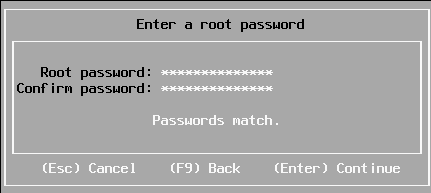
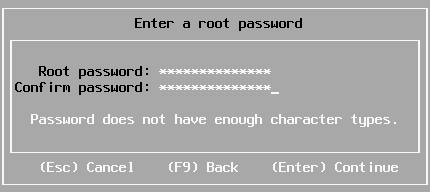
Sometimes you have a long enough password, that matches with the confirmation, but pressing “Enter” to continue gives “Password does not have enough character types”:

From [WayBack] Disable ESXi Password Complexity – Perfect Cloud:

A part of my job as a VMware Certified Instructor is to update our lab systems whenever new vSphere versions come out.   After upgrading from 5.5 to 6.0 I decided we should change passwords, h…

This is the workflow:

  1. Make a backup of /etc/pam.d/passwd.
  2. Use vi to edit /etc/pam.d/passwd, and:
    1. Put a # in front of the lines starting with password requisite
    2. Remove the use_authtok bit of the line starting with password sufficient
    3. Put a # in front of the line starting with password required
    4. Quit vi while saving (press Esc, then enter :wq on the prompt)
  3. Change the password to a less secure one
  4. Restore the original /etc/pam.d/passwd.

Via: esxi 6 force short password – Google Search

Working around this on during ESXi installation fails

I tried this:

  1. Press Alt-F1 to go from the installation screen to the console screen
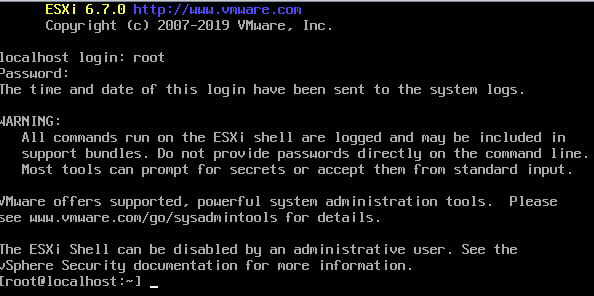
  2. Logon as root, with no password at all to get to the command-prompt:

  3. Perform the /etc/pam.d/passwd editing steps above
  4. Press Alt-F2 to go back to the install screen
  5. Enter root password

The password requirements stayed.

(more screenshots at [WayBack] ESXi 6.7 installation Guide – Let We-i Go)

Related

On my ESXI 6.5 system where the italic bit is removed, besides the two lines being commented out:

  1. original /etc/pam.d/passwd:
    #%PAM-1.0
    
    # Change only through host advanced option "Security.PasswordQualityControl".
    password   requisite    /lib/security/$ISA/pam_passwdqc.so retry=3 min=disabled,disabled,disabled,7,7
    password   sufficient   /lib/security/$ISA/pam_unix.so use_authtok nullok shadow sha512
    password   required     /lib/security/$ISA/pam_deny.so
    
  2. modified /etc/pam.d/passwd:
    #%PAM-1.0
    
    # Change only through host advanced option "Security.PasswordQualityControl".
    #password   requisite    /lib/security/$ISA/pam_passwdqc.so retry=3 min=disabled,disabled,disabled,7,7
    password   sufficient   /lib/security/$ISA/pam_unix.so nullok shadow sha512
    #password   required     /lib/security/$ISA/pam_deny.so
    

On my ESXI 6.7 system (which adds the bold lines below):

  1. original /etc/pam.d/passwd:
    #%PAM-1.0
    
    # Change only through host advanced option "Security.PasswordQualityControl".
    password   requisite    /lib/security/$ISA/pam_passwdqc.so retry=3 min=disabled,disabled,disabled,7,7
    
    # Change only through host advanced option "Security.PasswordHistory"
    password   requisite    /lib/security/$ISA/pam_pwhistory.so use_authtok enforce_for_root retry=2 remember=0
    
    password   sufficient   /lib/security/$ISA/pam_unix.so use_authtok nullok shadow sha512
    password   required     /lib/security/$ISA/pam_deny.so
    
  2. modified /etc/pam.d/passwd:
    #%PAM-1.0
    
    # Change only through host advanced option "Security.PasswordQualityControl".
    #password   requisite    /lib/security/$ISA/pam_passwdqc.so retry=3 min=disabled,disabled,disabled,7,7
    
    # Change only through host advanced option "Security.PasswordHistory"
    #password   requisite    /lib/security/$ISA/pam_pwhistory.so use_authtok enforce_for_root retry=2 remember=0
    
    password   sufficient   /lib/security/$ISA/pam_unix.so nullok shadow sha512
    #password   required     /lib/security/$ISA/pam_deny.so
    

–jeroen

Posted in *nix, ESXi6, ESXi6.5, ESXi6.7, Power User, Virtualization, VMware, VMware ESXi | Leave a Comment »

Supermicro | Products | Motherboards | Xeon® Boards | X9SRi-3F

Posted by jpluimers on 2021/03/12

I still like this board: Supermicro | Products | Motherboards | Xeon® Boards | X9SRi-3F.

It has been in a storage solution for a while, uses OK power, has not many SATA ports, but enough slots for expansion cards, and comes with two network connections and 8 slots which I fitted with a total of 256 gibibyte of memory.

Some links, as SuperMicro tends to hide them behind POST requests:

Note that IPMI over je Java Web Start.app runs into certificate signing issues, so better use Supermicro IPMIViewer for this:

IPMIView links via:

The errors when running the KVM Console from your web browser are waved away by SuperMicro, but more and more people bump into them:

–jeroen

Posted in Development, Hardware, Mainboards, Power User, Software Development, SuperMicro, Virtualization, VMware, VMware ESXi, X9SRi-3F | Leave a Comment »

A choco install list

Posted by jpluimers on 2021/02/03

Sometimes I forget the choco install mnemonics for various tools, so here is a small list below.

Of course you have to start with an administrative command prompt, and have a basic Chocolatey Installation in place.

If you want to clean cruft:

choco install --yes choco-cleaner

Basic install:

choco install --yes 7zip
choco install --yes everything
choco install --yes notepadplusplus
choco install --yes beyondcompare
choco install --yes git.install --params "/GitAndUnixToolsOnPath /NoGitLfs /SChannel /NoAutoCrlf /WindowsTerminal"
choco install --yes hg
choco install --yes sourcetree
choco install --yes sysinternals

For VMs (pic one):

choco install --yes vmware-tools
choco install --yes virtio-drivers

For browsing (not sure yet about Chrome as that one has a non-admin installer as well):

choco install --yes firefox

For file transfer (though be aware that some versions of Filezilla contained adware):

choco install --yes filezilla
choco install --yes winscp

For coding:

choco install --yes vscode
choco install --yes atom

For SQL server:

choco install --yes sql-server-management-studio

For web development / power user:

choco install --yes fiddler

For SOAP and REST:

choco install --yes soapui

If you don’t like manually downloading SequoiaView at gist.github.com/jpluimers/b0df9c2dba49010454ca6df406bc5f3d (e8efd031d667de8a1808d6ea73548d77949e7864.zip):

choco install --yes windirstat

For drawing, image manipulation (paint.net last, as it needs a UI action):

choco install --yes gimp
choco install --yes imagemagick
choco install --yes paint.net

For ISO image mounting in pre Windows 10:

choco install --yes wincdemu

For hard disk management:

choco install --yes hdtune
choco install --yes seatools
choco install --yes speedfan

For Fujitsu ScanSnap scanners (not sure yet this includes PDF support):

choco install --yes scansnapmanager

–jeroen

Posted in 7zip, atom editor, Beyond Compare, Chocolatey, Compression, Database Development, Development, DVCS - Distributed Version Control, Everything by VoidTools, Fiddler, Firefox, Fujitsu ScanSnap, git, Hardware, Mercurial/Hg, Power User, Scanners, SOAP/WebServices, Software Development, Source Code Management, SQL Server, SSMS SQL Server Management Studio, SysInternals, Text Editors, Versioning, Virtualization, VMware, VMware ESXi, vscode Visual Studio Code, Web Browsers, Web Development, Windows | Leave a Comment »

OSX 10.13 with vSphere 6.7 – Virtual Odyssey

Posted by jpluimers on 2020/11/16

Interesting: I never realised that getting MacOS installed on ESXi was relatively easy!

[WayBack] OSX 10.13 with vSphere 6.7 – Virtual Odyssey:

vCenter 6.7a/ESXi 6.7a Installing OSX 10.13 seemed pretty straight forward on 6.7. Essentially, you mount the ISO as per usual, and the only thing I had to do before starting the installation was to format the disk via terminal. Once…

So no need for all this:

–jeroen


Posted in ESXi6.5, ESXi6.7, Power User, Virtualization, VMware, VMware ESXi | Leave a Comment »

Converting a virtual IDE disk to a virtual SCSI disk (1016192)

Posted by jpluimers on 2020/09/11

Just in case I have a VM with only IDE disks of which one ore more need to become SCSI disks: [WayBack] Converting a virtual IDE disk to a virtual SCSI disk (1016192)

TL;DR

  1. Add one SCSI disk
  2. Install drivers for it and get it recognised
  3. When the VM is shutdown:
    1. Modify the disk description of the IDE disk to SCSI (hack) or
    2. (often easier) remove the disk, then attach it to the SCSI controller

–jeroen

Posted in Power User, Virtualization, VMware, VMware ESXi | Leave a Comment »

ESXi: shrinking a thin provisioned disk by first exploding it with zero content

Posted by jpluimers on 2020/09/07

In addition to ESXi: shrinking a Windows disk, you can shrink any ESXi thin provisioned disk by first exploding it with zero content, then shrinking it like described by [WayBack] How to Shrink a Thin VMDK on ESXi 5.0 | Boerlowie’s Blog.

It comes down to using this command:

 vmkfstools --punchzero myVirtualMachineDisk.vmdk

You can replace --punchzero with -K if you like more cryptic arguments.

This works because thin provisioned vmdk disk files are sparse files where zero content can be non-allocated.

The trick requires all empty space to be zeroed out (which usually comes down using a tool like sdelete on Windows or shred on Linux), hence the “exploding” in the post title.

For a good explanation on thin, versus thick versus eagerlyZeroedThick, read [WayBackThin Provisioning – What’s the scoop? – VMware vSphere Blog.

A few remarks:

  • this only works within datastores, so when you transfer your file out, then the file will be the thick size
  • an OVF exported virtual machine will benefit from thin provisioned disks
  • the du command will show the actual storage size (including the savings from think provisioned disks)
  • the ls command will show then “virtual” storage size (excluding any thin provisioning gains)
  • the difference between ls and du output is the thin provisioning gain

–jeroen

Posted in Power User, Virtualization, VMware, VMware ESXi | Leave a Comment »