Archive for the ‘Windows Server 2012 R2’ Category
Posted by jpluimers on 2018/03/21
About a year ago, [WayBack] Rumors of Cmd’s death have been greatly exaggerated – Windows Command Line Tools For Developers got published as a response to confusing posts like these:
But I still think it’s a wise idea to switch away from the Cmd and to PowerShell as with PowerShell you get way more consistent language features, far better documentation, truckloads of new features (of which I like the object pipeline and .NET interoperability most) and far fewer quirks.
It’s time as well, as by now, Windows 7 has been EOL for a while, and Windows 8.x is in extended support: [WayBack] Windows lifecycle fact sheet – Windows Help:
| Client operating systems |
Latest update or service pack |
End of mainstream support |
End of extended support |
| Windows XP |
Service Pack 3 |
April 14, 2009 |
April 8, 2014 |
| Windows Vista |
Service Pack 2 |
April 10, 2012 |
April 11, 2017 |
| Windows 7* |
Service Pack 1 |
January 13, 2015 |
January 14, 2020 |
| Windows 8 |
Windows 8.1 |
January 9, 2018 |
January 10, 2023 |
| Windows 10, released in July 2015** |
N/A |
October 13, 2020 |
October 14, 2025 |
Which means the PowerShell version baseline on supported Windows versions is at least 4.0: [Archive.is] windows 10 powershell version – Google Search and [WayBack] PowerShell versions and their Windows version – 4sysops
PowerShell and Windows versions ^
| PowerShell Version |
Release Date |
Default Windows Versions |
| PowerShell 2.0 |
October 2009 |
Windows 7 Windows Server 2008 R2 (**) |
| PowerShell 3.0 |
September 2012 |
Windows 8 Windows Server 2012 |
| PowerShell 4.0 |
October 2013 |
Windows 8.1 Windows Server 2012 R2 |
| PowerShell 5.0 |
April 2014 (***) |
Windows 10 |
So try PowerShell now. You won’t regret it.
–jeroen
via: [WayBack] Very interesting clear-up post and comments on CMD, command.com, PowerShell in past and future DOS/Windows versions and Unix shells altogether. – Ilya S – Google+
Posted in Batch-Files, CommandLine, Development, Power User, PowerShell, Scripting, Software Development, Windows, Windows 10, Windows 7, Windows 8, Windows 8.1, Windows Server 2012, Windows Server 2012 R2, Windows Server 2016 | Leave a Comment »
Posted by jpluimers on 2018/02/26
Posted in Power User, Windows, Windows 10, Windows 7, Windows 8, Windows 8.1, Windows Server 2008, Windows Server 2008 R2, Windows Server 2012, Windows Server 2012 R2, Windows Server 2016 | Leave a Comment »
Posted by jpluimers on 2018/02/02
Here’s how you can find out when your domain password will expire.
net user %USERNAME% /domain
It figures this out for the current logon domain (so it doesn’t work cross-domain) but it is a great help, especially when filtering out just the password information:
net user %USERNAME% /domain | findstr "Password"
This can be done in a more complex way with dsquery or adinfo that are tools to query
Read the rest of this entry »
Posted in Power User, Windows, Windows 10, Windows 7, Windows 8, Windows 8.1, Windows 9, Windows Server 2000, Windows Server 2003, Windows Server 2003 R2, Windows Server 2008, Windows Server 2008 R2, Windows Server 2012, Windows Server 2012 R2, Windows Server 2016, Windows Vista, Windows XP | Leave a Comment »
Posted by jpluimers on 2017/12/29
For shrinking VM disk images, it’s important to consolidate NTFS free space towards the end of the this.
I’ve tried many tools, starting with defrag C: /X (which tries, but doesn’t give good results) and found out these steps give the best results:
- Perform an Ultradefrag full optimisation,
- Perform a MyDefrag
Consolidate free space script on the drive.
If shrinking still fails then:
- Try the Ultradefrag at boot time
- Note you have to install the normal version, as you cannot enable boot time defragmentation from the portable version:
- Verify what kind of file(s) prevent shrinking: they show up in red after the MyDefrag session:
- Zoom in them (they can initially as small as 1 red pixel) by clicking on or near them, repeating the zoom long enough so you can hover over with the mouse and the lower part of the screen shows a filename like

 where you cannot find much information about “$badclus:$bad:$data” but appear to be clusters marked as
 bad on NTFS level using something like chkdsk /B.
- If it was a bad sector like above, then try to resolve it with [WayBack]
ntfsfix which ships with GParted live boot:
- boot a [WayBack] GParted — Live CD/USB/PXE/HD drive,
- run GParted to see the drive path (for instance /dev/sda1)
- start a terminal
- run this command:
ntfsfix -b /dev/sda1
which will give output like this:
Mounting volume... OK
Processing of $MFT and $MFTMirr completed successfully.
Checking the alternate boot sector... OK
NTFS volume version is 3.1.
Going to un-mark the bad clusters ($BadClus)... OK
NTFS partition /dev/sda1 was processed successfully.
- boot back into Windows
- on an administrative command prompt run this for the affected drive letter:
chkdsk D: /B
(reboot if needed)
- Shrink the drive using
diskmgmt.msc
If you still cannot shrink, then try [WayBack] http://ftp.raxco.com/pub/download/pd14.0/pd14.0_pro.exe PerfectDisk by Raxco free trial.
Note:
MyDefrag (formerly named JkDefrag) is not maintained any more but the 4.3.1 version in the WayBack machine still works very well as the underlying defragmentation APIs in Windows haven’t changed.
References:
For FAT32:
For GParted / ntfsfix:
PerfectDisk via:
–jeroen
Posted in Power User, Windows, Windows 10, Windows 7, Windows 8, Windows 8.1, Windows Server 2008, Windows Server 2008 R2, Windows Server 2012, Windows Server 2012 R2, Windows Server 2016, Windows Vista | Leave a Comment »
Posted by jpluimers on 2017/12/11
schtasks /End [/S <system> [/U <username> [/P [<password>]]]] /TN taskname
[WayBack] End a Running Task
Every now and then you have those Scheduled Tasks consisting of batch files that – despite trying – still ask for user input.
If – even after a reasonable time out – the Task Scheduler still hasn’t killed them, you can kill them by hand with the above schtasks in a snap.
–jeroen
Posted in Console (command prompt window), Power User, Windows, Windows 10, Windows 7, Windows 8, Windows 8.1, Windows Server 2008, Windows Server 2008 R2, Windows Server 2012, Windows Server 2012 R2, Windows Server 2016 | Leave a Comment »
Posted by jpluimers on 2017/09/25
Posted in Power User, Windows, Windows 10, Windows 7, Windows 8, Windows 8.1, Windows 9, Windows Server 2003, Windows Server 2003 R2, Windows Server 2008, Windows Server 2008 R2, Windows Server 2012, Windows Server 2012 R2, Windows Server 2016, Windows Vista, Windows XP | Leave a Comment »
Posted by jpluimers on 2017/06/26
Source: The Most Common VPN Error Codes Explained
- VPN Error 800 “Unable to establish connection”
- VPN Error 619 “A connection to the remote computer could not be established”
- VPN Error 51 “Unable to communicate with the VPN subsystem”
- VPN Error 412 “The remote peer is no longer responding”
- VPN Error 721 “The remote computer did not respond”
- VPN Error 720 “No PPP control protocols configured”
- VPN Error 691 “Access denied because username and/or password is invalid on the domain”
- VPN Errors 812, 732 and 734 “The connection was prevented because of a policy configured on your RAS/VPN server”
- VPN Error 806 “A connection between your computer and the VPN server has been established but the VPN connection cannot be completed.”
–jeroen
via: Could be useful. – Joe C. Hecht – Google+
Posted in Power User, Windows, Windows 10, Windows 7, Windows 8, Windows 8.1, Windows Server 2008, Windows Server 2008 R2, Windows Server 2012, Windows Server 2012 R2, Windows Vista, Windows XP | Leave a Comment »
Posted by jpluimers on 2017/06/05
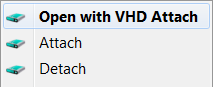 Brilliant:
This is small tool that adds Attach and Detach option to contextual (aka right-click) menu of Virtual disk (vhd) files. That enables those operations to be done without trip to Disk Management console. Detach option is available on hard drive contextual menu also (if selected in options).
Source:
–jeroen
Posted in Power User, Windows, Windows 10, Windows 7, Windows 8, Windows 8.1, Windows Server 2012, Windows Server 2012 R2 | Leave a Comment »
Posted by jpluimers on 2017/05/26
 Source:
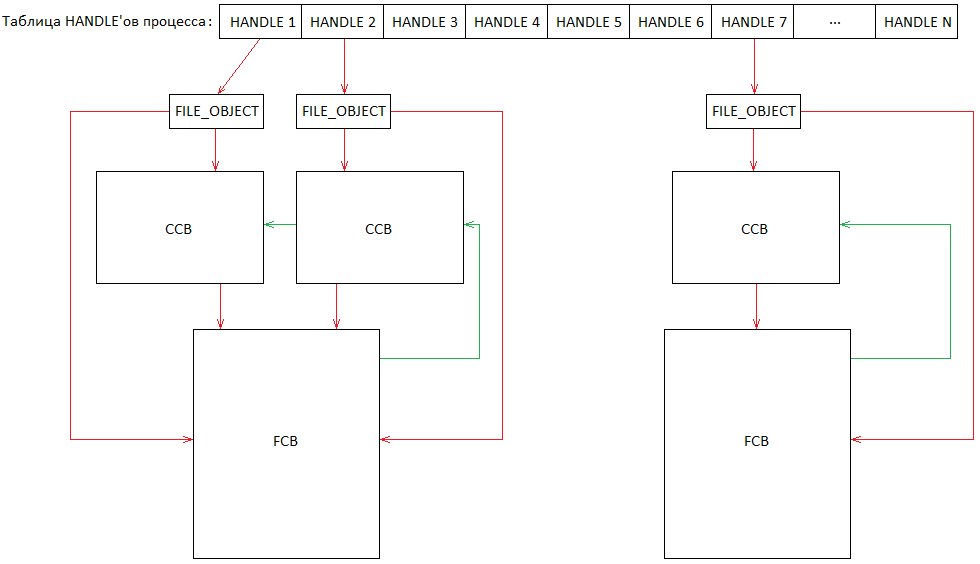
History repeating itself: [Archive.is] 31607 – C:\nul\nul crashes/BSOD then, now it’s this:
Via:
All versions prior to Windows 10 and Windows Server 2016 seem vulnerable.
So add $MFT to this list:
Oh BTW: history repeated itself this year too. With NUL
In short, Steven Sheldon created a rust package named nul which broke the complete package manager on Windows:
BTW: one of my gripes on learning new languages is that they come with a whole new idiom of their ecosystem: rust, cargo, crates, all sound like being a truck mechanic to me.
–jeroen
Read the rest of this entry »
Posted in Development, Microsoft Surface on Windows 7, NTFS, Power User, Security, Software Development, The Old New Thing, Windows, Windows 10, Windows 7, Windows 8, Windows 8.1, Windows 9, Windows 95, Windows 98, Windows Defender, Windows Development, Windows ME, Windows NT, Windows Server 2000, Windows Server 2003, Windows Server 2003 R2, Windows Server 2008, Windows Server 2008 R2, Windows Server 2012, Windows Server 2012 R2, Windows Server 2016, Windows Vista, Windows XP | Leave a Comment »
Posted by jpluimers on 2017/05/01
In addition to the two methods mentioned at Two Quick Methods for Finding Shared Folders in Windows (use net share or compmgmt.msc) I like this one:
fsmgmt.msc
It directly gets you to the “Shared Folders” inside compmgmt.msc
–jeroen
Posted in Power User, Windows, Windows 7, Windows 8, Windows 8.1, Windows Server 2000, Windows Server 2003, Windows Server 2003 R2, Windows Server 2008, Windows Server 2008 R2, Windows Server 2012, Windows Server 2012 R2, Windows Vista, Windows XP | Leave a Comment »


 The Wiert Corner - irregular stream of stuff