The Wiert Corner – irregular stream of stuff

Jeroen W. Pluimers on .NET, C#, Delphi, databases, and personal interests

  • My badges

  • Twitter Updates

  • My Flickr Stream

  • Pages

  • All categories

  • Enter your email address to subscribe to this blog and receive notifications of new posts by email.

    Join 1,839 other subscribers

Archive for the ‘Hardware Development’ Category

web based tools to simulate electronics

Posted by jpluimers on 2019/02/13

Via seedstudio, I bumped into EasyEDA – Wikipedia. It seems there are a lot of on-line tools that allow you to draw and often simulate electronics.

Time to put them on my list of stuff to play around with:

Circuitlab also has a nice free interactive book: [WayBack] “Ultimate Electronics” Book – CircuitLab A free interactive electronics textbook, “Ultimate Electronics”

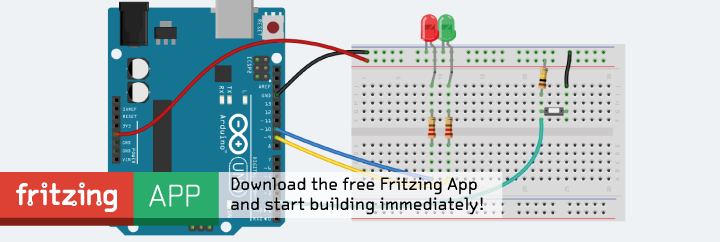
Later – via issue #1 of [WayBack] HackSpace magazine: The new magazine for the modern maker – I also found out about Fritzing which is off-line native software that I want to check out as it is open source:

[Archive.is] Fritzing

It helps a lot knowing there are various Electronic symbol – Wikipedia: Standards for symbols, covering much more than the one below:

To make it easier, power supplies have a host of different symbols for the same things. For instance, DC can have 3 or more different symbols. [WayBack] Electric Current Symbols

–jeroen

Posted in Development, Hardware Development | Leave a Comment »

Build a Power Bank in $2: 7 Steps (with Pictures)

Posted by jpluimers on 2019/02/12

Cool: [WayBackBuild a Power Bank in $2: 7 Steps (with Pictures)

Via:

TL;DR:

  1. salvage 18650 batteries from laptop battery packs
  2. test to separate good ones from bad ones
  3. assemble together the good ones
    1. put them in a holders
    2. solder plusses to plusses and minuses to minuses
  4. add charger electronics
  5. test
  6. put acrylic plate on front/back

Stuff you need:

–jeroen


Posted in 18650, Batteries, Development, Hardware Development, Hardware Interfacing, Li-Ion, Power User | Leave a Comment »

Raspberry Pi and relays – follow up on Having one Raspberry Pi reset another Raspberry Pi through relay or transistor

Posted by jpluimers on 2019/02/12

I did some more research because of Having one Raspberry Pi reset another Raspberry Pi through relay or transistor.

  • [WayBackHow To Add a Reset Switch To Your Raspberry PiRemoving and replacing the USB power cable puts undue wear and tear on your Raspberry Pi, particularly the power port itself. What the system really needs is a reset switch, but sadly none was included.
  • Grove Relay board:
    • has two versions; the V1.2 schematic adds a XC6206P302MR voltage regulator to regulate 3V through the relay coil and an extra 47k Ohm pull-down resistor.
    • has a trigger on high supporting a voltage of 3V, so it works with the Raspberry Pi 3.3V GPIO pins.
    • is “normal open”, so suits the reset scenario (connect on trigger) well.
    • has no “normal closed” header, so if you need that, you’re out of luck
    • does not have optocouplers:
      • Be careful with high voltages on supplies that differ from the one powering your Raspberry Pi
        • It’s fine for resetting another Raspberry Pi powered from the same source
      • The relay is rated 250V ~ but I’d be careful (I’m not sure if this is mains electricity 250V RMS or 250V peak; if the latter, it would be suitable to 175V RMS (approximately 250/1.42 volt).
  • An excellent description (sans optocoupler) on how to connect a relay to power, ground, signal-input and both outputs is at [WayBack/Archive.is] gpio – How to add isolation between raspberry pi and relay board? – Raspberry Pi Stack Exchange (thanks [WayBack] ppumkin).
  • Many 5V optocoupler (or optical-isolator, see video below) based relay boards work fine with the 3.3V GPIO pins from the Raspberry Pi.
    If they don’t, then there are two basic solutions:

    1. Easiest: solder an extra resistor next to the signal input of about the same value (so the voltage drop over it halves), see for instance [WayBack] Controlling a relay board from your RPi · foosel/OctoPrint Wiki
    2. Harder: put an extra transistor in between to pump up the voltage to 5V, see one of the schematics below.

Details of the above can be found from the below links and images from those links.

There is also an Android App with a RaspberryPi distribution that allows you to operate relays:

Finally there are USB relays, shown way down in this post.

Often these are part of some home automation (domotica), IoT, or other, so these are relevant too:

Read the rest of this entry »

Posted in Development, Hardware Development, Raspberry Pi | Leave a Comment »

6502 emulation: the ICE, or in-circuit-emulator…

Posted by jpluimers on 2019/02/05

On my list of hardware things to try:

[WayBack] a different take on 6502 emulation: the ICE, or in-circuit-emulator… – mos6502 – Google+

Basically it consists of three parts:


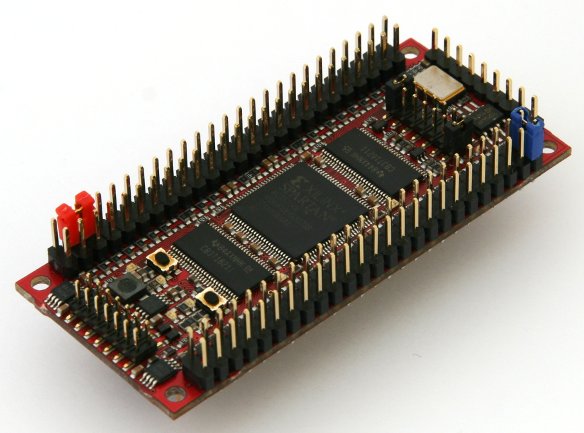
–jeroen


Posted in 6502, Development, Hardware Development, History, Z80 | Leave a Comment »

Raspberry Pi cannot be woken up by WOL, but it can send, and there is Whack-on-LAN

Posted by jpluimers on 2019/01/17

Cool stuff if you want to make your own WOL devices out of spare parts.

From old to new:

They can be woken up by anything sending magic WOL packets, including Raspberry Pi (which cannot be woken up by them, though you could use a Whack-on-LAN for that).

Basically the Raspberry Pi cannot be woken up with WOL because of a few reasons:

  1. The ethernet chip is connected over USB so it cannot pass the WOL result further on.
  2. If it could, there still is no BIOS to process the WOL result.
  3. When it is halted but has power, the CPU isn’t active. The GPU is, but cannot process the WOL.

It can be a WOL server though: [WayBackRaspberry Pi As Wake on LAN Server: 5 Steps (with Pictures)

–jeroen

Posted in Development, Ethernet, Hardware Development, Network-and-equipment, Power User, Raspberry Pi, Wake-on-LAN (WoL) | Leave a Comment »

Some ideas to show a Google Calendar on a TV using a Raspberry Pi and HDMI output

Posted by jpluimers on 2019/01/10

Using OpenSuSE Tumbleweed E20 on Raspberry Pi 3: accessing the enlightenment desktop over VNC after automatic logon I wanted to buy an on-line read-only diary to help my mentally retarded brother see what his next few days are going to be like.

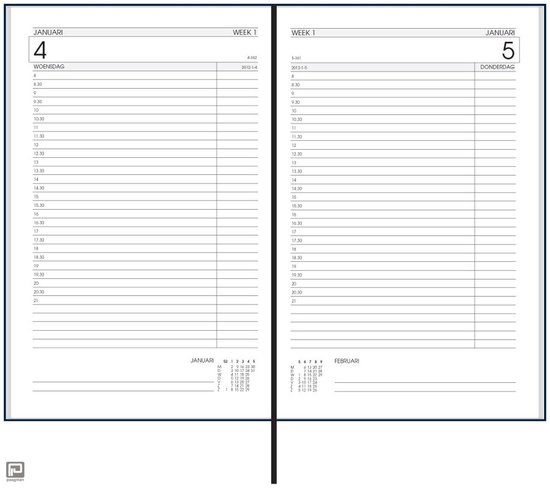
He increasingly has difficulty handling a paper agenda and has an agenda with 30 minute blocks like [Archive.isbol.com | Bureau Agenda 2017 – 1 dag per Pagina | 0041560163422 | Boeken (and the [Archive.is] picture on the right), but actually he needs 15 minute blocks during some portions of the day.

We call that kind “bureau agenda” which I think translates well into “desk diary”.

They were quite different from the agendas I used to have at school (:

[WayBack[Zonder titel] Rijam agenda 1983/84 verzamelen? Stripcatalogus op Catawiki

For most school mates, they were more like this:

Had je een O’Neill of ging je voor De Familie Doorzon? De oude agenda’s uit je middelbare schooltijd zijn de verpersoonlijking van je eigen puber-ik. Afgelopen weekend startte in het Nationaal Onderwijsmuseum in Dordrecht de toffe tentoonstelling Grow Up over die vuistdikke, volgeplakte agenda’s.

[WayBackSchoolagenda vol sentiment | Go with the Vlo

Anyway, some ideas I initially had are below.

This is what I actually did:

Two things for the future:

Initial thoughts

Raspberry based:

Chromecast based:

–jeroen

Read the rest of this entry »

Posted in Development, Google, GoogleCalendar, Hardware Development, JavaScript/ECMAScript, JSFiddle, LifeHacker, Power User, Raspberry Pi, Scripting, Software Development | 2 Comments »

OpenSuSE Tumbleweed on RaspberryPi 3: adding ” modprobe.blacklist=vc4″ to the kernel commandline was a lot tougher than I hoped for.

Posted by jpluimers on 2019/01/08

I run most of my Raspberry Pi systems headless, so I was a bit surprised that OpenSuSE tumbleweed on a Raspberry Pi 3B didn’t show anything on my HDMI monitor after I installed KDE after it switches away from text-mode boot output.

[WayBackHCL:Raspberry Pi3 – openSUSE suggests to

I see HDMI output in U-Boot, but not in Linux

The upstream Linux graphics driver for the Raspberry Pi has problems with a few monitors. The same applies to the 7″ LCD displays. In those cases, please fall back to the efi frame buffer console by passing the following into the kernel command line:

 modprobe.blacklist=vc4

However, it does not explain how to modify that “the kernel command line”.

Searching for obvious ways via “Raspberry Tumbleweed Kernel Command Line” got me to for instance

which all suggest editing /boot/cmdline.txt, however that file does not exist:

# ls -al /boot
total 34624
drwxr-xr-x  6 root root     4096 Jul 23 21:05 .
drwxr-xr-x 24 root root     4096 Jul 16 02:02 ..
-rw-r--r--  1 root root       65 Jul 16 12:42 .Image-4.4.76-7-default.hmac
-rw-r--r--  1 root root        0 Jul 16 16:56 0x75b762d5
lrwxrwxrwx  1 root root       22 Jul 16 16:34 Image -> Image-4.4.76-7-default
-rw-r--r--  1 root root 14878208 Jul 16 12:20 Image-4.4.76-7-default
-rw-r--r--  1 root root  3217519 Jul 16 12:20 System.map-4.4.76-7-default
lrwxrwxrwx  1 root root        1 Jul 16 02:00 boot -> .
-rw-r--r--  1 root root     1725 May 24 20:11 boot.readme
-rw-r--r--  1 root root     2405 Jul 16 16:56 boot.scr
-rw-r--r--  1 root root     2333 Jul 16 16:56 boot.script
-rw-r--r--  1 root root   152522 Jul 16 08:39 config-4.4.76-7-default
lrwxrwxrwx  1 root root       12 Jul 23 16:13 dtb -> dtb-4.11.6-1
drwxr-xr-x  3 root root     4096 Jul 23 16:13 dtb-4.11.6-1
drwxr-xr-x  5 root root    16384 Jan  1  1970 efi
drwxr-xr-x  7 root root     4096 Jul 24 18:27 grub2
lrwxrwxrwx  1 root root       23 Jul 16 16:34 initrd -> initrd-4.4.76-7-default
-rw-------  1 root root  8080932 Jul 23 21:05 initrd-4.4.76-7-default
-rw-r--r--  1 root root   288571 Jul 16 12:42 symvers-4.4.76-7-default.gz
-rw-r--r--  1 root root      377 Jul 16 12:42 sysctl.conf-4.4.76-7-default
-rw-r--r--  1 root root  1484762 Jul 16 16:56 unicode.pf2
drwxr-xr-x  2 root root     4096 Jul 24 09:05 vc
-rw-r--r--  1 root root  7282031 Jul 15 07:00 vmlinux-4.4.76-7-default.gz

There are other config.txt files:

# find / | grep config.txt
/boot/efi/config.txt
/boot/vc/config.txt

However, these seems to be unclear which of the two is actually used and what options can be set at all: [WayBackRaspberry Pi • View topic – aarch64 on Pi3.

So the quest continues, as a lot of settings can be applied in these files:

Setting “modprobe.blacklist=vc4”

I’ve temporarily given up on the /boot/config.txt editing, but continued searching for “modprobe.blacklist=vc4”, which lead to a few interesting results:

All of those suggest adding modprobe.blacklist=vc4 to the grub configuration. The second post actually has the most elaborate steps for this, which I’ve paraphrased into:

  1. As root, edit /etc/default/grub (make a backup first)
  2. Search for the variable GRUB_CMDLINE_LINUX
  3. Add the modprobe.blacklist=vc4to the end of the variable initialisation (ensure there is a space before it and you keep the terminating double-quote)
  4. Re-generate the grub configuration file used at boot time (make a backup first): grub2-mkconfig > /boot/grub2/grub.cfg

This solved my problem: no text output on HDMI.

Note that in order to get graphical output, you need to install any of the non-JeOS images. Installing just kde+kdm and dependencies isn’t enough to get the X server going.

–jeroen

Posted in Development, Hardware Development, Raspberry Pi | Leave a Comment »

Testing SMTP from the console on Linux, BSD and Mac OS: swaks and smtp-cli Perl script clients

Posted by jpluimers on 2019/01/03

Testing SMTP using telnet is tedious as you have to remember the commands and responses in the SMTP protocol. It gets even harder when doing SMTP AUTH, as then you have to base encode a bunch of strings [WayBackHow to Test SMTP AUTH using Telnet [Wiki] | NDCHost

Luckily there is a Perl script swaks: [WayBackSwaks – Swiss Army Knife for SMTP which does ESMTP and LMTP as well as TLS.

The funny thing is that the repository at jetmore/swaks: Swaks – Swiss Army Knife for SMTP only has the readme, but the not the script which you can get from [WayBack] swaks.pl.

Despite that, most Linux distributions have an installation package.

[WayBackswaks for OpenSuse is in the [WayBacknetwork repository, so for Tumbleweed (actually: Factory) on Raspberry Pi you need to perform this:

zypper addrepo http://download.opensuse.org/repositories/network/openSUSE_Factory_ARM/network.repo
zypper refresh
zypper install swaks

On Mac OS X it is even easier: if you have the homebrew package manager installed, you just install the [WayBackswaks formula using the [WayBack] swaks.rb script:

brew install swaks

Note there is also the smtp-cli Perl script which I mentioned before at Fake/Mock SMTP servers and services for use during development, which also does TLS, but few environments have ready built packages for them. If you still want to try it out:

For SMTP AUTH:

swaks -tls --to jeroen.wiert.me@pluimers.com --from jeroen.wiert.me@pluimers.com --server smtp.xs4all.nl --auth-user username

Which prompts for the password, then outputs like this:

=== Trying smtp.xs4all.nl:25...
=== Connected to smtp.xs4all.nl.
<- 220 smtp-cloud3.xs4all.net ESMTP ESMTP server ready -> EHLO rmbpro1tbjwp
<-  250-smtp-cloud3.xs4all.net hello [188.206.68.219], pleased to meet you
<-  250-HELP
<-  250-AUTH LOGIN PLAIN
<-  250-SIZE 157286400
<-  250-8BITMIME
<-  250-STARTTLS
<- 250 OK -> STARTTLS
<- 220 Ready to start TLS === TLS started with cipher TLSv1:DHE-RSA-AES256-SHA:256 === TLS no local certificate set === TLS peer DN="/OU=Domain Control Validated/OU=PositiveSSL Wildcard/CN=*.xs4all.nl" ~> EHLO rmbpro1tbjwp
<~  250-smtp-cloud3.xs4all.net hello [188.206.68.219], pleased to meet you
<~  250-HELP
<~  250-AUTH LOGIN PLAIN
<~  250-SIZE 157286400
<~  250-8BITMIME
<~ 250 OK ~> AUTH LOGIN
<~ 334 ############ ~> anA=
<~ 334 ############ ~> ############################
<~ 235 ... authentication succeeded ~> MAIL FROM:<jeroen.wiert.me@pluimers.com>
<~  250 <jeroen.wiert.me@pluimers.com> sender ok
 ~> RCPT TO:<jeroen.wiert.me@pluimers.com>
<~  250 <jeroen.wiert.me@pluimers.com> recipient ok
 ~> DATA
<~ 354 enter mail, end with "." on a line by itself ~> Date: Wed, 19 Jul 2017 09:09:57 +0200
 ~> To: jeroen.wiert.me@pluimers.com
 ~> From: jeroen.wiert.me@pluimers.com
 ~> Subject: test Wed, 19 Jul 2017 09:09:57 +0200
 ~> Message-Id: <20170719090957.052207@rmbpro1tbjwp>
 ~> X-Mailer: swaks v20170101.0 jetmore.org/john/code/swaks/
 ~> 
 ~> This is a test mailing
 ~> 
 ~> .
<~ 250 smtp-cloud3.xs4all.net accepted mail mXA71v00C4jr6ac01XA9Bo for delivery ~> QUIT
<~  221 smtp-cloud3.xs4all.net ESMTP closing connection
=== Connection closed with remote host.

–jeroen

Posted in *nix, *nix-tools, Communications Development, Development, Hardware Development, Internet protocol suite, Linux, openSuSE, Power User, Raspberry Pi, SMTP, SuSE Linux, Tumbleweed | Leave a Comment »

Need to play with this: Raspberry Pi web simulator from Microsoft Corporation

Posted by jpluimers on 2018/12/26

It’s been a while since [WayBack] +Microsoft Corporation has recently released a preview version of an open source +Raspberry Pi web simulator where you can connect sensors and component… – Jean-Luc Aufranc – Google+

Back then it was convoluted to get going. Hopefully by now that has changed.

So time to take another look during the holiday season:


It reminded me a lot of [WayBackBring ideas to life with free online Arduino simulator and PCB apps | Autodesk Circuits (a.k.a. circuits.io):

Read the rest of this entry »

Posted in *nix, Development, Hardware, Hardware Development, Hardware Interfacing, Linux, Power User, Raspberry Pi, Software Development | Leave a Comment »

Fritz!Box LUA links on my research list

Posted by jpluimers on 2018/11/27

I’m not sure around which firmware versions Fritz!Box started to implement LUA links, but they are now on my research list.

Below a reference and where I found them.

A few notes first:

  • There are many duplicates, which in due time I need to de-duplicate.
  • The .lua links seem to override the old cgi-bin links (that are partially reverse engineered at [WayBackCategory:Befehle in /usr/www/cgi-bin – Fritz!Box).
  • Usually, .lua links require a SID. In the web-ui, a Fritz!Box very much tries to hide that SID from URLs in the browser address bar (especially for firmware versions 06.50 and up) so the easiest to get them is this:
    1. Login to your Fritz!Box
    2. Manually copy any of the URLs in the left side
    3. Take the SID from there.
  • More recent firmware versions hide the .lua links too, but you can see them when monitoring your network traffic in the developer mode of your web browser

Logging in programmatically needs a challenge response mechanism. It used to be at [Wayback] http://www.avm.de/de/Extern/Technical_Note_Session_ID.pdf but now has moved to [Wayback/Archive.ishttps://avm.de/fileadmin/user_upload/Global/Service/Schnittstellen/AVM_Technical_Note_-_Session_ID.pdf

Here is the list:

Read the rest of this entry »

Posted in Development, Fritz!, Fritz!Box, Hardware Development, Hardware Interfacing, Internet, Power User | Leave a Comment »