Archive for the ‘Web Browsers’ Category
Posted by jpluimers on 2020/06/22
For my link archive: [WayBack] browser – How to connect a website has only IPv6 address without domain name? – Super User (thanks haimg):
According to RFC2732, literal IPv6 addresses should be put inside square brackets in URLs, e.g. like this:
http://[1080:0:0:0:8:800:200C:417A]/index.html
If you also need to specify a port other then 80 to access the server it has to be placed after the closing bracket:
http://[1080:0:0:0:8:800:200C:417A]:8888/index.html
Of course, you have to have end-to-end IPv6 connectivity to that host. E.g. if the server is not inside your own local network, you need to have IPv6 connectivity, either via your ISP (rare), or via some kind of IPv6 in IPv4 encapsulation (tunnel).
Related: [WayBack] RFC 2732 – Format for Literal IPv6 Addresses in URL’s
–jeroen
Posted in Chrome, Firefox, Internet Explorer, Opera, Power User, Web Browsers | Leave a Comment »
Posted by jpluimers on 2020/05/20
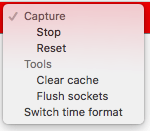 Cool feature I discovered from [WayBack] How to read network requests in Chrome for new tab or popup window:
chrome://net-internals/#events
It will immediately show all events from all tabs including networking events.
The red bar at the top has a drop down on the right where you can stop them and perform a few other actions.
During or after capture, you can select relevant requests from the list (through checkboxes) so the right of the pane gets their info (which is a lot: not just the request/response content including all headers and cookies, but also any delegates from extensions and their results).
Read the rest of this entry »
Posted in Bookmarklet, Chrome, Google, Power User, Web Browsers | Leave a Comment »
Posted by jpluimers on 2019/11/27
If you have Chrome 78 before version 78.0.3904.108, there is a high chance you cannot access (some of) your saved passwords.
This has been fixed in 78.0.3904.108: [WayBack] Chrome 78 update has removed all saved passwords for over 50 users – Google Chrome Enterprise Help
Google is aware of an issue causing saved passwords not to appear after upgrading to Chrome 78. Even though the passwords are not showing up in the UI, they haven’t been lost or deleted.
…
The fix is included in version 78.0.3904.108 which is now pushing at 25% for Mac/Win/Android and 100% for Linux (and will ramp over the next few days based on the field issues and feedback).
–jeroen
Posted in Chrome, LifeHacker, Power User, Web Browsers | Leave a Comment »
Posted by jpluimers on 2019/10/25
By default, Chrome uses the same proxy server as Internet Explorer: the system one that your Chrome settings page accesses from chrome://settings/search#proxy through this command-line call:
"C:\Windows\system32\rundll32.exe" C:\Windows\system32\shell32.dll,Control_RunDLL C:\Windows\system32\inetcpl.cpl,,4
There is no GUI way inside Chrome to change this, but there is a command-line parameter: --proxy-server="ipaddress:port"
So create a new shortcut to Chrome, then you can change it.
This comes in very handy if you want to test
- some sessions through for instance Internet Explorer going through HTTP Fiddler (that defaults at localhost:8888)
- other sessions through Cntlm (that defaults to localhost:3128)
Some background information:
–jeroen
Posted in Chrome, Cntlm, NTLM, Power User, Web Browsers, Windows, Windows 7, Windows 8, Windows 8.1, Windows Server 2003, Windows Server 2003 R2, Windows Server 2008, Windows Server 2008 R2, Windows Server 2012, Windows Server 2012 R2, Windows Vista, Windows XP, Windows-Http-Proxy | Leave a Comment »
Posted by jpluimers on 2019/10/25
If you find out bookmarklets like the [WayBack] Press-This or [Archive.is] SubToMe do not work on some pages but to on others.
Often it’s not the bookmarklet, but a combination the site disabling CSP (Content Security Policy) and browsers not coping well with that, see for instance:
via:
Read the rest of this entry »
Posted in Bookmarklet, CSP, Power User, Security, Web Browsers | Leave a Comment »
Posted by jpluimers on 2019/06/17
 I live in a street that has a non-ASCII character in it: Pyreneeën.
I’ve reverted back to entering the street name as plain ASCII for a simple reason:
Too often the ë gets mangled into encoding gibberish, similar to the é example in [WayBack] When Good Characters Go Bad: A Guide to Diagnosing Character Display Problems as these characters are very near both in UTF-8 and in the [WayBack] Unicode Characters in the Latin-1 Supplement Block:
I’ve seen these encodings, where only the top encoding is correct; the degeneration gets worse moving downwards, a classic Mojibake:
| # |
encoded |
UTF-8 (hex.) |
| 0 |
ë |
0xC3 0xAB |
| 1 |
ë |
0xC3 0x83 0xC2 0xAB |
| 2 |
ë |
0xC3 0x83 0xC2 0x83 0xC3 0x82 0xC2 0xAB |
| 3 |
ÃÂë |
0xC3 0x83 0xC2 0x83 0xC3 0x82 0xC2 0x83 0xC3 0x83 0xC2 0x82 0xC3 0x82 0xC2 0xAB |
| 4 |
ÃÂÃÂÃÂë |
0xC3 0x83 0xC2 0x83 0xC3 0x82 0xC2 0x83 0xC3 0x83 0xC2 0x82 0xC3 0x82 0xC2 0x83 0xC3 0x83 0xC2 0x83 0xC3 0x82 0xC2 0x82 0xC3 0x83 0xC2 0x82 0xC3 0x82 0xC2 0xAB |
| 5 |
ë |
0x26 0x65 0x75 0x6d 0x6c 0x3b |
The last one seldomly happens, the first one relatively often, just like [Archive.is] fd.nl did a while on their finanancial pages.
These mistakes become sort of understandable (but not forgivable) when you look at the below table-fragment (the full table is at[WayBack] Unicode/UTF-8-character table – starting from code position 0080).
Read the rest of this entry »
Posted in Development, Encoding, Mojibake, Power User, Software Development, Unicode, Web Browsers | Leave a Comment »
Posted by jpluimers on 2019/04/24
A few years ago, Firefox changed the default “network.http.response.timeout” value from zero to 300 seconds (5 minutes).
Display style systems that show refreshing web pages, this can be a problem as when the connection to the web-server is unavailable for more than 5 minutes, then the page will show “The connection has timed out” and stop refreshing.
The solution – apart from fixing each and every connection problem – is to either restore the value or make it very long:
network.http.response.timeout=0network.http.response.timeout=30000
Changing this works similarly like in A way to skip the Firefox “Well, this is embarrassing” during a sudden reboot « The Wiert Corner – irregular stream of stuff:
- Open Firefox
- Type
about:config in the addressbar
 Confirm the
This might void your warranty!
by clicking
I accept the risk!- Search for
network.http.response.timeout
- Double click it so the value changes from the
default value 0 to the user set value 0
–jeroen
Via:
Posted in Development, Firefox, Power User, Scripting, Software Development, Web Browsers, Web Development | Leave a Comment »
Posted by jpluimers on 2019/04/15
Just when I thought I made a note of a password I hardly ever use, I didn’t, luckily this open source tools understands how to recover many kinds of passwords: AlessandroZ/LaZagne: Credentials recovery project.
–jeroen
Posted in *nix, *nix-tools, Chrome, Development, DVCS - Distributed Version Control, Firefox, git, Internet Explorer, Office, Opera, Outlook, Power User, Python, Scripting, Skype, Software Development, Source Code Management, Web Browsers, WiFi, Windows | Leave a Comment »
Posted by jpluimers on 2019/04/11
I wrote about bookmarklets before, but more from a usage perspective, not from a programmers one.
From what I understand now is that:
- bookmarklets are basically a special form of URI
- you can use JavaScript in them, but must make sure you do not interfere with existing JavaScript on the page
javascript:(function(){ window.open('https://wiert.me/'); })();
- the URI has limits so,
- browsers can have length restrictions (some around 500 characters) forcing you to put the actual script on-line as externalised bookmarklet (which won’t work on body-less pages)
- you will have to encode special characters (and URI decode them before beautifying existing JavaScript bookmarklets)
My first tries will likely be:
Read the rest of this entry »
Posted in Bookmarklet, Development, JavaScript/ECMAScript, jQuery, Power User, Scripting, Software Development, Web Browsers | Leave a Comment »


 The Wiert Corner - irregular stream of stuff