The Wiert Corner – irregular stream of stuff

Jeroen W. Pluimers on .NET, C#, Delphi, databases, and personal interests

  • My badges

  • Twitter Updates

  • Pages

  • All categories

  • Enter your email address to subscribe to this blog and receive notifications of new posts by email.

    Join 1,854 other subscribers

When an installer errors out with “Please re-run this installer as a normal user instead of”…

Posted by jpluimers on 2019/08/12

Via [WayBack] Anyone with a hint on how to work around this: … “Please re-run this installer as a normal user instead of”… – Jeroen Wiert Pluimers – Google+

This happened for instance when trying to install Source Tree 2.x on Windows (1.9.x works fine):

[Window Title]
SourceTreeSetup-2.3.1.0.exe

[Main Instruction]
Installation has failed

[Content]
Please re-run this installer as a normal user instead of “Run as Administrator”.

[Close]

The problem was by accident the machine got in a state to run commands without UAC approval, so the run dialog would already look have “This task will be created with administrative privileges”:

It was odd, as the machine didn’t have it enabled in the security policy (secpo.msc):

So I did a bit more digging, bumped into [WayBack] Why does my Run dialog say that tasks will created with administrative privileges? – The Old New Thing and had one of those #facepalm moments: Explorer had crashed, and I had started it from Process Explorer, forgetting Process Explorer had an UAC token.

The solution is easy:

  1. Logoff / Logon
  2. Verify the Windows-R shows a “normal” run:

Then you can just run the installer:

–jeroen

Posted in Batch-Files, Console (command prompt window), Development, Power User, Scripting, Software Development, The Old New Thing, Windows, Windows Development | Leave a Comment »

PlasticSCM console

Posted by jpluimers on 2019/08/09

The cm.exe by default is not on the path, even though it is a useful tool.

Some links on it:

Slow

One drawback: the cm.exe is slow in startup, likely because it is a .NET executable needing quite a few assemblies to load:

"C:\Program Files (x86)\Microsoft SDKs\Windows\v10.0A\bin\NETFX 4.7.1 Tools\CorFlags.exe" "C:\Program Files\PlasticSCM5\client\cm.exe"
Microsoft (R) .NET Framework CorFlags Conversion Tool. Version 4.7.2558.0
Copyright (c) Microsoft Corporation. All rights reserved.

Version : v4.0.30319
CLR Header: 2.5
PE : PE32
CorFlags : 0x1
ILONLY : 1
32BITREQ : 0
32BITPREF : 0
Signed : 0

Finding stuff

I get a feeling that there is quite a bit of cm functionality either undocumented, or hardly documented.

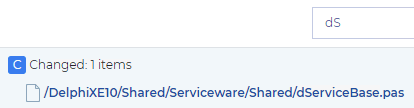
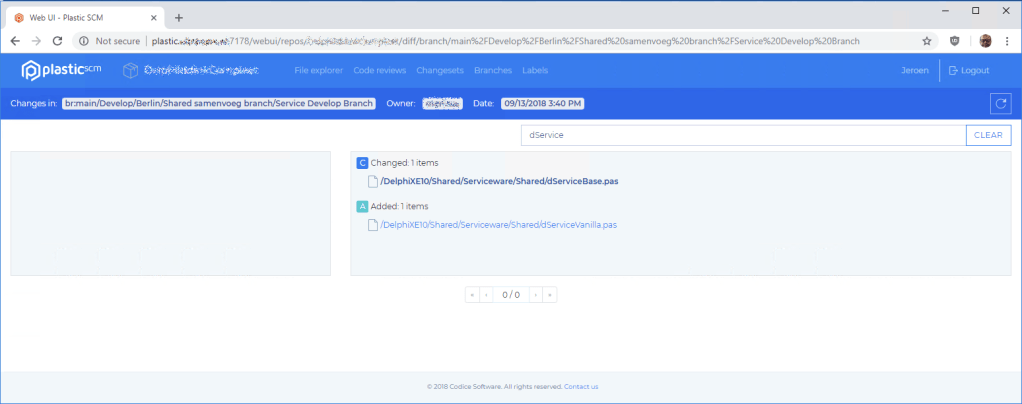
For instance, copying a title from the PlasticSCM GUI does not mean it will work as a cm command.

Despite the documentation indicating

When you run queries using comparison operators (>, <, >=, <=) from the command line, remember that the shell considers these operators as IO redirections, so you will need to enclose the queries with quotation marks:
cm find "branches where owner='pablo' and changesets >= '2013/03/01'"

you have to be really careful where to put the starting double quote: it has to be after the find command:

  1. Example 1
    • Title
      User query: find changeset where branch='/main/test/My Branch Name' on repository 'Projects@ssl://plastic.example.org:8088' (22 Items - 0 selected)
    • Failure
      "C:\Program Files\PlasticSCM5\client\cm.exe" "find changeset where branch='/main/test/My Branch Name' on repository 'Projects@ssl://plastic.example.org:8088'"
      Command 'find changeset where branch='/main/test/My Branch Name' on repository 'Projects@ssl://plastic.example.org:8088'' not found. Type cm showcommands to get a command list.
    • Success
      "C:\Program Files\PlasticSCM5\client\cm.exe" find "changeset where branch='/main/test/My Branch Name' on repository 'Projects@ssl://plastic.example.org:8088'"
  2. Example 2
    • Title
      Changesets /main/test/My Branch Name@Projects@ssl://plastic.example.org:8088 (4 Items - 1 selected)
    • Failure
      "C:\Program Files\PlasticSCM5\client\cm.exe" find "Changesets /main/test/My Branch Name@Projects@ssl://plastic.example.org:8088"
      Error: unexpected char: '@'
    • Success
      "C:\Program Files\PlasticSCM5\client\cm.exe" find "Changesets where branch='/main/test/My Branch Name' on repository 'Projects@ssl://plastic.example.org:8088'"

This means that changeset can be Changesets: it is case insensitive and has multiple aliases. It looks similar to commands I used in my days of using Rational ClearCase – Wikipedia

I need to find out how to translate a non-query title into a query one. That will make it a lot easier to go from PlasticSCM GUI to the cm.

No XML documentation

The cm find command has a cool parameter --xml, which dumps the output in an XML tree.

My original goal was to see if I could turn the XML into something like Markdown or RST, using an XSLT transform like these:

For those transforms, you have to know how the input XML is structured. However, this information is undocumented.

When asked, PlasticSCM indicated there is no XSD for it claiming it was “super simple export to XML”:

[WayBack] Plastic SCM on Twitter: “No XSD, I’m afraid. Just super simple export to XML.… “

https://twitter.com/plasticscm/status/1039842761304940544

I hoped the elements were just uppercase versions of the output below, but they are not. Bummer.

–jeroen

Read the rest of this entry »

Posted in Development, PlasticSCM, Power User, Source Code Management | Leave a Comment »

Periodic Table of Motion

Posted by jpluimers on 2019/08/09

Cool [WayBack] motiontable showcasing many graphical transformation motions in a way similar to the Periodic Table of Elements.

More in depth information (in Japanese, but Google Translate performs a great job) at:

  • [WayBack] About (also explaining the similarity of both tables, for instance on how columns and rows are organised)
  • [WayBack] Work List showing the effects of many transformations applied to various graphic designs

Via [WayBack] Motion Periodic Table http://foxcodex.html.xdomain.jp/index.html #gamedev – Adrian Marius Popa – Google+

–jeroen

Posted in Graphic Design, Power User | Leave a Comment »

Dean Bubley’s Disruptive Wireless: Debunking the Network QoS myth

Posted by jpluimers on 2019/08/09

QoS doesn’t work, except for one specific scenario:

Where QoS works is where one organisation controls both ends of a connection AND also tightly-defines and controls the applications:

  • A fixed-broadband provider can protect IP telephony & IPTV on home broadband between central office & the home gateway.An enterprise can build a private network & prioritise its most important application(s), plus maybe a connection to a public cloud or UCaaS service.
  • Mobile operators can tune a 4G network to prioritise VoLTE.
  • Telco core and transport networks can apply differential QoS to particular wholesale customers, or to their own various retail requirements (eg enterprise users’ data vs. low-end consumers, or cell-site timing signals and backhaul vs. user data).
  • Industrial process & control systems use a variety of special realtime connection protocols and networks. Vendors of “OT” (operational technology) tend to view IT/telecoms and TCP/IP as quaint. The IT/OT boundary is the real “edge”.

Source: [WayBackDean Bubley’s Disruptive Wireless: Debunking the Network QoS myth

Via: [WayBack] This is not news, but it’s worthwhile repeating… – Kristian Köhntopp – Google+:

This is not news, but it’s worthwhile repeating: it is actually cheaper to build a network that can carry the traffic than building a network that keeps quality promises on a backbone that is undersized or close to capacity. Overprovisioning works, everything else does not, economically as well as technically.

–jeroen

Posted in Network-and-equipment, Power User, QoS | Leave a Comment »

NativeInt / NativeUInt type in various Delphi versions – twm’s blog

Posted by jpluimers on 2019/08/08

Reminder to Self (and note that Delphi <= 2007 does not reference NativeInt/NativeUInt in System.pas): [WayBack] NativeInt / NativeUInt type in various Delphi versions – twm’s blog

Just in case you are maintaining Delphi code for several older versions of Delphi: Be aware that the declarations of NativeInt and NativeUInt are wrong in some of them.

Delphi version SizeOf(Native(U)Int) Win32 SizeOf(Native(U)Int) Win64
1 to 6 not available not available
7 to 2007
8 ← this is wrong
not available
2009 to XE 4 not available
XE2 to XE8 4 8
10.x 4 8

Relevant GExperts commit: [WayBack] GExperts / Code / Commit [r2399]

Via  [WayBack] Just in case you are maintaining Delphi code for several older versions of Delphi: Be aware that the declarations of NativeInt and NativeUInt are wrong … – Thomas Mueller (dummzeuch) – Google+

–jeroen

Posted in Delphi, Development, Software Development | Leave a Comment »

Using PE Flags in Delphi – twm’s blog

Posted by jpluimers on 2019/08/08

For my link archive: [WayBackUsing PE Flags in Delphi – twm’s blog with information about and links to:

The flags themselves are documented at [WayBack] IMAGE_FILE_HEADER structure (Windows)

–jeroen

Via: [WayBack] There was a discussion about using the PE flag IMAGE_FILE_LARGE_ADDRESS_AWARE… – Thomas Mueller (dummzeuch) – Google+

Posted in Delphi, Development, Software Development, Windows Development | Leave a Comment »

The 14 JavaScript debugging tips you probably didn’t know | Raygun

Posted by jpluimers on 2019/08/08

For my link archive: [WayBackThe 14 JavaScript debugging tips you probably didn’t know | Raygun

–jeroen

Posted in Development, JavaScript/ECMAScript, Scripting, Software Development | Leave a Comment »

Inactive GUI applications: click once or twice to perform an action within the application

Posted by jpluimers on 2019/08/07

When an application is inactive, you have to click it at least once to activate it, but sometimes click twice to actually perform an action.

In the past, there were more applications requiring it, even User Interface or Human Interface guidelines explaining the difference.

Nowadays, most of these guidelines have become hard to find, but luckily some of them have been archived in the WayBack machine.

They all come down to this:

An action in an application can be disruptive, especially when there is no confirmation step for it.

Clicking an application over the area that invokes such a disruptive action, without the user realising it can have adverse consequences.

Some links for further reading:


Enabling Click-Through

An item that provides click-through is one that a user can activate with one click, even though the item is in an inactive window. (To activate an item that does not support click-through, the user must first make the containing window active and then click the item.) Although click-through can make some user tasks easier, it can also confuse users if they click items unintentionally.

Click-through is not a property of a class of controls; any control, including toolbar items, can support click-through. This also means that you can support click-through for any subset of items; you don’t have to choose between supporting click-through for all items in a window or none. Follow the guidelines in this section so that you can support click-through when it’s appropriate.

Avoid providing click-through for an item or action whose result might be dangerous or undesirable. Specifically, avoid enabling click-through for an item that:

  • Performs a potentially harmful action that users can’t cancel (for example, the Delete button in Mail)
  • Performs an action that is difficult or impossible to cancel (such as the Send button in Mail)
  • Dismisses a dialog without telling the user what action was taken (for example, the Save button in a Save dialog that overwrites an existing file and automatically dismisses the dialog)
  • Removes the user from the current context (for example, selecting a new item in a Finder column that changes the target of the Finder window)

Clicking in any one of these situations should cause the window that contains the item to be brought forward, but no other action to be taken.

In general, it’s safe to provide click-through for an item that asks the user for confirmation before executing, even if the command ultimately results in destruction of data. For example, you can provide click-through for a delete button if you also make sure to give users the opportunity to cancel or confirm the action before it proceeds.

Think twice before supporting click-through for items that don’t provide confirmation feedback. Specifically, consider how dangerous the action might be, and determine how difficult it will be for the user to undo the action after it’s performed. For example, the Mail Delete button does not provide click-through because it deletes a message without asking for confirmation, which is a potentially harmful action that can be difficult to undo. On the other hand, click-through for the New button in Mail is fine because its resulting action is not harmful and is easy to undo.

Ensure that items that don’t support click-through appear disabled when their window is inactive. The disabled appearance helps users understand that these controls are unavailable. For example, the Delete and Mark as Junk buttons in the inactive Mail window shown below don’t support click-through.

An inactive window with controls that support click-through

–jeroen

Posted in Apple, Classic Macintosh, Development, Mac, Mac OS X / OS X / MacOS, Power User, Software Development, Usability, User Experience (ux), Windows | Leave a Comment »

This is why I try to avoid C, as it means handling code from others that shoot in foots

Posted by jpluimers on 2019/08/07

Via [WayBack] Hello, I’m translating some C code to Delphi and found something that surprise me…is it logical that this code compiles ? – Paul TOTH – Google+

Maintaining C means you need to be aware that other people like shooting at foots (yes, that is a grammar error by intent):

#include 
#include 

void test();

void test2() {
  test();
}

void test(char *msg) {
  printf("test called '%s' (%d)\n", msg, strlen(msg));
}

void main() {
  test2();
}

Of course!? with gcc under Ubuntu the result is

test called 'test' (4)

Code is derived from [Archive.isgit hub user fogleman project Craft search db_worker_start

The thread has some nice comments.

–jeroen

Posted in C, Development, Software Development | Leave a Comment »

More on new .NET path handling – Jeremy Kuhne’s Blog

Posted by jpluimers on 2019/08/07

When it was at the age natural people are allowed to drive in the USA, the .NET framework behaved far less brain dead handling various (especially long or strange) paths: [WayBackMore on new .NET path handling – Jeremy Kuhne’s Blog.

Path handling has frustrated me in many development environments, so I wonder if ones that are beyond the (USA) legal age of drinking follow.

–jeroen

via: [WayBack] Some time ago, the .net developers finally saw sense and removed path normalization and long path limit code in System.IO… Does anybody know if Embarcadero have come to their senses… – David Heffernan – Google+

Posted in .NET, Delphi, Development, Java, Java Platform, Software Development | Leave a Comment »