The Wiert Corner – irregular stream of stuff

Jeroen W. Pluimers on .NET, C#, Delphi, databases, and personal interests

  • My badges

  • Twitter Updates

  • My Flickr Stream

  • Pages

  • All categories

  • Enter your email address to subscribe to this blog and receive notifications of new posts by email.

    Join 1,854 other subscribers

Archive for the ‘Software Development’ Category

Small batch file wrapper around PowerShell to uniquely sort file based content

Posted by jpluimers on 2021/05/19

From my batch file library; note this PowerShell wrapper does not support stdin, but that is OK for me.

For Windows 10 and up, sort /unique works too and supports stdin.

:: note: does not work on stdin, unliqke sort which does support standard input
:: http://secretgeek.net/ps_duplicates
PowerShell Get-Content %1 ^| Sort-Object ^| Get-Unique
:: note that for Windoww 10 and up, there is a sort /unique switch, but Windows versions below it do not.
:: https://superuser.com/questions/1316317/is-there-a-windows-equivalent-to-the-unix-uniq

Related:

–jeroen

Posted in Batch-Files, CommandLine, Development, PowerShell, PowerShell, Scripting, Software Development | Leave a Comment »

Much Turbo Pascal history (via What is a Delphi DCU file? – Stack Overflow)

Posted by jpluimers on 2021/05/19

Editing [WayBack] What is a Delphi DCU file? – Stack Overflow for more historic correctness and adding links prompted me to archive some older material and search for some more, basically because while historically very relevant, link rot makes a lot of that stuff harder and harder to find.

The legendary full page colour advert published in the 12th 1983 issue of Byte Magazine on page 456 is at the bottom of this post (Many BYTE magaine issues have been archived at https://archive.org/details/byte-magazine).

The smaller version below is from WayBack: Sip from the Firehose : November 2008 marks the 25th anniversary of Turbo Pascal v1.0! (this article is not available on the Embarcadero or Idera site any more).

I also included more adverts in reverse chronological order at the end:

The last two via [WayBack] saundby.com: Software for the Ampro Little Board.

--jeroen

Read the rest of this entry »

Posted in Conference Topics, Conferences, CP/M, Delphi, Development, Event, History, MS-DOS, Pascal, Power User, Software Development, Turbo Pascal, UCSD Pascal, Z80 | Leave a Comment »

Plastic SCM: add the current directory recursively

Posted by jpluimers on 2021/05/18

Since I always forget the command (I do not use it often enough) [WayBack] Plastic SCM – Branch per task guide:

cm add -R .

That adds the current directory (.) recursively, taking into account the ignore.conf file.

–jeroen

Posted in Development, PlasticSCM, Software Development, Source Code Management | Leave a Comment »

SQL Server: RowVersion is not the same format as BigInt

Posted by jpluimers on 2021/05/18

A while ago, I needed to get RowVersion binary data out of SQL Server. People around me told me it is stored as BigInt.

I luckily bumped into [WayBack] sql server – Cast rowversion to bigint – Stack Overflow.

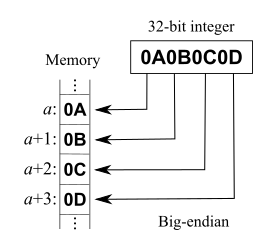
That post explains RowVersion is not stored as BigInt. Both RowVersion and BigInt take up 8 bytes of storage, but RowVersion is big-endian and unsigned, whereas BigInt is little-endian and signed.

A few quotes from it:

In my C# program I don’t want to work with byte array, therefore I cast rowversion data type to bigint:

SELECT CAST([version] AS BIGINT) FROM [dbo].[mytable]

So I receive a number instead of byte array. Is this conversion always successful and are there any possible problems with it? If so, in which data type should I cast rowversion instead?

and

You can convert in C# also, but if you want to compare them you should be aware that rowversion is apparently stored big-endian, so you need to do something like:

byte[] timestampByteArray = ... // from datareader/linq2sql etc...
var timestampInt = BitConverter.ToInt64(timestampByteArray, 0);
timestampInt = IPAddress.NetworkToHostOrder(timestampInt);

It’d probably be more correct to convert it as ToUInt64, but then you’d have to write your own endian conversion as there’s no overload on NetworkToHostOrder that takes uint64. Or just borrow one from Jon Skeet (search page for ‘endian’).

Code: [WayBack] Jon Skeet: Miscellaneous Utility Library

Related:

--jeroen

Posted in .NET, Database Development, Delphi, Development, Jon Skeet, Software Development, SQL Server | Leave a Comment »

JclRTTI: type has not type info

Posted by jpluimers on 2021/05/18

[WayBack] Any idea why we get this error, or even better, how to fix it : [dcc32 Error] JclRTTI.pas(663): E2134 Type ‘<void>’ has no type info We compile same c… – Tommi Prami – Google+

So the JCL needs to have the compiler setting Emit runtime type information set to true (which is the default for projects, but can be turned off).

Thanks Stefan Glienke for reporting the fix.

–jeroen

Posted in Delphi, Development, Software Development | Leave a Comment »

Chocolatey: vcredist 2005/2008/2010 updates failing as Microsoft rebuilt the installers multiple times causing new hashes each time

Posted by jpluimers on 2021/05/14

The Microsoft rebuilt move affects these Chocolatey Microsoft Visual C++ Redistributable packages, usually multiple times:

You get error messages like this:

ERROR: Checksum for 'C:\Users\saroot\AppData\Local\Temp\chocolatey\vcredist2010\10.0.40219.2\vcredist_x86.exe' did not meet '66B797B3B4F99488F53C2B676610DFE9868984C779536891A8D8F73EE214BC4B' for checksum type 'sha256'. Consider passing the actual checksums through with --checksum --checksum64 once you validate the checksums are appropriate. A less secure option is to pass --ignore-checksums if necessary

The cause is [Archive.is] vcredist-all fails to install due to broken checksum of vcredist2005, vcredist2008 and vcredist2010 · Issue #105 · jberezanski/ChocolateyPackages

jberezanskicommented

Great, Microsoft is apparently on an in-place installer update spree.

Actually, this is not a problem with vcredist-all, but rather with those specific packages and should be reported to maintainers of those packages. It so happens, however, that I’m also one of the maintainers of vcredist2008 and vcredist2010 (which live in https://github.com/chocolatey-community/chocolatey-coreteampackages/tree/master/manual). I’ve already prepared a fix for 2010 and I guess I’ll do 2008 tomorrow.

As for 2005, I can see that it has the same maintainer as vcredist2010 had until very recently – when we took over that package because the maintainer did not respond. So we probably should take over 2005, too.

Progress

The vcredist2010 package has been modified two times for this:

Hopefully the vcredist2008 and vcredist2005 packages will follow soon.

–jeroen

Posted in C++, Chocolatey, Development, Power User, Software Development, Visual Studio C++, Windows | Leave a Comment »

How to calculate bitmap size? – Stack Overflow

Posted by jpluimers on 2021/05/13

A while ago I needed an estimate for [WayBack] How to calculate bitmap size? – Stack Overflow, which does an accurate calculation for the size of the pixel storage (i.e. without headers):

pixelStorageSize = (( width*bitsPerPixel + 31) / 32) * 4 * height

Here:

  • 4 is the number of bytes per quad-byte as bitmaps are stored with pixel lines aligned on quad-byte boundaries
  • 32 is the bits per quad-byte
  • 31 helps to round up to the quad-word boundary

It was derived from [WayBack] Capturing an Image – Windows applications | Microsoft Docs and shorthand for what is explained at [WayBack] BMP file format: Pixel storage – Wikipedia

The bits representing the bitmap pixels are packed in rows. The size of each row is rounded up to a multiple of 4 bytes (a 32-bit DWORD) by padding.

For images with height above 1, multiple padded rows are stored consecutively, forming a Pixel Array.

The total number of bytes necessary to store one row of pixels can be calculated as:

{\displaystyle {\text{RowSize}}=\left\lceil {\frac {{\text{BitsPerPixel}}\cdot {\text{ImageWidth}}}{32}}\right\rceil \cdot 4=\left\lfloor {\frac {{\text{BitsPerPixel}}\cdot {\text{ImageWidth}}+31}{32}}\right\rfloor \cdot 4,}
ImageWidth is expressed in pixels, note the special parentheses.

The total amount of bytes necessary to store an array of pixels in an n bits per pixel (bpp) image, with 2ncolors, can be calculated by accounting for the effect of rounding up the size of each row to a multiple of 4 bytes, as follows:

PixelArraySize = RowSize · |ImageHeight|
ImageHeight is expressed in pixels. The absolute value is necessary because ImageHeight can be negative.

I think I needed this to estimate how many bitmaps would fit in

[WayBack] Virtual address space – Wikipedia, which on 32-bit Windows by default is limited to 2 GiB, and can be extended to 3 GIB by enabling the IMAGE_FILE_LARGE_ADDRESS_AWARE executable header flag.

This flag imposes the risk of many libraries and DLLs to fail because they do not get the pointer math right. You often do not have control of future versions of DLLs being loaded in your process space and their risks, so do not ever use that flag.

–jeroen

Posted in Algorithms, Development, Software Development | 1 Comment »

Chocolatey: installing Oracle SQL Developer and updating the chocolatey package

Posted by jpluimers on 2021/05/13

Sometimes an install is not just as simple as C:\>choco install --yes oracle-sql-developer.

Edit 20210514:

Note that most of the below pain will be moot in the future as per [Archive.is] Jeff Smith 🍻 on Twitter: “we’re working on removing the SSO requirement, it’s already done for @oraclesqlcl – see here … “ referring to [Wayback] SQLcl now under the Oracle Free Use Terms and Conditions license | Oracle Database Insider Blog

SQLcl, the modern command-line interface for the Oracle Database, can now be downloaded directly from the web without any click-through license agreement.

It means the Oracle acount restriction will be lifted, and downloads will be a lot simpler.

I started with the below failing command, tried a lot of things, then finally almost gave up: Oracle stuff does not want to be automated, which means I should try to less of their stuff.

First of all you need an Oracle account (I dislike companies doing that for free product installs; I’m looking at Embarcadero too) by going to profile.oracle.com:

[WayBack] Chocolatey Gallery | Oracle SQL Developer 18.4.0 (also: gist.github.com/search?l=XML&q=oracle-sql-developer)

Notes

  • This version supports both 32bit and 64bit and subsequently does not have a JDK bundled with it. It has a
    dependency on the jdk8 package to meet the application’s JDK requirement.
  • An Oracle account is required to download this package. See the “Package Parameters” section below for
    details on how to provide your Oracle credentials to the installer. If you don’t have an existing account, you can
    create one for free here: https://profile.oracle.com/myprofile/account/create-account.jspx

Package Parameters

The following package parameters are required:

/Username: – Oracle username
/Password: – Oracle password

(e.g. choco install oracle-sql-developer --params "'/Username:MyUsername /Password:MyPassword'")

To have choco remember parameters on upgrade, be sure to set choco feature enable -n=useRememberedArgumentsForUpgrades.

Then the installation failed fail again: ERROR: The response content cannot be parsed because the Internet Explorer engine is not available, or Internet Explorer's first-launch configuration is not complete. Specify the UseBasicParsing parameter and try again.

The trick is to RUN IEXPLORE.EXE AS ADMINISTRATOR ONCE BEFORE INSTALLING FROM CHOCOLATEY. Who would believe that.

The reason is that the package uses Invoke-WebRequest which requires Internet Explorer and PowerShell 3. Chocolatey packages however need to be able to run on just PowerShell 2 without Invoke-WebRequest.

Maybe using cURL can remedy that; adding a dependency to is is possible, as cURL can be installed via chocolatey: [WayBack] How to Install cURL on Windows – I Don’t Know, Read The Manual. Another alternative might be [WayBack] Replace Invoke-RestMethod in PowerShell 2.0 to use [WayBack] WebRequest Class (System.Net) | Microsoft Docs.

Read the rest of this entry »

Posted in CertUtil, Chocolatey, CommandLine, Database Development, Development, DVCS - Distributed Version Control, git, Hashing, OracleDB, Power User, PowerShell, Security, SHA, SHA-1, Software Development, Source Code Management, Windows, XML, XML/XSD | Leave a Comment »

Delphi: EInvalidOp exception, might just mean you have a use-after free scenario, or an out-of-bounds value

Posted by jpluimers on 2021/05/13

Quite some time ago, I was researching spurious exceptions in a Delphi application, then finally replicated them in a unit test suite.

One of them was occurring almost all of the time: EInvalidOp.

It is one of the floating point exceptions (incidentally exampled at [WayBack] Exceptions: Declaring Exception Types) all inheriting from the [WayBack] EMathError Class:

EMathError is the base class for floating-point math exception classes. EMathError itself is never raised.

The following exceptions descend from EMathError:

Meaning
Parameter out of range
Processor encountered an undefined instruction
Floating-point operation produced result too large to store
Floating-point operation produced result with no precision
Attempt to divide by zero

Run-time exception information is saved in fields provided by [WayBack] EExternal.

Use-after-free

In my first case (which I described in delphi – Invalid floating point operation calling Trunc()), not all input scenarios had been tested in a certain scenario. In a production environment, one of the inputs was really high.

In a later case, the actual cause was not a floating point problem at all, but a use-after-free scenario that overwrite a floating point value with something not so compatible also causing a simple Trunc statement to fail in the same way.

In that case, the production data could never reach the big numbers that failed, so no new tests were needed.

–jeroen

Posted in Conference Topics, Conferences, Delphi, Development, Event, Software Development | Leave a Comment »

Golang written: nefertiti-tradebot.com

Posted by jpluimers on 2021/05/12

[WayBack] dutchdelphidude on Twitter: “ik doe nu dit ermee nefertiti-tradebot.com … “

nefertiti-tradebot.com

–jeroen

Read the rest of this entry »

Posted in Development, Go (golang), Software Development | Leave a Comment »