The Wiert Corner – irregular stream of stuff

Jeroen W. Pluimers on .NET, C#, Delphi, databases, and personal interests

  • My badges

  • Twitter Updates

  • My Flickr Stream

  • Pages

  • All categories

  • Enter your email address to subscribe to this blog and receive notifications of new posts by email.

    Join 1,854 other subscribers

Archive for the ‘History’ Category

SMS cards: The technology inside IBM’s 1960s mainframes

Posted by jpluimers on 2015/12/11

When SMS means Standard Module System.

Pure Geek Porn, for instance this triple AND gate:

triple AND gate with germanium transistors and diodes

triple AND gate with germanium transistors and diodes

Thanks Jan Wildeboer for sharing this.

–jeroen

via: SMS cards: The technology inside IBM’s 1960s mainframes.

Posted in History | Leave a Comment »

In remembrance of Felipe Rodriquez

Posted by jpluimers on 2015/12/10

Felipe makes a few appearances in this great _Unauthorized Access_ documentary by Annaliza Savage 1994.

Memorable moments:

  1. Intro about the initial small size of Hack-Tick.
  2. The start of the Hack-Tick ISP in The Netherlands, which originally started with UUCP and later grew into one of the most important general ISPs with a very keen focus in privacy: xs4all.
  3. Hacking at the End of the Universe congress.

Most of the “in memories” were in Dutch, but one of the few English ones says it all: [Wayback] D U T C H F E L L O W S — In memory of Felipe Rodriquez.

Karin Spaink (friend of Felipe, also suffering from MS) wrote [Wayback] Felipe Rodriguez has died.

A few of the Dutch articles that impressed me very much (some obituaries, some on the internet history in The Netherlands):

–jeroen

The full video:

Slightly longer but with a worse audio quality:


Posted in About, History, Internet, Personal | 1 Comment »

¯\_(ツ)_/¯ bot not ¯\_㋡_/¯ or using Katakana for Smileys

Posted by jpluimers on 2015/12/06

Recently I see a lot of people using the ¯_(ツ)_/¯  emoticon as a meme for shrugging arms (though *shrug* is both shorter and easier to type).

It’s based on the Tsu kana (which is has no meaning by itself, but is a mora indicating a glottal stop) and seems to be in use since 2011.

There is also the Shi kana (which also resembles a smiling face), which would lead to ¯_(シ)_/¯.

The fun part is that the for Shi, Wikpedia mentions ㋛ (which is basically Shi enclosed in a circle) it would become ¯_㋛_/¯ which is as short as *shrug* but more visual.

But for Tsu, Wikipedia doesn’t mention ㋡ (maybe coincidentally, the Tsu enclosed in a circle Wiktionary page isn’t there yet as well) which would make ¯_㋡_/¯, again as short as *shrug* but more visual and the one I would prefer.

The below Unicode code points were all added in 1993, quite some time before they got used as emoticons:

–jeroen

PS: there is a little visual trick to cope with shi, tsu, so and n: watch the stroke order and top/left line.


Posted in Emoticons, Fun, Geeky, History | Leave a Comment »

Blast from the past: the digital highway as imagined circa 1995.

Posted by jpluimers on 2015/08/07

Blast from the past: the digital highway as imagined circa 1995 (thanks Kristian Köhntopp for sharing this a while ago).

Learned a new phrase too (handfeste Datenträger) for something a marching band friend of mine was involved in: before he suddenly passed away at 39 he was a “high bandwidth courier” giving meaning to the phrase by Tanenbaum “Never underestimate the bandwidth of a station wagon full of tapes hurtling down the highway” by driving around magnetic tapes and optical media between various locations for about 600+ km a day.

Who could imagine in the age where ISDN at home (@ 64 kibit/s) was fast, that 20 years later you could have fiber (@ 500 Mibit/s) at home both for like EUR 50/month.

Like Steve Streeting posted: having high bandwidth (relative to the time you live in) makes you stop thinking about your internet speed

It allows you to find new usage patterns. Which is good for imagination, work, etc.

–jeroen

PS:

I lied a little. EUR 50/month is for the subscription only. Nowadays that means a permanent connection. In the ISDN days having a permanent connection to an ISP would set you down another EUR 50/month for the ISP, and about EUR 600/month of data usage to the telecom provider.

I did that for a couple of years until cable and ADSL became available. Why? Because it was the fastest way to stay informed (gopher, newsgroups, mailing lists, early forums and web-sites) and get the latest software (mainly over FTP).

Imagine this was only years after not even HCC being able to sustain the costs of a Fidonet transatlantic link, and now two decades later. I’ve posted about Fidonet before, and back-then it was the most affordable way to access information from across the world.

Now less than a century after the first transatlantic phone service was established in 1927, world wide communication is almost free (and there is even internet in space).

PPS:

Swets – where my friend worked for filed for bankruptcy last year. No more high bandwidth couriers…

via:

Posted in BBS, FidoNet, History, Infrastructure | Leave a Comment »

Easy 6502 by skilldrick: an ebook tutorial to learn 6502 assembly with embedded simulator

Posted by jpluimers on 2015/08/04

A while ago, Alan Cox write a G+ post pointing me to Easy 6502 by skilldrick. The last couple of weeks I finally found time to play with it:

It is a tutorial ebook by Nick Morgan with examples and a play ground based on the adapted JavaScript 6502 assembler and simulator right integrated into a github.io site.

From the perspective of learning assembly language to get a grasp of thinking at the lowest computer abstraction, it is an ideal tutorial: the 6502 is a very simple 8-bit processor with only 3 registers. These restrictions make programming fun.

These are the topics covered:

This is what Alan thinks about it:

… some of the other 6502 tutorials

This one is really really neat – bit more basic than the bits I need to brush up on but really nicely done.

skilldrick.github.io/easy6502/Easy 6502.

via:

Posted in 6502, 6502 Assembly, Assembly Language, Development, History, JavaScript/ECMAScript, Scripting, Software Development | Leave a Comment »

Turbo Pascal Compiler and IDE in JavaScript

Posted by jpluimers on 2015/07/09

A (hardly) limited Turbo Pascal Compiler (and large parts of the IDE!) in JavaScript.

Memories from the CP/M era (:

Code is on GitHub.

–jeroen

Posted in CP/M, Development, History, Pascal, Software Development, Turbo Pascal, Z80 | Leave a Comment »

20 years ago today: Here’s a nickel kid. Go buy yourself a real computer.

Posted by jpluimers on 2015/06/24

An eternal Dilbert strip that is based on the tiny Here’s a nickel kid. Go buy yourself a real computer fragment from single.h:

#if _FP_W_TYPE_SIZE < 32
#error "Here's a nickel kid. Go buy yourself a real computer."
#endif

Read the rest of this entry »

Posted in *nix, ARM, Assembly Language, Delphi, Delphi 1, Development, Fun, Geeky, History, MS-DOS, Power User, Software Development, Windows, Windows 8.1, Windows 95, Windows NT, x86 | 2 Comments »

2 More Old Micro Cornucopia issues on BitSavers from 1986 « The Wiert Corner – irregular stream of stuff

Posted by jpluimers on 2015/06/18

Almost two years ago, I wrote “the only issues missing are #28, #30 and #31.”. As of mid May any more:

All of them are from the 5th anniversary year.

–jeroen

via 2 More Old Micro Cornucopia issues on BitSavers from 1986 « The Wiert Corner – irregular stream of stuff.

Posted in 6502 Assembly, Assembly Language, BitSavers.org, C, C++, Development, History, Pascal, Software Development, Turbo Pascal | Leave a Comment »

Now that XE8 is out, some Turbo Pascal history

Posted by jpluimers on 2015/04/14

A few people asked, so below is a picture of just a piece of my books closet.

From left to right:

  1. Object Professional 1.0 manuals volume 1-3
  2. BTree Filer 5.0 manual
  3. Turbo Professional manual (from 1985!)
  4. Borland Paradox Engine 3.0 manuals
  5. Crystal Reports Developers Edition
  6. Borland Open Architecture Handbook for Pascal
  7. Turbo Pascal 5.5 OOP Guide
  8. Turbo Pascal 5.5 Reference Guide
  9. Turbo Pascal 5.5 User’s Guide
  10. Turbo Pascal Quick Reference
  11. Programming with Turbo Vision

This is only the front-left portion of one shelve. Most shelves are two deep and about 4 times as wide as what you see here (:

I have floppies somewhere in my archive too. Need to dig them up some day.

–jeroen

via:

Read the rest of this entry »

Posted in Delphi, Delphi XE8, Development, History, Pascal, Software Development, Turbo Pascal | 6 Comments »

Oh Mein Gott…

Posted by jpluimers on 2015/04/09

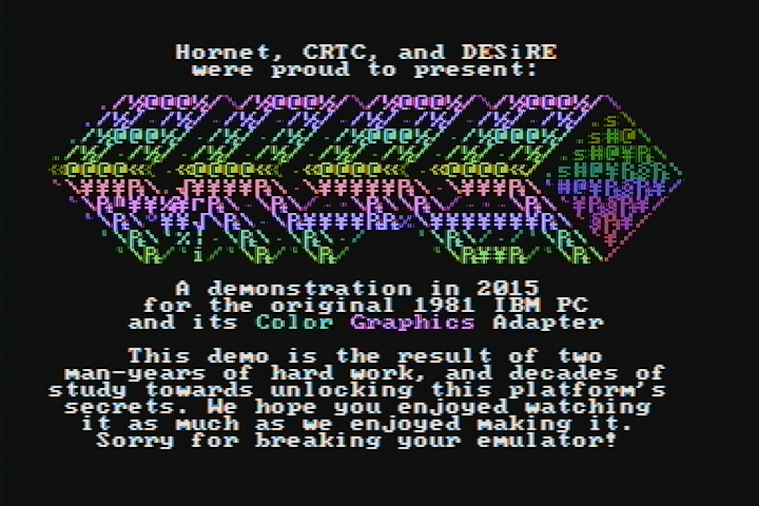
Oh Mein Gott….

Demo party time. Amazing. As it runs on an early 4.77 Mhz IBM 8088 PC with CGA video.

–jeroen


Posted in History | Leave a Comment »