


Recommended reading:
–jeroen
Posted by jpluimers on 2016/05/14
Recommended reading:
–jeroen

Posted in 6502, Development, History, Software Development | Leave a Comment »
Posted by jpluimers on 2016/04/25
I remember this happening when I was almost starting the studies at University: the Netherlands getting their country code top-level domain in 1986: at first mostly universities and research institutions were getting their .nl domains.
Today 30 years ago .nl came into existence and the first research institution domain here was cwi.nl (the research institution for math and informatics) as it handled the registrations (for years Piet Beertema did that, even before he hooked CWI to NFSnet in 1988).
This was the era of uucp – way before the web – which handled a lot of the mail traffic, but not the only one as back-then my HLERUL5.bitnet email address wasn’t even tied to the .nl dmain back then: it ran over DECnet based Mail-11 software. So it took a few more years before I got a .nl email address that the university and one of the reasons I still use a jeroenp account on many systems, for instance a few more years later when I got jeroenp@dragons.nest.nl at home.
This was way after the first commercial companies got their .nl toplevel domains, for instance and.nl was registered very early on (and Jos Horsmeier was very active).
So: happy birthday .nl and a bit thank you for all the people involved in getting .nl into existence.
–jeroen
Source: .nl – Wikipedia, the free encyclopedia
Posted in History, Internet, Power User | Leave a Comment »
Posted by jpluimers on 2016/04/10
Very cool This week, a look at Nintendo’s choice of the 6502 for the Famicom, later to be the NES.
It skims on the BCD patent, which they covered before in more depth.
–jeroen
Posted in 6502, History | Leave a Comment »
Posted by jpluimers on 2016/04/06

Anders Live – Build 2016 – Channel 9 Stage C907 – Speakers: Anders Hejlsberg, Seth Juarez
Anders explaining about being a pragmatist ever since he started working on the Turbo Pascal predecessor in 1981. It’s been a long way to TypeScript and beyond (:
Lot’s of interesting tidbits about the future of TypeScript and how it relates to other languages.
Source: Anders Live | Build 2016 | Channel 9
Direct URLs:
–jeroen
PS:
The Turbo Pascal predecessors were called Blue Link Software Pascal, Compas Pascal and Poly Pascal as I learned last year while teaching a workshop for DAPUG in Denmark when I bumped into some people working with Anders while he still lived there a long time ago. Later I researched the above links.
Posted in .NET, C#, Delphi, Development, History, Pascal, Software Development, Turbo Pascal | 1 Comment »
Posted by jpluimers on 2016/04/01
Apple Inc. just turned 40 today. Happy birthday!
Based on Mac@30, here is my educated guess for Apple@40.
(Boy what were they thinking when establishing Apple Computer Inc. on April 1st 1976)
–jeroen
Posted in 6502, Apple, Apple I, History, Power User | Leave a Comment »
Posted by jpluimers on 2016/03/11
Mac SE/30’s nine-inch screen is ideal for font-wrangling, says dev, 16Mhz 68030 not so much
Wow, back in the days I used Fontographer too, at a client that also used Ikarus, but on even older Mac hardware. But that was early 1990s (:
–jeroen
Source: Motorola-powered Mac from 1989 used to write smartphone apps • The Register
Posted in Apple, Classic Macintosh, Font, History, Macintosh SE/30, Power User | Leave a Comment »
Posted by jpluimers on 2016/03/11
Grappig om in een stukje achtergrond te duiken.
Mijn broer woonde vroeger aan de Johan Dixstraat 18. Dat is vlak bij de Nicolaas Damesstraat. Ik werkte voor een klant genaamd Nico Dames. De combinatie wekte mijn interesse.
De buurt rondom die straat is allemaal rondom Kwekers, dus je ziet straten als:
Dan een paar linkjes:
–jeroen
Posted in About, History, Personal | Leave a Comment »
Posted by jpluimers on 2016/02/12
For a short while (from Windows 2003 Service Pack 1 till Windows 2003 service pack 2) some updates used Windows Hotpatching.
Some links on the how/why and how to abuse it:
All because of this little post:
Hier ein Einblick in die Denkweise von Leuten, die Software auf CD-ROM verteilen und bei denen Release Zyklen in Monaten und nicht Minuten gemessen werd… – Kristian Köhntopp – Google+
–jeroen
Posted in C, Development, History, Software Development, The Old New Thing, Windows Development | Leave a Comment »
Posted by jpluimers on 2016/02/11
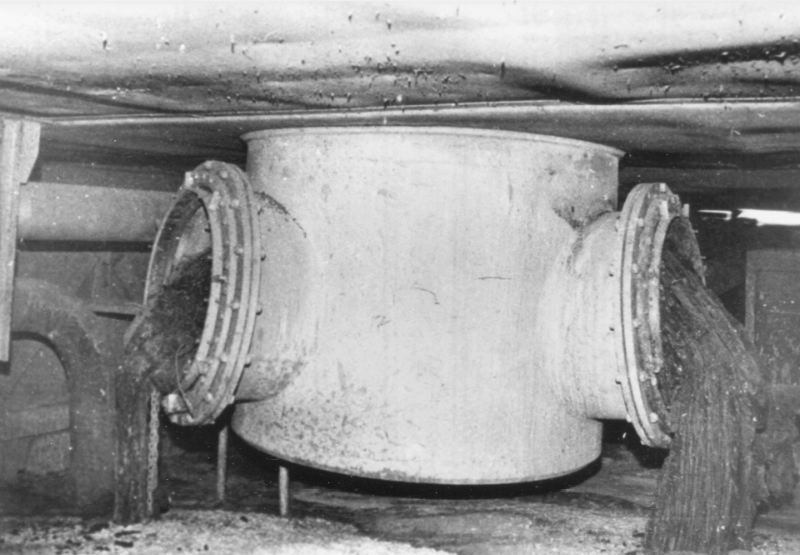
Photos from source: The Famous Photo of Chernobyl’s Most Dangerous Radioactive Material Was a Selfie | Atlas Obscura
Corium elephant foot selfie:


Posted in History | Leave a Comment »
Posted by jpluimers on 2016/02/11
You find a lot of stuff when you are reorganizing your office #TP6 Library….
I must clean out my closets as well. I think I have similar stuff lying around.
–jeroen


Posted in Delphi, Development, History, Software Development, Turbo Pascal | Leave a Comment »
 The Wiert Corner - irregular stream of stuff