Author Archive
Posted by jpluimers on 2020/01/21
For my link archive in case I ever need to do Delphi generic type matching on intrinsic types. This will be tricky as you can have typed types like [WayBack] type TDate = type TDateTime since the early Delphi ages.
[WayBack] Hi, by using compiler intrinsics, is it possible to check if a generic type parameter is an unsigned integer? – Malcon X Portela – Google+
It will probably come down to fast intrinsic type mapping and slower typed type mapping.
The above WayBack link contains the most important bits of the Google+ post:
Hi, by using compiler intrinsics, is it possible to check if a generic type parameter is an unsigned integer? I have the following code:
function TChecker<T>.CheckIsUnsigned: Boolean;
begin
  if GetTypeKind(T) = tkInteger then
  begin
  if SizeOf(T) = 4 then
  begin
    // TODO: Check if it is an unsigned 32-bit integer
    Result := True;
  end else if SizeOf(T) = 2 then
  begin
    // TODO: Check if it is an unsigned 16-bit integer
    Result := True;
  end else
  begin
    // TODO: Check if it is an unsigned 8-bit integer
    Result := True;
  end;
  end else
  begin
    Result := False;
  end;
end;
The code should return True only if the ‘T’ generic type parameter is an unsigned integer. I remember that +Stefan Glienke posted here some code that can do this trick, however, I am not able to find that now.
Thanks!
Hi +Jeroen Wiert Pluimers, my answer can be a bit disappointing, sorry :( Some time after writing this question here, I just realized which for the things I was originally trying to do, being signed or unsigned would not change anything on the final result hehehehe :D But from this amazing project https://github.com/d-mozulyov/Rapid.Generics (entire credits goes to Dmitry Mozulyov for the magic), it is possible to write the check to the generic type parameter in order to identify if it is a 32-bit/64-bit signed or unsigned number.
LTypeData := PTypeInfo(TypeInfo(T)).TypeData;

case GetTypeKind(T) of
  tkInteger:
  begin
    {case LTypeData.OrdType of
      otSLong: Writeln('32-bit signed');
      otULong: Writeln('32-bit unsigned');
    end;}
    // the above code does the same thing
    if LTypeData.MaxValue > LTypeData.MinValue then
    begin
      Writeln('32-bit signed');
    end else
    begin
      Writeln('32-bit unsigned');
    end;
  end;
  tkInt64:
  begin
    if LTypeData.MaxInt64Value > LTypeData.MinInt64Value then
    begin
      Writeln('64-bit signed');
    end else
    begin
      Writeln('64-bit unsigned');
    end;
  end;
end;
The [WayBack] Rapid.Generics project is indeed cool, but unmaintained and has no unit tests. The main code is in some [Wayback] 30k lines Rapid.Generics.pas unit with some cool ideas and implementations. Hopefully people will find time to integrate some of the ideas there into basically the only well maintained Delphi generics library Spring4D.
A big limitation might be that the code is Delphi XE8 and up only, whereas Spring4D supports older Delphi versions.
–jeroen
Posted in Conference Topics, Conferences, Delphi, Development, Event, Software Development | Leave a Comment »
Posted by jpluimers on 2020/01/20
This procedure works for Somfy RTS motors to:
- removing an additional channel
- removing an additional remote
The trick is to have one remote/channel that you want to keep working as you need that one to initiate the deletion process:
- On the channel/remote you want to delete
- Test with the up/down button that it is indeed the one you want to delete
- On the channel/remote you want to keep
- Test with up/down button
- The Somfy RTS motor show now work
- Press the small button with a pen
- The Somfy RTS motor now should “wiggle”
- On the channel/remote you want to delete
- Press the small button with a pen
- The Somfy RTS motor now should “wiggle” again
- Test with up/down button
- The somfy RTS motor should now do nothing
- On the channel/remote you want to keep
- Test with up/down button
- The Somfy RTS motor show still work
Via: [WayBack] How to change the control of a Somfy RTS roller blind from 2 to 1 remote – Projectionscreen.net
Videos below the fold:
–jeroen
Read the rest of this entry »
Posted in Hardware, LifeHacker, Power User | Leave a Comment »
Posted by jpluimers on 2020/01/20
When you look at how to find listed cron jobs, usually the answer is cron -l or cron -u username -l.
However, on OpenSuSE systems, cron jobs can be in different places, and the sysconfig settings have influence on them too.
These files and directories all influence cron:
Directories:
/etc/cron.d/

/etc/cron.daily/

/etc/cron.hourly/

/etc/cron.monthly/

/etc/cron.weekly/
Files:
/etc/sysconfig/cron

/etc/init.d/rc2.d/K01cron

/etc/init.d/rc2.d/S14cron

/etc/init.d/rc3.d/K01cron

/etc/init.d/rc3.d/S14cron

/etc/init.d/rc5.d/K01cron

/etc/init.d/rc5.d/S14cron

/etc/init.d/cron

/etc/news/crontab.sample

/etc/pam.d/crond

/etc/systemd/system/multi-user.target.wants/cron.service

/etc/omc/srvinfo.d/cron.xml

/etc/cron.deny

/etc/crontab
Most are available for other Linux distributions as well, but each one might have slightly different configurations (especially for the directories). Some background reading:
Some details:
- The
crontab -l will only list what is in /etc/crontab.
- These directories are influenced by
/etc/sysconfig/cron, especially the DAILY_TIME variable (see below) for the daily jobs.
All of the directories are checked every 15 minutes through /usr/lib/cron/run-crons:/etc/cron.daily/
/etc/cron.hourly/
/etc/cron.monthly/
/etc/cron.weekly/
- That script then uses these files for checking when to run:
/var/spool/cron/lastrun/cron.weekly

/var/spool/cron/lastrun/cron.daily

/var/spool/cron/lastrun/cron.hourly
The DAILY_TIME variable:
## Type: string

## Default: ""

#

# At which time cron.daily should start. Default is 15 minutes after booting

# the system. Example setting would be "14:00".

# Due to the fact that cron script runs only every 15 minutes,

# it will only run on xx:00, xx:15, xx:30, xx:45, not at the accurate time

# you set.

DAILY_TIME=""
–jeroen
Posted in *nix, *nix-tools, cron, Linux, openSuSE, Power User, SuSE Linux, Tumbleweed | Leave a Comment »
Posted by jpluimers on 2020/01/20
A few notes on tracking down a use-after free related issue involving interfaces.
The crash message is like this:
Project UseAfterFreeWithInterface.exe raised exception class $C0000005 with message 'access violation at 0x004106c0: read of address 0x80808088'.
Two things here:
An important note first
Basically any memory value in an exception starting with $8080 and sometimes even $80 should raise suspicion: it usually means a use-after-free case.
You see these errors with FastMM and not with the memory manager as [WayBack] delphi • View topic • Problem with FastMM and D7 explains:
Read the rest of this entry »
Posted in Conference Topics, Conferences, Delphi, Development, Event, Software Development | 8 Comments »
Posted by jpluimers on 2020/01/20
Rephrased from [WayBack] Jeroen Wiert Pluimers – Google+:
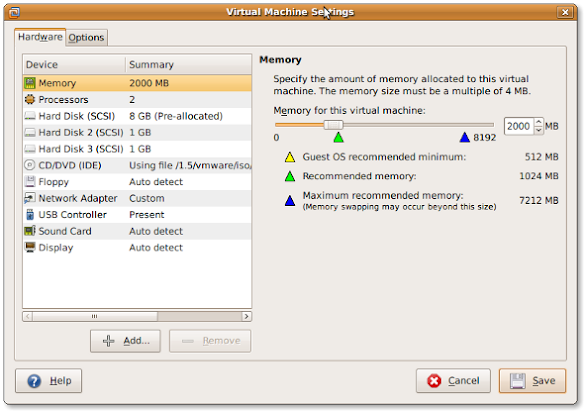
If you install a virtual machine, ensure the disk controller and disks are SCSI based.
This has many advantages, including:
- speed (usually the SCSI drivers can be paravirtualised)
- hot addition of new disks
It holds for virtually any virtualization platform including all non-ancient (less than ~10 year old) versions of:
- VMware (Workstation, Viewer, but I expect this also to work on vSphere, ESXI, Fusion)
- Hyper-V
- KVM (and therefore Proxmox)
- VirtualBox
Based on my notes in the above link and the links below:
Note this isn’t just for Linux guests/hosts: Most guests (including Windows) can do a SCSI bus re-scan and detect new SCSI devices.
The trick here is that the guest must already have a virtual SCSI controller (adding that will require a reboot of the guest).
Then adding a new SCSI disk on that controller from any host (Windows, Mac, ESXi, vSphere) should work fine.
–jeroen
Posted in ESXi4, ESXi5, ESXi5.1, ESXi5.5, ESXi6, ESXi6.5, Fusion, Hyper-V, KVM Kernel-based Virtual Machine, Power User, Proxmox, View, VirtualBox, Virtualization, VMware, VMware ESXi, VMware Workstation | Leave a Comment »
Posted by jpluimers on 2020/01/19
[WayBack] Tweaking4All.com – Topics – Delphi – How to change the font of a hint window: Delphi THintWindow are odd, as you cannot set the Vcl.Forms.HintWindowClass before uses it to initialise the hint window in the Application instance from the initialisation section in the Vcl.Forms unit.
The only way to change it is to:
- Set the
HintWindowClass to a new class
- Toggle the state of
Application.ShowHint
So the duplicate line below is no accident:
  HintWindowClass := TMyHintWindow;
  Application.ShowHint := not Application.ShowHint;
  Application.ShowHint := not Application.ShowHint;
References:
–jeroen
Posted in Delphi, Development, Software Development | Leave a Comment »
Posted by jpluimers on 2020/01/17
A blog entry since it was hard to find about [WayBack] “Isolated segment – all turns from it are closed” – Google Search as the source reveals not much: no explanation at [WayBack] wme-history/index.html at master · wazers/wme-history · GitHub (A repository containing the pretty-printed index and JavaScript files of the WME to investigate version differences – wazers/wme-history).
Same for [WayBack] “Added big junction” waze – Google Search and [WayBack] wme-history/index.html at master · wazers/wme-history · GitHub
Note that updates you make to the map can take a while to update to the actual live map (even after approval).
You can check at [WayBack] Waze Status for the latest updates.
I added a piece of road in between Thunstetten and Herzogenbugsee, but could not save it:
Read the rest of this entry »
Posted in LifeHacker, Power User, Waze | Leave a Comment »
Posted by jpluimers on 2020/01/17
A long time ago I wrote in Mac/PC: sending Wake-on-LAN (WOL) packets « The Wiert Corner – irregular stream of stuff “I’ve succesfully woken up these machines: HP XW6600 running ESXi 5.1 ThinkPad W701U running Windows 7”.
The XW6600 have now been demoted to Windows 10 machines that I only need every now and then, so most of the time they are shutdown.
However, with the installation of Windows 10 however, they stopped reacting to WOL (Wake on LAN).
Per web-search results, I’ve tried all the permutations of the below settings to no avail.
Luckily, my trusty APC PDU AP7921 (and little sister AP7920) helped out: when setting the “Reboot Duration” to 30 seconds or more (so the power fully drains), it can be rebooted.

Note that since I bought these a long time ago, they have been replaced by these:
- AP7920 Rack PDU, Switched, 1U, 12A/208V, 10A/230V, (8)C13
- AP7921 Rack PDU, Switched, 1U, 16A, 208/230V, (8)C13
Firmwares:
Power usage:
- an XW66000 with 32 gigabytes of RAM and one hard disk takes between 0.6-1.2 Ampère of current, which at 230 Volt is 140-275 Watt.
- over one day that is between 3.4 and 6.6 kWh
Settings tried
Read the rest of this entry »
Posted in Ethernet, Hardware, HP XW6600, Network-and-equipment, Power User, Wake-on-LAN (WoL), Windows, Windows 10 | Leave a Comment »


 The Wiert Corner - irregular stream of stuff