Archive for the ‘History’ Category
Posted by jpluimers on 2026/07/22
Some are surprised but because of MS-DOS 2.x compatibility:
`c:tmp.txt` is a valid file path on Windows
Since each drive letter remembers the current directory and that memory bit is not thread-local nor process-local, so relying on it is bad practice.
The above is a quote from [Wayback/Archive] Oleksii Holub 🇺🇦 on Twitter: “So I was trying to understand the difference between <code>Path.IsPathRooted(...)</code> and <code>Path.IsPathFullyQualified(...)</code> and learned that apparently <code>c:tmp.txt</code> is a valid file path on Windows 🤯” which has an image without alt-text on a long bit of Microsoft documentation which I will further quote below.
Many people don’t know this, so here is a list of variations on relative paths:
Read the rest of this entry »
Posted in Conference Topics, Conferences, Development, EKON, Event, History, MS-DOS, Power User, Retrocomputing, Software Development, Windows Development | Leave a Comment »
Posted by jpluimers on 2026/05/27
Got an error when pushing a relatively large commit to GitLab: error: RPC failed; HTTP 502 curl 22 The requested URL returned error: 502
There was no big difference in information between these commands¹:
git pushgit push --verbose
Read the rest of this entry »
Posted in //e, 6502, Apple, Apple ///, Apple IIgs, Apple ][, Development, DVCS - Distributed Version Control, git, GitLab, History, Power User, Software Development, Source Code Management, Versioning | Leave a Comment »
Posted by jpluimers on 2026/05/06
Cool to see what 3D printing plus a Raspberry Pi emulating a C64 can do [Wayback/Archive] I Built a Commodore 64 Laptop That Never Existed (PI + EMULATION) – The Portable 64 Concept Design – YouTube.
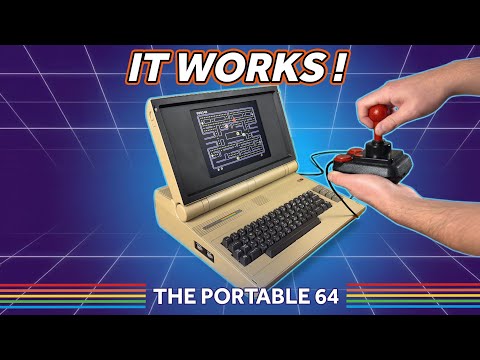
The Portable 64 with an original Commodore 64 joystick
However, published in December 2025 after Commodore had been resurrected from the C= brands, it would have been way cooler if was based on new Commodore 64 Ultimate hardware.
Maybe someone will do such a portable computer based on that hardware, or even better that it becomes available at [Wayback/Archive] Home | Commodore.
--jeroen
Posted in 3D printing, 6502, C64, Commodore, Development, Hardware Development, History, Power User, Retrocomputing | Leave a Comment »
Posted by jpluimers on 2026/05/04
 Via [Wayback/Archive] Der Kneisner M100 – oder das “once in a lifetime project” | Computermuseum Visselhövede, about an IMSAI 8080 clone, I bumped into the VT220 based Glass TTY VT220 font and found some links of it and it’s modifications which are listed below by category
Read the rest of this entry »
Posted in 8080, Development, Font, History, JavaScript/ECMAScript, LifeHacker, Power User, Retrocomputing, Scripting, Software Development | Tagged: DEC, fonts, Typography, vintagecomputing | Leave a Comment »
Posted by jpluimers on 2026/04/24
[Wayback/A] Screenshot of Pitfall II: Lost Caverns (Apple II, 1984) – MobyGames
Pitfall II: Lost Caverns (Apple II) screenshot:Title screen (this version has been cracked)
Memories of Apple II, ][e and //c.
There was quite a good crack-scene in The Netherlands with a well known name “The Redhead”.
Back then I didn’t know about the BBS systems involved:
- NEABBBS: 020-717666 (which was ran by Max Keizer and part of FidoNet)
- NABBS: 03200-28717 (which I could hardly find any other information about, the areacode was part of Lelystad)
Read the rest of this entry »
Posted in //e, Apple, Apple ][, BBS, FidoNet, History, Power User | Leave a Comment »
Posted by jpluimers on 2026/04/01
For a while now, after initially displaying archived Google Search results, it changes the Wayback Machine archival URL after displaying.
Examples:
https://web.archive.org/web/20230322163526/https://www.google.com/web/20230322163526/https://www.google.com/search?q=excel+last+delimiterhttps://web.archive.org/web/20230321192712/https://www.google.com/search?q=excel+textafter+textbefore+textsplit+site:https:%2F%2Fsupport.microsoft.com%2Fen-us%2Foffice%2F&google_abuse=GOOGLE_ABUSE_EXEMPTION%3DID%3D3020867903a1f6fa:TM%3D1679426832:C%3D%3E:IP%3D207.241.225.236-:S%3DTSrpWMPwWKoNpiXh-oD21Q%3B+path%3D/%3B+domain%3Dgoogle.com%3B+expires%3DTue,+21-Mar-2023+22:27:12+GMThttps://web.archive.org/web/20230321192712/https://www.google.com/web/20230321192712/https://www.google.com/search?q=excel+textafter+textbefore+textsplit+site:https:%2F%2Fsupport.microsoft.com%2Fen-us%2Foffice%2F&google_abuse=GOOGLE_ABUSE_EXEMPTION%3DID%3D3020867903a1f6fa:TM%3D1679426832:C%3D%3E:IP%3D207.241.225.236-:S%3DTSrpWMPwWKoNpiXh-oD21Q%3B+path%3D/%3B+domain%3Dgoogle.com%3B+expires%3DTue,+21-Mar-2023+22:27:12+GMT
I want to write a Bookmarklet that fixes these.
There is not much in the results of
[Wayback/Archive] “GOOGLE_ABUSE_EXEMPTION” “Wayback” – Google Search, but I think this happens when there is a high frequency Google Search archivals from the Wayback Machine.
–jeroen
Posted in Google, GoogleSearch, History, Internet, InternetArchive, Power User, WayBack machine | Leave a Comment »
Posted by jpluimers on 2026/03/27
| Below is a dump of links about FidoNet links with a few remarks so I won’t forget as it was 25+ years ago that I stopped hosting the FidoNet node that had been on-line for almost 10 years (I was a FidoNet point for a few years before that).
See also my other FidoNet posts. |
                    __
                   /  \
                  /|oo \
                 (_|  /_)
                  _`@/_ \    _
                 |     | \   \\
                 | (*) |  \   ))
    ______       |__U__| /  \//
   / FIDO \       _//|| _\   /
  (________)     (_/(_|(____/
 (c) John Madill
FidoNet logo by John Madill
|
Read the rest of this entry »
Posted in BBS, FidoNet, History | Leave a Comment »
Posted by jpluimers on 2026/03/04
Finding a reference to DASM while researching yesterday’s post @jpluimers on Twitter: “@b0rk @jilles_com Acids vs bases.”, it felt even more like a trip like memory lane as I had used it in the 1980s on Apple ][ and Apple //e after mainly using EDASM. Lisa and Merlin.
I am glad that it is still alive and kicking with home page at [Wayback/Archive] dasm – macro assembler for 8-bit machines and repository at [Wayback/Archive] dasm-assembler/dasm: Macro assembler with support for several 8-bit microprocessors.
Especially this history section on the home page rang a bell:
- Matthew Dillon started dasm in 1987-1988.
- Olaf “Rhialto” Seibert extended dasm in 1995.
- Andrew “Dr.Boo” Davie maintained dasm in 2003-2008.
- Peter Fröhlich maintained dasm in 2008-2015.
- In 2019, the dasm source code and releases were moved to GitHub.
More links from this trip down memory lane:
Read the rest of this entry »
Posted in //e, 6502 Assembly, Apple, Apple ][, Assembly Language, Development, History, Power User, Software Development | Leave a Comment »
Posted by jpluimers on 2026/03/03
A few years back I tweeted [Wayback/Archive] Jeroen Wiert Pluimers @wiert@mastodon.social on Twitter: “@b0rk @jilles_com Acids vs bases.”

It was a kind of tongue-in-cheek reaction (with a way better picture below) to a very valuable post by b0rk (Julia Evans) on both Twitter and Mastodon [Wayback/Archive] Julia Evans on Twitter: “bases” / [Wayback/Archive] Julia Evans: “bases title: bases # we usually…” – Mastodon for two reasons:
- There are various interpretations of bases
- Octal is very important to educate as errors introduced by its support are hard to spot even if you do know about octal.
Back to Julia’s post:
Read the rest of this entry »
Posted in *nix, *nix-tools, 68k, 8086, Assembly Language, bash, bash, C, C++, Chemistry, Conference Topics, Conferences, Development, EPS/PostScript, Event, Haskell, History, Java, Java Platform, JavaScript/ECMAScript, Jon Skeet, LifeHacker, Mathematics, PDP-11, Perl, PHP, Power User, Python, science, Scripting, Software Development, x86 | Leave a Comment »


 The Wiert Corner - irregular stream of stuff