


I knew open source meme generators would exist, but I never searched for them before. Here is a small table with generator and repository columns:
Archive for the ‘Makefile’ Category
Open source meme generators on GitHub
Posted by jpluimers on 2026/08/20

Posted in *nix, *nix-tools, ash/dash, bash, bash, Batch-Files, Bookmarklet, CSS, Development, HTML, JavaScript/ECMAScript, Makefile, Power User, Python, Scripting, sh, Sh Shell, Software Development, Web Browsers, Web Development | Leave a Comment »
Some scripts and tips for easing the maintenance of a postfix based SMTP system
Posted by jpluimers on 2021/11/24
A few scripts and tips I found Googling around.
Deleting queued messages by regular expression pattern
I have seen the below delete-from-mailq.pl script numerous time, usually without any attribution (for instance [Wayback] Postfix Flush the Mail Queue – nixCraft and [Wayback] postfix-delete.pl – Following script deletes all mail from the mailq which matches the regular expression specified as the first argument · GitHub).
The earliest version I could find was in [Wayback] ‘Re: delete messages from mailq’ – MARC by [Wayback] ‘Ralf Hildebrandt ‘ posts – MARC:
--- snip ---
#!/usr/bin/perl

$REGEXP = shift || die "no email-adress given (regexp-style, e.g. bl.*\@yahoo.com)!";

@data = qx</usr/sbin/postqueue -p>;
for (@data) {
  if (/^(\w+)\*?\s/) {
     $queue_id = $1;
  }
  if($queue_id) {
    if (/$REGEXP/i) {
      $Q{$queue_id} = 1;
      $queue_id = "";
    }
  }
}

#open(POSTSUPER,"|cat") || die "couldn't open postsuper" ;
open(POSTSUPER,"|postsuper -d -") || die "couldn't open postsuper" ;

foreach (keys %Q) {
  print POSTSUPER "$_\n";
};
close(POSTSUPER);
--- snip ---

And then use:
% delete-from-mailq "^test"
Tips
[Wayback] How do I check the postfix queue size? – Server Fault
Lots of great answers and pointers to useful guides/software there.
qstat
[Wayback] Postfix Bottleneck Analysis points to [Wayback] Postfix manual – qshape(1): qshape - Print Postfix queue domain and age distribution, then explains about different scenarion and queues:
- [Wayback] Introducing the qshape tool
- [Wayback] Trouble shooting with qshape
- [Wayback] Example 1: Healthy queue
- [Wayback] Example 2: Deferred queue full of dictionary attack bounces
- [Wayback] Example 3: Congestion in the active queue
- [Wayback] Example 4: High volume destination backlog
- [Wayback] Postfix queue directories
postqueue
postqueue -p | tail -n 1Last line in the
postqueue -pshows how many requests and size:
-- 317788 Kbytes in 11860 Requests.
View queues size
I tried finding the original posting of the below script, but could not. If you find it, please let me know.
#!/usr/bin/env perl

# postfix queue/s size
# author:
# source: http://tech.groups.yahoo.com/group/postfix-users/message/255133

use strict;
use warnings;
use Symbol;
sub count {
        my ($dir) = @_;
        my $dh = gensym();
        my $c = 0;
        opendir($dh, $dir) or die "$0: opendir: $dir: $!\n";
        while (my $f = readdir($dh)) {
                if ($f =~ m{^[A-F0-9]{5,}$}) {
                        ++$c;
                } elsif ($f =~ m{^[A-F0-9]$}) {
                        $c += count("$dir/$f");
                }
        }
        closedir($dh) or die "closedir: $dir: $!\n";
        return $c;
}
my $qdir = `postconf -h queue_directory`;
chomp($qdir);
chdir($qdir) or die "$0: chdir: $qdir: $!\n";
printf "Incoming: %d\n", count("incoming");
printf "Active: %d\n", count("active");
printf "Deferred: %d\n", count("deferred");
printf "Bounced: %d\n", count("bounce");
printf "Hold: %d\n", count("hold");
printf "Corrupt: %d\n", count("corrupt");
Various commands
[Wayback] Inspecting Postfix’s email queue – Tech-G explaining about:
mailqpostqueue -ppostcat -vq XXXXXXXXXX(whereXXXXXXXXXXis the message ID)postqueue -f/postfix flushpostsuper -dto delete messages
More of these in [Wayback] Postfix Mail Queue Management – Linux Hint and [Wayback] Postfix Bottleneck Analysis: queues.
Makefile
Based on [Wayback] Using “make” for Postfix file maintenance
MAPS = relays.db aliases.db transport.db relocated.db \
        virtual.db sender_checks.db rejected_recips.db \
        helo_access.db

all : $(MAPS)

aliases.db : aliases
        newaliases

%.db : %
        postmap $*
This is my Makefile that runs fine on Tumbleweed (note: all 8-space indents are TAB characters):
MAPS =  /etc/aliases.db \
        transport.db \
        virtual.db \
        helo_access.db \
        canonical.db \
        sasl_passwd.db \
        relocated.db \
        relay.db \
        access.db \
        relay_ccerts.db \
        sender_canonical.db

all : $(MAPS)

aliases.db : aliases
        @echo "Rebuilding $@."
        newaliases

%.db : %
        @echo "Rebuilding $@."
        postmap $*
In the future, I might try [Wayback] Makefile.postfix · GitHub, though I think it is convoluted:
This file contains hidden or bidirectional Unicode text that may be interpreted or compiled differently than what appears below. To review, open the file in an editor that reveals hidden Unicode characters.
Learn more about bidirectional Unicode characters
| ## Postfix: Makefile to update *.db files | |
| POSTCONF= /usr/sbin/postconf | |
| POSTMAP= /usr/sbin/postmap | |
| default: postmap | |
| postmap: Makefile.postmap | |
| @echo 'Updating database files …' | |
| $(MAKE) -f Makefile.postmap | |
| Makefile.postmap: main.cf | |
| @echo 'Updating $@ …' | |
| @set -e; \ | |
| rm -f $@.$$$$.tmp; \ | |
| echo 'POSTMAP=$(POSTMAP)' >>$@.$$$$.tmp; \ | |
| echo 'postmap::' >>$@.$$$$.tmp; \ | |
| config_directory="$(PWD)"; \ | |
| { $(POSTCONF) -c $(PWD) || kill $$$$; } \ | |
| |tr ' ' '\n' \ | |
| |sed -n \ | |
| -e 's/,$$//' \ | |
| -e 's#^hash:\$$config_directory/##p' \ | |
| -e 's#^hash:'"$$config_directory/##p" \ | |
| |sort -u \ | |
| |while read mapfile; do \ | |
| echo "postmap:: $$mapfile.db" >>$@.$$$$.tmp; \ | |
| echo "$$mapfile.db: $$mapfile" >>$@.$$$$.tmp; \ | |
| echo " \$$(POSTMAP) $$<" >>$@.$$$$.tmp; \ | |
| done; \ | |
| mv $@.$$$$.tmp $@ |
[Wayback] Ralf Hildebrandt
Ralf Hildebrandt is an active and well-known figure in the Postfix community. He’s a systems engineer for T-NetPro, a German telecommunications company and has spoken about Postfix at industry conferences and contributes regularly to a number of open source mailing lists.
Co-author of this book: [Wayback: Book of Postfix State-of-the-Art Message Transport ISBN 9781593270018] (which used to have its own site: [Wayback: The Book of Postfix]
Book of Postfix
State-of-the-Art Message Transport
Publisher: No Starch PressRelease Date: March 2005Pages: 496 Best practices for Postfix–the popular alternative to Sendmail. Developed with security and speed in mind, Postfix has become a popular alternative to Sendmail and comes preinstalled in many Linux distributions as the default mailer. The Book of Postfix is a complete guide to Postfix whether used at home, as a mailrelay or virus-scanning gateway, or as a company mailserver. Practical examples show how to deal with daily challenges like protecting mail users from spam and viruses, managing multiple domains, and offering roaming access.
This is a great review of the book: [Wayback] The Book of Postfix (Ralf Hildebrandt, Patrick Koetter)
Related
For my postfix studies… « The Wiert Corner – irregular stream of stuff
–jeroen
Share this:

Posted in *nix, *nix-tools, bash, Communications Development, Development, Internet protocol suite, Makefile, postfix, Power User, Scripting, SMTP, Software Development | Leave a Comment »
Tool for debugging makefiles – Stack Overflow
Posted by jpluimers on 2021/11/23
I’m not good at makefiles, so I needed a tool to help me debug some relatively simple ones.
[Wayback] Tool for debugging makefiles – Stack Overflow came to the rescue.
The suggestion in the first answer was enough: run make -n.
But the other suggestions are great too, so here I quote them (thanks [Wayback] Rob Wells and [Wayback] User Rajish):
Have you been looking at the output from runningmake -nandmake -np, and the biggiemake -nd?Are you using a fairly recent version of
gmake?Have you looked at the free chapter on [Wayback] Debugging Makefiles available on O’Reilly’s site for their excellent book “Managing Projects with GNU Make” ([Wayback] Amazon Link).
I’m sure that [Wayback] remake is what you are looking for.
From the homepage:
remake is a patched and modernized version of GNU make utility that adds improved error reporting, the ability to trace execution in a comprehensible way, and a debugger.
It has gdb-like interface and is supported by mdb-mode in (x)emacs which means breakponts, watches etc. And there’s [Wayback] DDD if you don’t like (x)emacs
The free chapter: [Wayback] https://www.oreilly.com/openbook/make3/book/ch12.pdf
Remake documentation: [Wayback] remake – GNU Make with comprehensible tracing, profiling, extended error messages, and a debugger — remake 4.3+dbg-1.4 documentation
Tutorials
[Wayback] Makefile Tutorial by Example
–jeroen
Share this:

Posted in Development, Makefile, Scripting, Software Development | Leave a Comment »
mail-filters/Makefile at master · fumiyas/mail-filters
Posted by jpluimers on 2019/04/15
Cool tool if you use Postfix: mail-filters/Makefile at master · fumiyas/mail-filters.
You set it up like this:
cd /etc/postfix

wget https://raw.githubusercontent.com/fumiyas/mail-filters/master/postfix/Makefile
Then each time you change your postfix configuration:
cd /etc/postfix

make
In that directory, it will (re)generate a Makefile.postmapbased on the lines with hash in main.cf, then make each .db file from the source hash file.
After that you have to manually restart postfix, which depends on your Linux flavour.
Similar solutions:
- [WayBack] Using “make” for Postfix file maintenance
- [WayBack] Postfix Makefiles – Web and dedicated hosting tutorials by Anchor
(also does a reload on one specific flavour) - [WayBack] HSC – Brève – Makefile for postfix configuration
(also does a reload on one specific flavour)
–jeroen
Share this:

Posted in *nix, *nix-tools, Development, Makefile, postfix, Power User, Scripting, Software Development | Leave a Comment »
Argumate — program languages “What if …”
Posted by jpluimers on 2017/11/02
Quoted in full because even 2.5 years later, it’s just too funny:
- Python: What if everything was a dict?
- Java: What if everything was an object?
- JavaScript: What if everything was a dict *and* an object?
- C: What if everything was a pointer?
- APL: What if everything was an array?
- Tcl: What if everything was a string?
- Prolog: What if everything was a term?
- LISP: What if everything was a pair?
- Scheme: What if everything was a function?
- Haskell: What if everything was a monad?
- Assembly: What if everything was a register?
- Coq: What if everything was a type/proposition?
- COBOL: WHAT IF EVERYTHING WAS UPPERCASE?
- C#: What if everything was like Java, but different?
- Ruby: What if everything was monkey patched?
- Pascal: BEGIN What if everything was structured? END
- C++: What if we added everything to the language?
- C++11: What if we forgot to stop adding stuff?
- Rust: What if garbage collection didn’t exist?
- Go: What if we tried designing C a second time?
- Perl: What if shell, sed, and awk were one language?
- Perl6: What if we took the joke too far?
- PHP: What if we wanted to make SQL injection easier?
- VB: What if we wanted to allow anyone to program?
- VB.NET: What if we wanted to stop them again?
- Forth: What if everything was a stack?
- ColorForth: What if the stack was green?
- PostScript: What if everything was printed at 600dpi?
- XSLT: What if everything was an XML element?
- Make: What if everything was a dependency?
- m4: What if everything was incomprehensibly quoted?
- Scala: What if Haskell ran on the JVM?
- Clojure: What if LISP ran on the JVM?
- Lua: What if game developers got tired of C++?
- Mathematica: What if Stephen Wolfram invented everything?
- Malbolge: What if there is no god?
–jeroen
Share this:

Posted in .NET, APL, Assembly Language, BASIC, C, C#, C++, COBOL, Development, EPS/PostScript, Fun, Go (golang), Java, Java Platform, JavaScript/ECMAScript, LISP, Makefile, Pascal, Perl, PHP, Python, Quotes, Ruby, Rust, Scala, Scripting, Smalltalk, Software Development, T-Shirt quotes, TCL, Turbo Prolog, VB.NET, Visual BASIC, XML/XSD, XSLT | Leave a Comment »
Makefile Assignments are Turing-Complete « null program
Posted by jpluimers on 2017/06/01
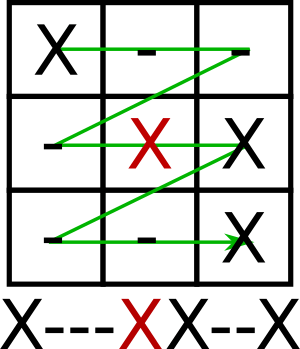 The picture tricked me into thinking it was a Makefile for Tic-Tac-Toe, but it is in fact a 174 kilobyte makefile for Conways’ game of life which proofs that make macros are Turing complete.
Source: Makefile Assignments are Turing-Complete « null program
While running on my Mac, the recursivity will make it fail on lack of resources though.
If seen both these:
and
make[119]: /bin/sh: Resource temporarily unavailable

make[119]: *** wait: No child processes. Stop.

make[119]: *** Waiting for unfinished jobs....

make[119]: *** wait: No child processes. Stop.

–jeroen
Share this:

Posted in Development, Makefile, Scripting, Software Development | Leave a Comment »
Modifying openssl to build on Mac without makedepend: using cc -M/gcc -M/clang -M
Posted by jpluimers on 2016/09/08
Coping with OpenSSL is frustrating on so many levels. It would be hilarious if not so many depended on it.
The main thing is that there is so much cruft in openssl but nobody seemingly to care enough about copying with that cruft. Though the intentions of the LibreSSL are great and it has far left cruft, it didn’t gain enough ground in the 2+ years it exists.
For me, the biggest problem was that OpenSSL would fail to build on “modern” OS X versions. These lack makedepend which was part of OS X, but got removed somewhere between 2006 and 8.0 in 2012. Luckily, the 2006 post also mentions the alternative: gcc -M.
Actually
cc -Morclang -Mwork just as well asccsymlinks toclangandgcccallsclangwith some parameters.
OpenSSL references makedepend in a lot of Makefiles (see list below). The good part is that config and Configure modify the Makefiles so most people use a manual workaround after running Configure or revert to a macports built or other binaries of makedepend or a homebrew formula.
That is not really an automated solution suitable for general use, let alone suitable for Continuous Integration, so I dug a bit deeper: config is a shell script and Configure is a sherl script: a cleverly crafted shell script starting with the below line invoking Perl with the rest of the script. The reason is that #! shebangs need an absolute location which for Perl can vary. A nice discussion on this trick is at Running Under Some Shell which contains a more elaborate how this works:
Share this:

Posted in bash, Development, Makefile, Perl, Scripting, Software Development | Leave a Comment »